
Très Riches Heures du duc de Berry
A richly decorated early 15th‑century Book of Hours commissioned by Jean, duc de Berry, celebrated for its calendar miniatures and status as a masterwork of International Gothic illumination.
Overview
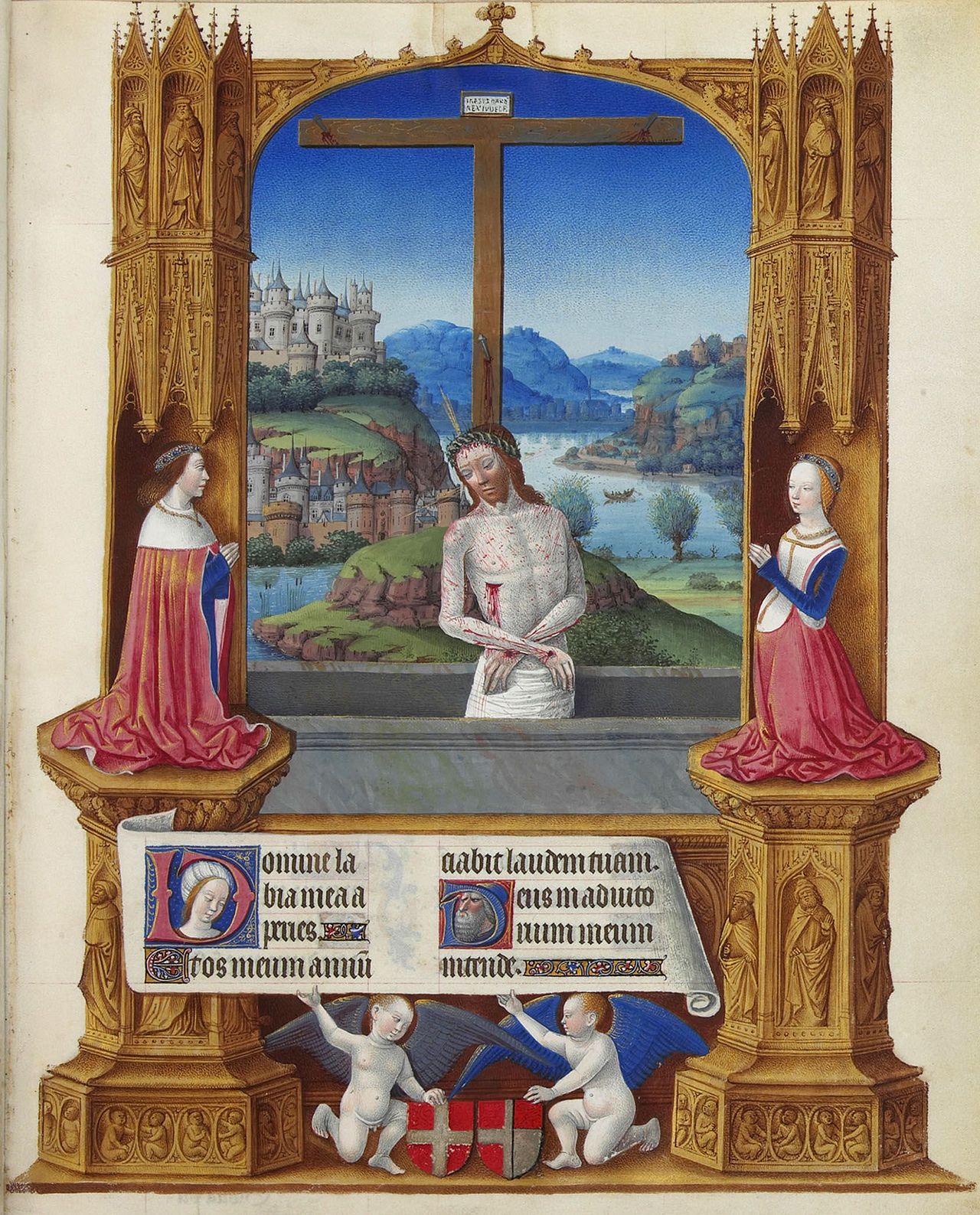
The Très Riches Heures du duc de Berry, often shortened to the Très Riches Heures, is one of the most celebrated medieval Books of Hours. Commissioned by Jean, duc de Berry around 1410, it was intended for private devotion and contains the standard sequence of short prayers and texts to be recited at the canonical hours. As a luxury manuscript it combines devotional function with exceptionally refined pictorial decoration and is widely regarded as a high point of International Gothic illumination, sometimes called "le roi des manuscrits enluminés".
Image gallery
10 Images





Physical description and contents
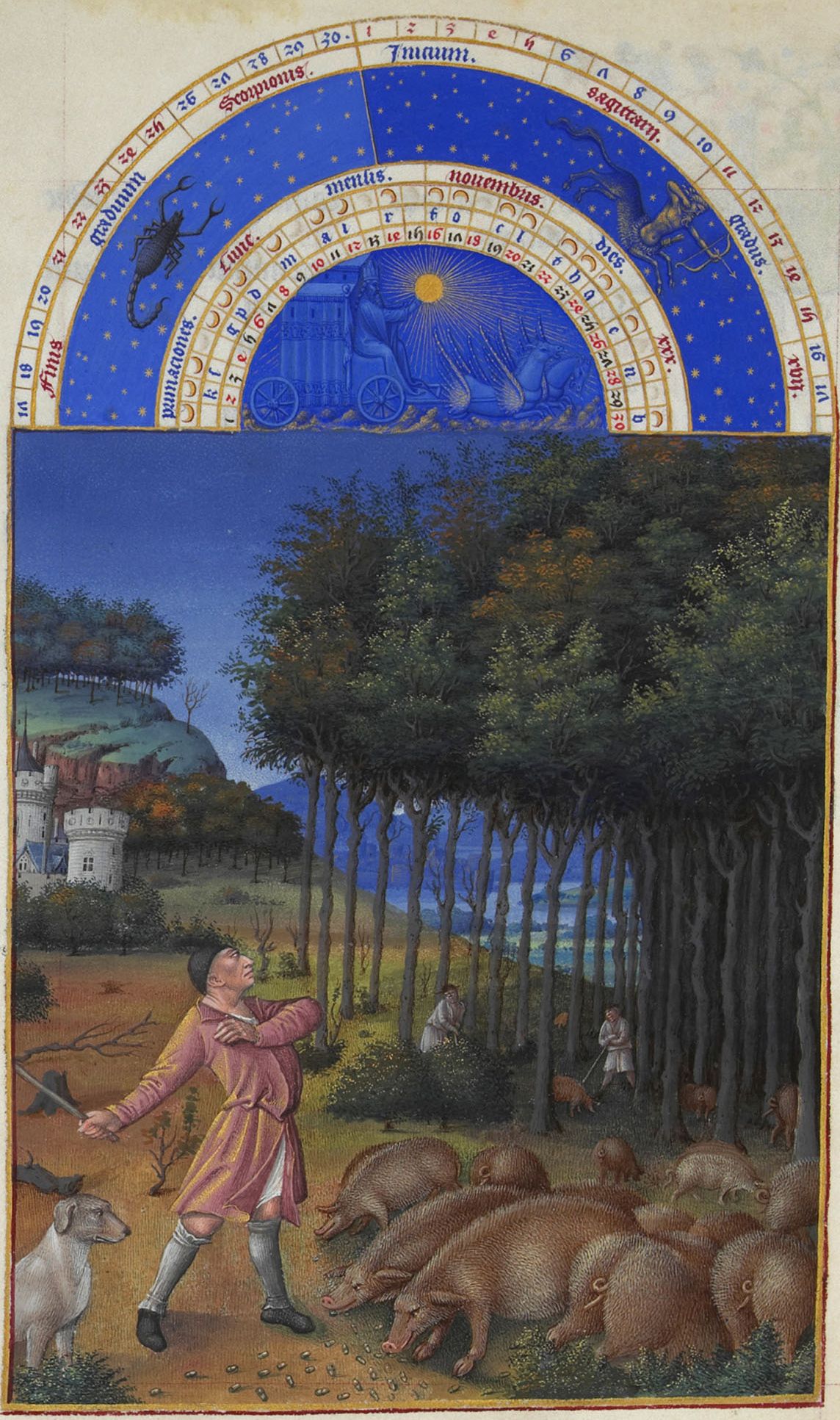
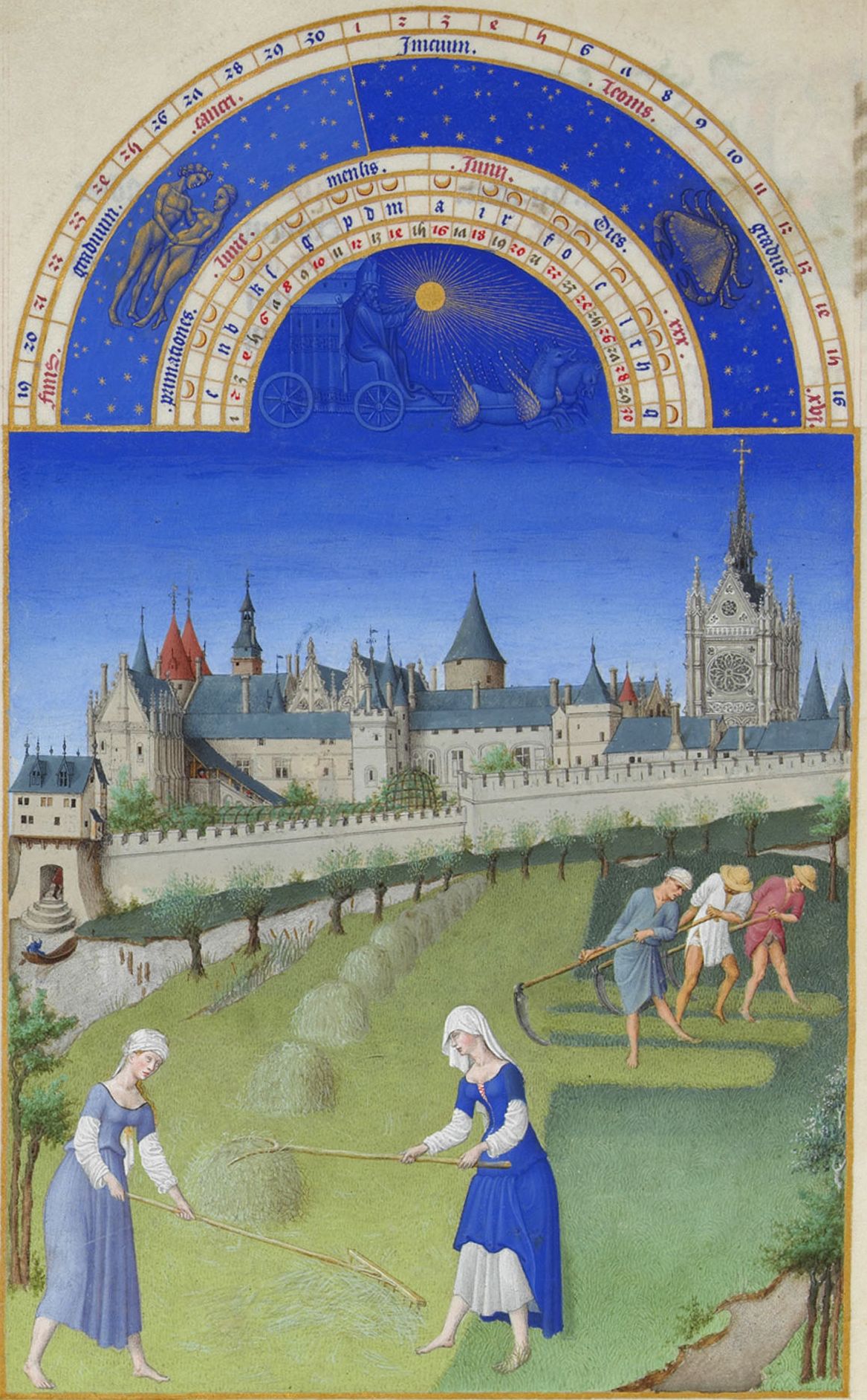
The manuscript comprises 416 folios, including roughly 131 large miniatures and many further historiated initials and border decorations; some accounts note some 300 decorated capital letters. The most famous section is the calendar, a series of monthly scenes that pair the labours of the months with detailed landscapes, courtly life and small roundels for the zodiac. Though the images are small in scale, their quality, color and compositional sophistication make them central works for the study of late medieval painting.
Calendar miniatures and subject matter
Calendar pages present a striking range of subjects: peasant activities, aristocratic pastimes, seasonal agriculture, and urban or castle settings. These scenes serve both practical and symbolic purposes, marking time through the liturgical year while offering rich evidence about dress, tools, architecture and social roles in the early 15th century. The manuscript also contains standard devotional offices and liturgical material: short prayers, psalms and texts adapted for lay use within the Book of Hours tradition.
Production history
The Très Riches Heures was created over a prolonged period and involved several hands. The first and most celebrated campaign was executed by the Limbourg brothers, whose inventive compositions and luminous color define much of the manuscript's character. Work on the book continued sporadically after their deaths and subsequently in later decades by artists such as Barthélemy van Eyck and Jean Colombe. The extended production history—spanning nearly a century—results in a manuscript that documents evolving tastes and techniques in late medieval illumination.
Materials and technique
As a luxury object the Très Riches Heures was produced on high‑quality parchment (vellum) and painted with fine pigments and areas of burnished gold leaf. Illuminators used tempera-like paints and delicate brushwork to achieve jewel‑like color and subtle modeling in very small formats. Borders and initials are often elaborately worked, combining vegetal motifs, grotesques and small narrative scenes that complement the main miniatures.
Significance and legacy
The manuscript is important both as a devotional object and as a document for historians and art historians. Its miniatures have been widely studied for their composition, technique and the vivid information they preserve about medieval life. The Très Riches Heures influenced later manuscript illumination and is a benchmark for the aesthetic of the International Gothic. Today it is preserved as Ms. 65 in the Musée Condé, Chantilly, where scholars and the public continue to study and admire its pages.
Notable features
- Luxury Book of Hours combining text and extensive pictorial cycles.
- Famous calendar miniatures depicting seasonal labours and the zodiac.
- Produced by multiple artists over many decades, including the Limbourg brothers and later painters.
- Remarkable use of color, gold leaf and fine brushwork on vellum.
- Important source for costume, architecture and rural life in the early 1400s.
The Très Riches Heures remains a cornerstone for understanding late medieval art and devotion: an object where religious practice, courtly taste and pictorial innovation meet in one of the era's most lavish manuscripts.
Related articles
Author
AlegsaOnline.com Très Riches Heures du duc de Berry Leandro Alegsa
URL: https://en.alegsaonline.com/art/101396