
Tree hollow (tree cavity): formation, ecology and importance
A tree hollow is a natural cavity in a living or dead tree that provides shelter and nesting sites for many species; formed by decay, injury or excavation and important for biodiversity.
A tree hollow, often called a tree cavity, is an internal void that develops in the trunk or larger branches of a living or standing dead tree. Such spaces may be simple depressions or deep chambers and are a common feature in mature trees. The term cavity is frequently used in scientific and conservation literature to describe these hollows.
Image gallery
6 Images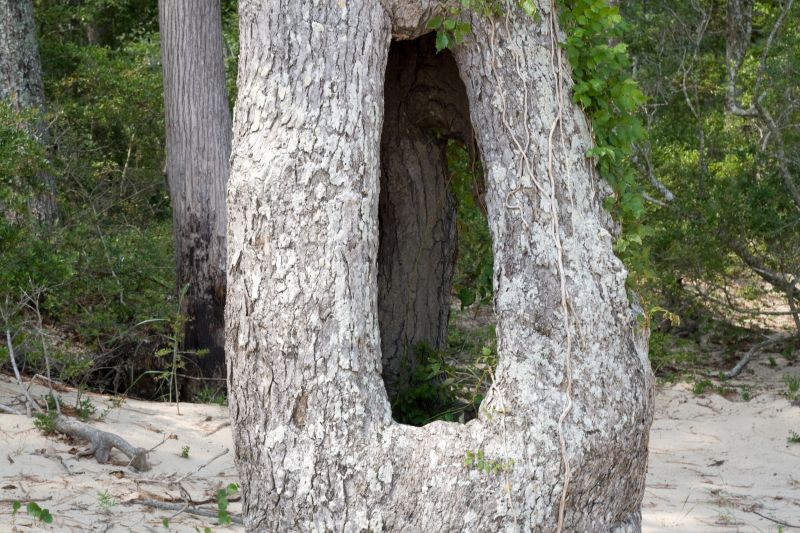


How hollows form
Hollows arise through a variety of natural processes. Common causes include:
- Wood decay following branch loss or bark damage, often accelerated by fungi.
- Physical injury from storms, lightning, fire or animal activity.
- Excavation by animals such as woodpeckers or other cavity‑creating species.
- Heartwood rot that progresses slowly in older trees.
Living trees can compartmentalize decay, leading to cavities that do not immediately kill the tree. Size, shape and internal conditions vary widely according to species, age and local climate.
Wildlife use and examples
Hollows are essential microhabitats that support many forms of life. They provide nesting, roosting and shelter for birds, mammals, reptiles and invertebrates. Notable users include:
- Owls and other cavity‑nesting birds.
- Bats and small mammals such as squirrels and possums.
- Invertebrates, including solitary bees and wasps.
- Reptiles and amphibians seeking refuge.
Conservationists emphasize that hollows increase local biodiversity by offering safe breeding sites and stable microclimates for dependent species. See general resources on habitat requirements for more context.
Because hollows form slowly, older trees are disproportionately valuable. Forestry practices that remove veteran trees reduce available cavities; as a mitigation, artificial nest boxes are used in many regions to substitute lost sites. For information on species that rely on cavities and practical management, consult guides aimed at protecting animals and their habitats.
Distinctions matter: some cavities are actively excavated by animals, others result from decay processes. Both types are ecologically important. Conservation strategies typically prioritize retaining trees with hollows, monitoring cavity availability, and creating replacement structures where natural hollows are scarce.
Related articles
Author
AlegsaOnline.com Tree hollow (tree cavity): formation, ecology and importance Leandro Alegsa
URL: https://en.alegsaonline.com/art/101334