
Owl (Strigiformes): biology, behavior and global distribution
Owls are nocturnal or crepuscular birds of prey in the order Strigiformes. This article summarizes their anatomy, hunting adaptations, diversity, habitat, and relationship with people.
Overview
Owls are a group of predatory birds classified in the order Strigiformes. They are best known for hunting at low light levels, quiet flight, and a reputation as solitary, secretive birds. There are about 200 species, ranging from small, insect-eating owls to large raptors that take mammals and other birds.
Image gallery
10 Images


Physical characteristics and adaptations
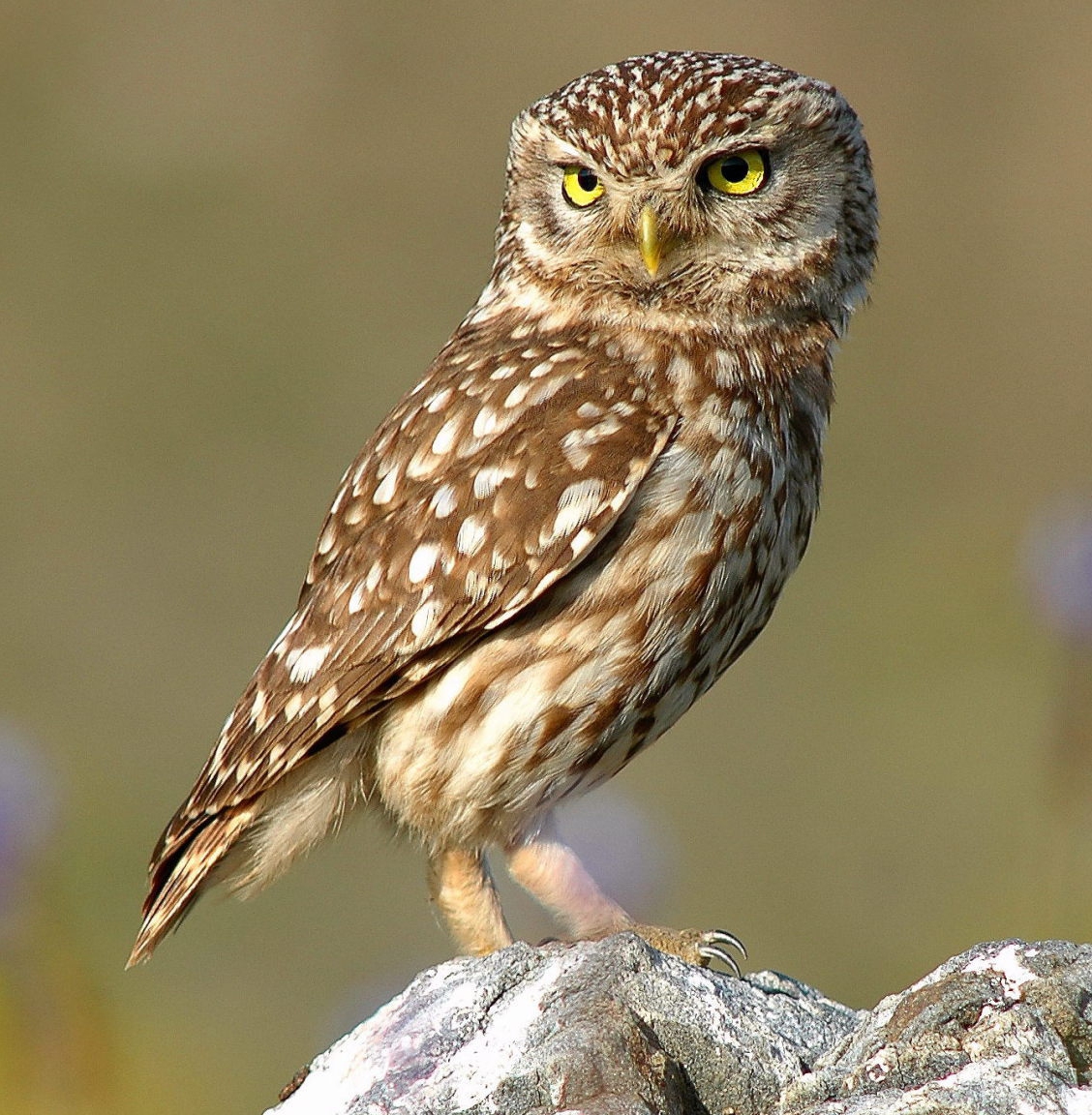
Owls share a suite of physical traits that support nocturnal predation: a circular facial disk that helps focus sound, forward-facing eyes for binocular vision, and flexible necks that can rotate to compensate for limited eye movement. Their wing and feather structure reduces turbulence and noise, enabling near-silent flight. Many species have asymmetrical ear openings and dense plumage that improve hearing and stealth.
Diet and hunting
Most owls are carnivorous and opportunistic hunters. Typical prey includes small mammals such as rodents, amphibians, insects, and other birds; several species also regularly catch fish. Hunting strategies vary: some perch-watch and swoop down on prey, others actively quarter open ground. Owls often swallow small prey whole and later regurgitate indigestible parts as compact pellets, which are useful for scientific study.
Distribution and habitat
Owls are found on every continent except Antarctica, and they are largely absent from most of Greenland and a handful of remote islands. They occupy diverse habitats — forests, grasslands, deserts, tundra and urban areas — and many species have adapted to human-altered landscapes.
Taxonomy and notable species
The order generally divides into two families: the barn owls (Tytonidae) and the typical owls (Strigidae). Well-known examples include the barn owl, great horned owl, and the snowy owl. Species differ in size, ecology and activity patterns: while many are nocturnal, some, such as the snowy owl, are often active by day.
Human significance and conservation
Owls play key ecological roles as predators controlling rodent populations and are culturally prominent in many societies. Some species are secure, but others face habitat loss, persecution, and secondary poisoning. Conservation measures include habitat protection, mitigating hazards like rodenticide, and public education to reduce conflict.
Questions and answers
Q: What order do owls belong to?
A: Owls belong to the order Strigiformes.
Q: How many species of owls are there?
A: There are 200 species of owls.
Q: What kind of animals do owls prey on?
A: Owls are animals of prey and feed on small mammals such as rodents, insects, and other birds.
Q: Are owls social animals?
A: Most owls are solitary animals.
Q: When do owls typically hunt?
A: Owls typically hunt at night and are the only large group of birds that hunt at night.
Q: What parts of the world are owls found in?
A: Owls are found in all parts of the world except Antarctica, most of Greenland, and some small islands.
Q: Do all species of owls hunt the same prey?
A: No, some species of owls like to eat fish in addition to their usual prey of small mammals and other birds.
Related articles
Author
AlegsaOnline.com Owl (Strigiformes): biology, behavior and global distribution Leandro Alegsa
URL: https://en.alegsaonline.com/art/73779
Sources
- sandiegozoo.org : "San Diego Zoo Birds: Owl"
- wildlife.state.co.us : "A Parliament of Owls"
- nps.gov : "The Owls of Big Bend"
- carolina.com : "Owl Pellets in the Classroom: Safety Guidelines"
- newscientist.com : newscientist.com/article/dn28745-falcons-imprison-live-birds-to-keep-them-fresh-for-a-lat…
- bbc.co.uk : bbc.co.uk/news/science-environment-21279609