
Tiruchirappalli (Trichy): city, history, landmarks and modern role
Tiruchirappalli (Trichy) is a major city in Tamil Nadu, India, known for its ancient temples, Rockfort, Srirangam island, industrial and educational institutions, and a layered history from the Chola period to the colonial era.
Overview
Tiruchirappalli, commonly called Trichy or Tiruchi, is a prominent city in India and an important urban centre of the state of Tamil Nadu. The Tamil form of its name is traditionally interpreted as "the town of the respected Chira," referring to a Jain monk; this etymology is reflected in local accounts and place‑name studies (name in Tamil, Chira the monk). During the British colonial period the town was widely known as Trichinopoly. Today it serves as the administrative headquarters of Tiruchirappalli District and is one of the larger municipal corporations in the state (municipal, corporation); population figures have varied over decades, with estimates in the early 21st century placing the urban population at around one million (population estimate).
Image gallery
10 Images


Geography and urban structure
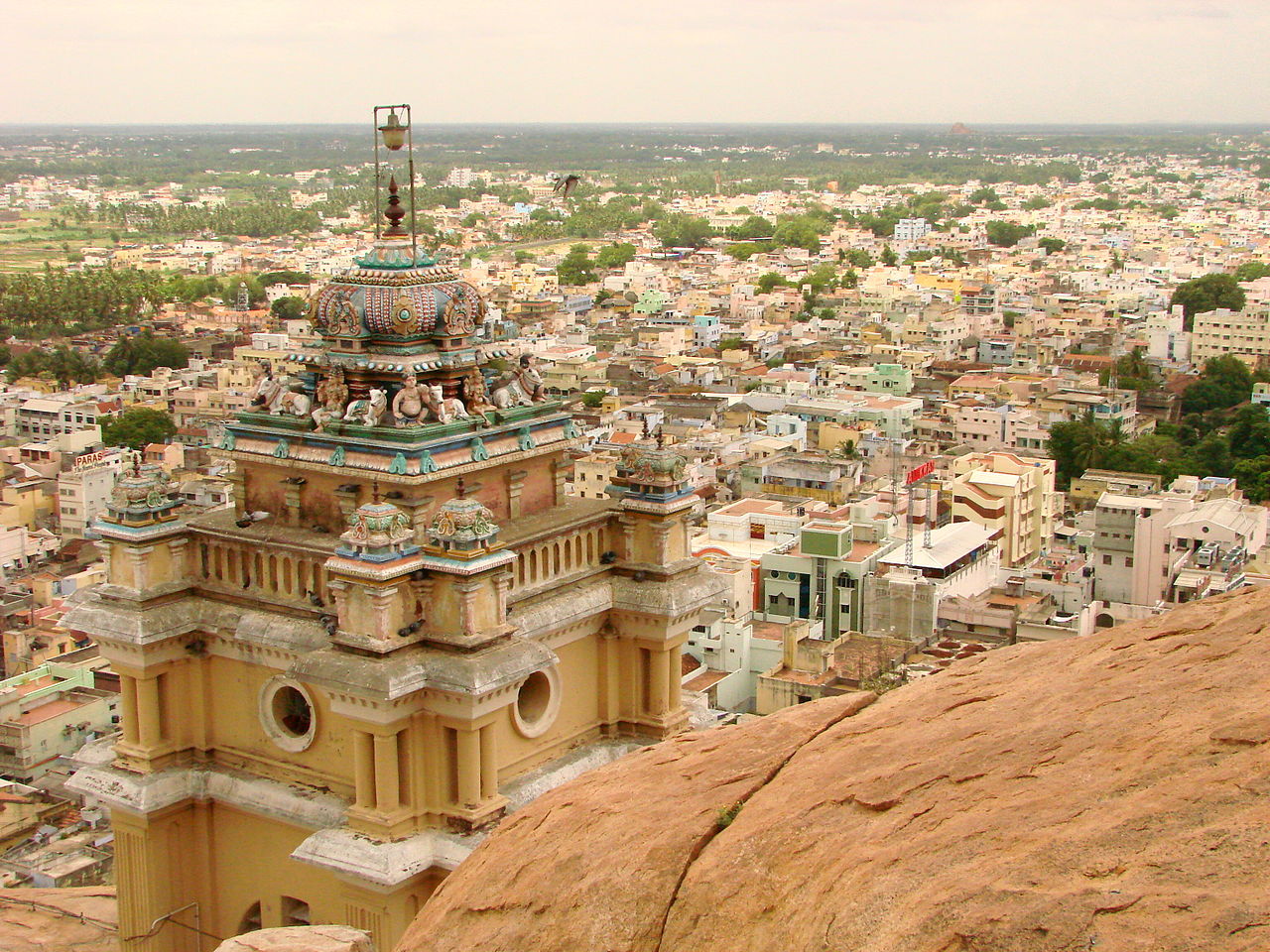
The city sits on the banks of the Kaveri (Cauvery) River and includes several distinct neighbourhoods and historic cores. Srirangam, an island formed by a branch of the river, contains one of the city's most famous temple complexes. The Rockfort, a natural volcanic rock outcrop with temple shrines on its summit, dominates the central skyline. Nearby suburbs and former capitals such as Woraiyur reflect Trichy’s layered urban growth from ancient to modern times.
History
Tiruchirappalli has a long recorded history. Archaeological and literary evidence links the area to early South Indian kingdoms; Woraiyur was a capital for early Chola rulers before about the 9th century. Over succeeding centuries the city and its surroundings were influenced by medieval dynasties, regional polities such as Nayaks, and later by European colonial powers. Trichy’s strategic position on the Kaveri made it a military and administrative centre at different times, which is why remnants of fortifications and colonial-era buildings are found alongside ancient shrines.
Landmarks and religious importance
Tiruchirappalli is widely regarded as a centre of pilgrimage and historic architecture. Important religious sites and monuments include temples, several churches and mosques, and various protected monuments. Notable sites are:
- The Rockfort complex, with hilltop shrines and panoramic city views.
- Srirangam Ranganathaswamy Temple, a sprawling Vaishnava shrine occupying much of Srirangam island.
- Samayapuram Mariamman and other temples such as Thiruvanaikaval and Nachiyar Kovil.
- Ancient irrigation works nearby, including the Grand Anicut (Kallanai) attributed to the Chola king Karikala, and the recreational weir at Mukkombu.
Economy, education and transport
Modern Tiruchirappalli combines heritage tourism with industry and education. It hosts engineering and manufacturing units, central public sector establishments, and well-known educational institutions that draw students from across India. The city is a regional transport hub with a major railway junction and an airport that links it to other parts of the country. These facilities support both commerce and a steady flow of visitors for pilgrimage, business and study.
Culture, festivals and tourism
Trichy’s cultural life is shaped by temple festivals, classical music and dance traditions, and a cuisine rooted in Tamil culinary practices. Annual processions and rites at Srirangam and other temples attract devotees in large numbers, while historical sites such as the Rockfort and colonial-era quarters are focal points for tourists. Visitors are drawn by the combination of living religious traditions, accessible archaeological sites and civic amenities that make Tiruchirappalli a key city in central Tamil Nadu.
For further reading and official references, consult local district resources and cultural guides (India, Tamil Nadu, linguistic note, historical figures, colonial name, municipal details, corporation status, demography, temples index, monuments list, places of worship, Woraiyur history).
Related articles
Author
AlegsaOnline.com Tiruchirappalli (Trichy): city, history, landmarks and modern role Leandro Alegsa
URL: https://en.alegsaonline.com/art/100079