
Thule: the legendary northern land reported by Pytheas
Thule is the name used in classical sources for a distant northern land reported by the Greek explorer Pytheas. Its precise identity remains debated — candidates include Iceland, the Faroes, Shetland, Norway or Greenland.
Thule is the name recorded in ancient Greek and Roman writings for a remote land to the far north that the explorer Pytheas claimed to have reached in the 4th century BCE. In classical usage the word came to mean the extreme limit of the known world: a place beyond ordinary maps. Because the original account by Pytheas is lost and survives only in later summaries and objections, Thule has remained a subject of scholarly debate and popular imagination for two millennia.
Image gallery
3 Images

Classical sources and Pytheas
Pytheas of Massalia (modern Marseille) sailed north from Britain and described long daylight, sea ice, and island coasts beyond Britain. Later authors — including geographers, historians and commentators from Rome and Alexandria — quote or refer to his reports, sometimes skeptically. Those secondary references preserve a mix of direct observation and later interpretation, which complicates efforts to reconstruct where Pytheas actually sailed.
Possible identifications
Modern candidates for Thule are islands and coasts in the North Atlantic and Arctic margins. Common proposals include:
- Iceland — often suggested because of its northerly position and distinct daylight patterns;
- the Faroe Islands or the Shetlands — plausible as nearer stepping stones north of Britain;
- the northern coasts of Norway — which could match some climatic and navigational details;
- Thule (Qaanaaq) in northwestern Greenland — a modern settlement that later adopted the historic name and reinforced the Greenland association in contemporary usage.
Later cultural and cartographic use
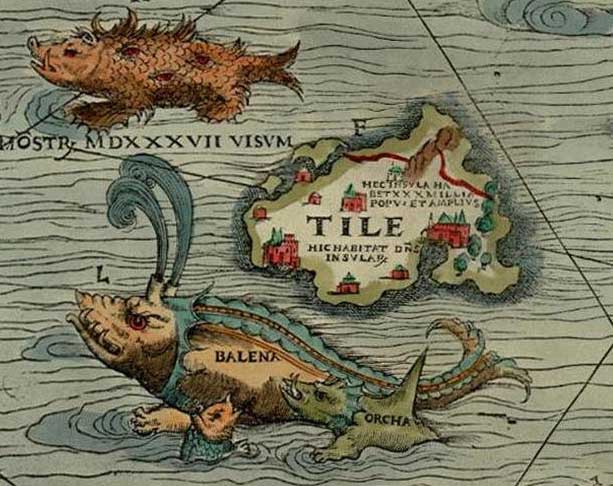
From the Roman era through the Middle Ages and into early modern mapmaking, the name Thule (and the Latin phrase Ultima Thule) signified a remote, boundaryland of exploration. Cartographers and poets used the term metaphorically for the unattainable or for distant polar regions. The legacy of the name appears in place names, literature, and the naming of polar-era installations and communities.
Scholarly debate and legacy
Because Pytheas's original narrative is lost, interpretations depend on weighing later summaries, geographic reasoning, archaeological evidence and environmental reconstruction. Scholars continue to re-evaluate ocean currents, sailing speeds, and reported phenomena (such as midnight sun and sea ice) to refine identifications. Whatever its actual location, Thule remains important as a cultural symbol of the limits of knowledge and as an early European encounter with northern maritime zones.
Notable facts
- Thule evolved from a specific voyage report into a general concept for a remote northern place.
- At least four distinct real-world regions have been proposed as the original Thule.
- The modern settlement called Thule or Qaanaaq in Greenland preserves the historic name and its associations.
The continuing interest in Thule combines classical scholarship, historical geography and the cultural resonance of a name that has long signified the edge of the known world.
Related articles
Author
AlegsaOnline.com Thule: the legendary northern land reported by Pytheas Leandro Alegsa
URL: https://en.alegsaonline.com/art/99694