
Thorne Bay, Alaska: a small community on Prince of Wales Island
Thorne Bay is a small city on Prince of Wales Island in Southeast Alaska. Founded as a logging community, it sits within the Tongass National Forest and is known for fishing, outdoor recreation, and a remote island character.
Overview
Thorne Bay is a small incorporated city on Prince of Wales Island in Southeast Alaska. It lies within the Prince of Wales–Hyder Census Area and along sheltered waterways typical of the region. The 2010 census recorded a population of 471, reflecting its status as one of the smaller, close-knit communities in the Alaska Panhandle.
Image gallery
1 Image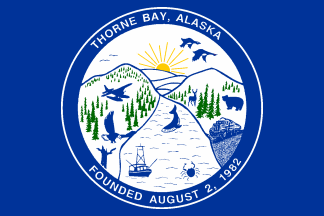
Geography and climate
Thorne Bay sits amid the coastal temperate rainforest of the Tongass National Forest. The landscape combines rugged shoreline, dense Sitka spruce and western hemlock, and numerous bays and inlets. Winters are cool and wet rather than extremely cold, and the area receives heavy precipitation compared with interior Alaska, supporting abundant salmon streams and rich wildlife.
History and economy
The community developed in the mid-20th century around timber harvesting and associated mills; logging and forest products were historically the primary economic drivers. Over time the local economy diversified to include sport fishing, small-scale tourism, guiding, and services for residents. Subsistence harvesting of fish and game remains important for many families.
Services, access, and community life
As with many Southeast island towns, Thorne Bay is accessed mainly by water and air rather than by road to the Alaskan highway system. Local infrastructure typically includes a small harbor, airstrip or seaplane service, shops, and community facilities. Residents and visitors rely on ferries, charter boats, or planes to reach larger regional centers. For municipal details see the local city page: Thorne Bay city information, and for regional context consult the Prince of Wales–Hyder Census Area.
Recreation, wildlife, and notable facts
Outdoor recreation is a major draw: salmon and halibut fishing, deer hunting, kayaking, and hiking through temperate rainforest. The surrounding national forest supports diverse birdlife and marine mammals along the coast. Basic visitor guidance and population statistics are available from census and regional resources such as the 2010 census documentation.
- Main uses: fishing, hunting, recreation, small-scale forestry.
- Setting: remote island community within Tongass National Forest.
- Access: primarily by boat or plane; ferry and charter services connect to larger towns.
Related articles
Author
AlegsaOnline.com Thorne Bay, Alaska: a small community on Prince of Wales Island Leandro Alegsa
URL: https://en.alegsaonline.com/art/99590
Sources
- www2.census.gov : "2016 U.S. Gazetteer Files"