
Thespis — the first Gilbert and Sullivan operetta
Thespis (1871) is the inaugural Gilbert and Sullivan operetta. Set on Mount Olympus, its music is mostly lost; the work launched a partnership that shaped Victorian comic opera and inspired later reconstructions.
Overview
Thespis, subtitled The Gods Grown Old, is the first theatrical collaboration between dramatist W. S. Gilbert and composer Arthur Sullivan. Premiering in 1871 at the Gaiety Theatre under manager John Hollingshead, the piece marks the origin of a partnership that later produced the celebrated Savoy Operas. Although critics generally received the initial run positively, the production was short-lived and its score has not survived intact.
Image gallery
10 Images

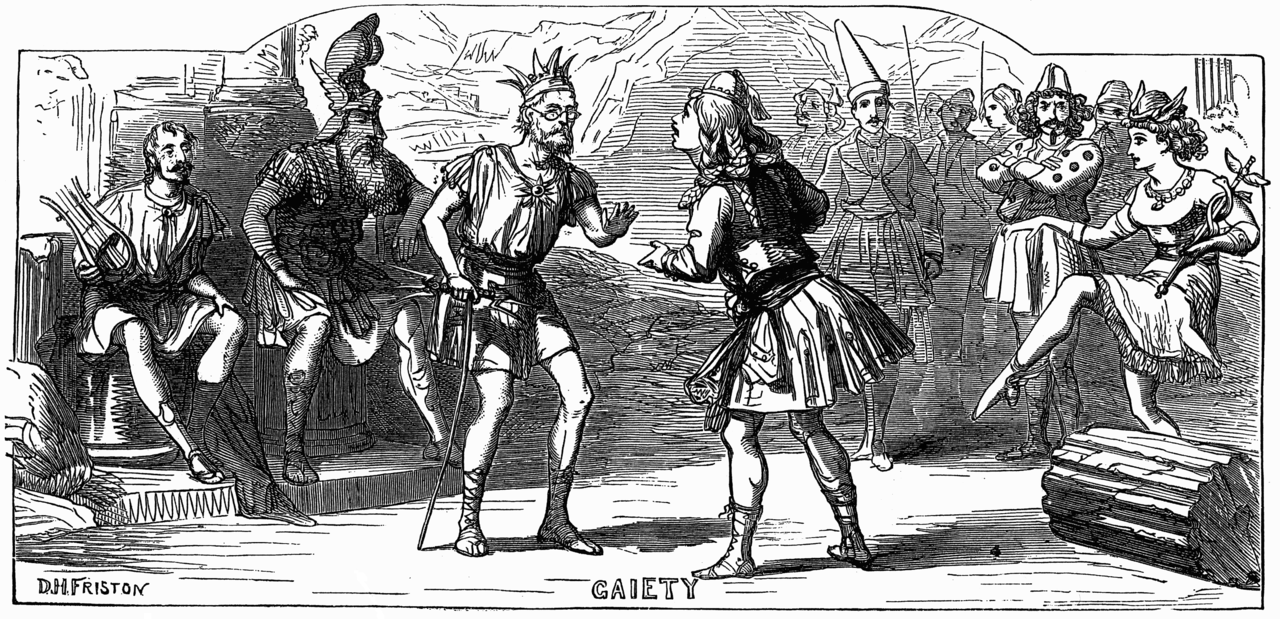


Setting and plot
The operetta is set on Mount Olympus and revolves around an itinerant acting troupe that temporarily takes over the duties of the old gods. Gilbert's libretto plays with themes of role‑playing, the inversion of authority, and theatrical illusion — motifs that would recur in later collaborations. The drama contrasts the theatrical company's practical, contemporary approach with the faded pomposity of antique divinity, producing comic situations and social satire in a mythic framework.
Composition, premiere and reception
Commissioned in 1871 by John Hollingshead for the Gaiety Theatre, the show opened with limited rehearsal time and modest staging. It ran for around 65 performances and, while reviewers praised its wit and the imaginative staging, the piece did not achieve the long runs later Gilbert and Sullivan works would enjoy. The premiere is documented in contemporary accounts and is commonly discussed in histories of Victorian musical theatre. For background material, see the production archive entries at source and descriptive summaries at related resources.
Loss of the score and surviving material
Unlike the later operettas, most of Sullivan's original score for Thespis is lost. Only the libretto and a few musical fragments remain with certainty. Because of this scarcity, the work cannot be performed in its original musical form. Musicologists and theatre historians have attempted reconstructions by assembling surviving fragments, adapting Sullivan's music from other works, or composing replacement music in a Sullivanian style. Scholarly commentary and attempts at reconstruction are discussed in studies accessible via specialist literature.
Legacy and notable facts
- Thespis inaugurated the long collaboration between Gilbert and Sullivan and so occupies an important place in the development of English comic opera.
- Its lost score has made the operetta a subject of fascination for historians, prompting modern pastiches and reconstructed performances.
- Although incomplete, the surviving libretto reveals themes and comic devices that Gilbert would refine in later, better‑known works.
Because the music is largely missing, Thespis is most often studied as a literary and theatrical milestone rather than as a regularly performed musical work. Its historical role in launching Gilbert and Sullivan's partnership ensures ongoing interest from scholars, performers and enthusiasts of Victorian theatre.
Related articles
Author
AlegsaOnline.com Thespis — the first Gilbert and Sullivan operetta Leandro Alegsa
URL: https://en.alegsaonline.com/art/99331