
Theodore Sturgeon
American science fiction and fantasy writer known for lyrical prose, human-centered stories, and 'Sturgeon's Law'; author of More Than Human and influential short fiction.
Overview
Theodore Sturgeon (February 26, 1918 – May 8, 1985) was an American writer whose work stretched across science fiction, fantasy, and mainstream short fiction. He became noted not only for imaginative plots but for a strong emphasis on character, emotion and ethical questions. Sturgeon's name is widely recognized in genre history thanks to both his fiction and a memorable aphorism that summarizes his attitude toward quality in creative work.
Image gallery
5 Images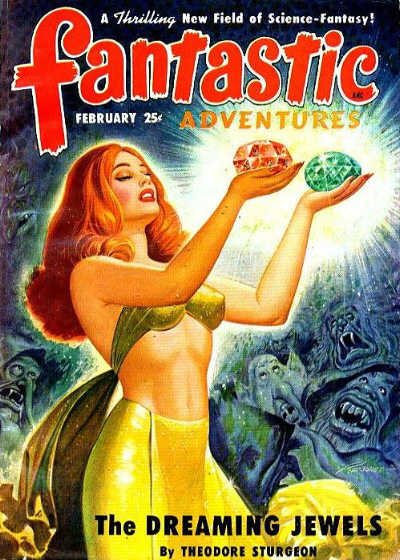


Style and themes
Sturgeon's prose is often described as lyrical or "rhythmic," blending poetic cadence with conventional narrative. He favored scenes of intimate feeling, psychological depth and moral nuance rather than merely technological spectacle. Common themes include human empathy, transformation, sexuality, and the idea that small groups or unusual individuals can create a new kind of community or consciousness.
Major works
- More Than Human (1953) — a novel assembled from connected shorter pieces that explores the emergence of a gestalt intelligence from disparate human beings.
- "Baby Is Three" and other linked novellas — several shorter works served as building blocks for longer narratives and illustrate Sturgeon's focus on found families and psychic bonds.
- "Killdozer!" and numerous short stories — Sturgeon produced acclaimed tales for pulp and magazine markets that mixed horror, satire and science-fictional premises.
History and publication
Sturgeon began publishing in pulp magazines and gradually moved into more literary and adult-oriented venues. Over decades he published hundreds of short stories and several novels, often revising and reworking shorter pieces into longer forms. Readers and editors praised his ability to bring tenderness and moral questioning to speculative situations.
Legacy and notable facts
Sturgeon left a lasting influence on subsequent writers of speculative fiction, particularly those who emphasize character and psychological realism. He is also remembered for "Sturgeon's Law," an often-quoted maxim about quality in culture. For further reading see biographies and bibliographies and a detailed bibliography of his work.
Questions and answers
Q: Who was Theodore Sturgeon?
A: Theodore Sturgeon was an American science fiction author.
Q: What was Theodore Sturgeon's writing style?
A: Theodore Sturgeon's writing style was rhythmic prose, which is a type of writing that incorporates poetry rhythms and meters.
Q: How did Theodore Sturgeon's writing style affect the mood of his text?
A: Theodore Sturgeon's writing style made subtle shifts in mood by incorporating poetry rhythms and meters into his prose text.
Q: Did readers often notice the shift in mood caused by Theodore Sturgeon's writing style?
A: No, usually readers did not notice how the timing of the words changed their feeling.
Q: What is Theodore Sturgeon's most famous novel?
A: Theodore Sturgeon's most famous novel is More Than Human, which was published in 1953.
Q: Was Theodore Sturgeon only known for writing science fiction?
A: Yes, Theodore Sturgeon was only known for writing science fiction.
Q: When was Theodore Sturgeon born and when did he pass away?
A: Theodore Sturgeon was born on February 26, 1918, and he passed away on May 8, 1985.
Related articles
Author
AlegsaOnline.com Theodore Sturgeon Leandro Alegsa
URL: https://en.alegsaonline.com/art/99247
Sources
- physics.emory.edu : Theodore Sturgeon, Storyteller.
- physics.emory.edu : Theodore Sturgeon FAQ
- gwillick.com : Obituary
- amazon.com : Solicitation