
Theodoric the Great: Ostrogothic King and Ruler of Italy
Theodoric the Great (c. 454–526) led the Ostrogoths, ruled Italy after defeating Odoacer, preserved Roman administration, supported Arian Christianity, and left a lasting cultural and political legacy.
Overview: Theodoric the Great (traditionally c. 454–526) was a leading figure of the late antique world who combined Gothic kingship with Roman office. Known in Roman contexts as Flavius Theodoricus, he governed the Ostrogoths and, after his conquest of Italy, acted as its de facto ruler until his death.
Rise to power: Raised during a period of shifting alliances, Theodoric became king of the Ostrogoths in 488. After campaigns against the Germanic chieftain Odoacer, he secured control of Italy by 493. His ascent followed decades of movement, warfare and negotiation among Germanic groups and the Eastern Roman Empire.
As king of the Ostrogoths and later as a ruler in Italy, Theodoric tried to balance Gothic military strength with Roman institutions. He maintained much of the imperial bureaucracy, confirmed privileges of the senatorial class and issued laws that aimed to stabilize social and economic life across diverse populations.
Government, religion and diplomacy: Ruling Italy from Ravenna, Theodoric styled himself a Roman-style monarch while preserving Gothic traditions. He promoted Arianism among his people but generally pursued a policy of legal pluralism for Roman Catholics. He also served as a patron of building and the arts. Diplomatically he acted as a bridge between Goths and Romans and later served as regent for allied rulerships, including a period as regent of the Visigoths.
Legacy and controversies: His reign is marked by cultural patronage—churches and mosaics in Ravenna reflect his era—and by political tensions, such as the trial and execution of the philosopher Boethius and conflicts with parts of the Roman elite. He arranged dynastic marriages (notably involving his daughter Amalasuntha) to secure alliances.
Image gallery
10 Images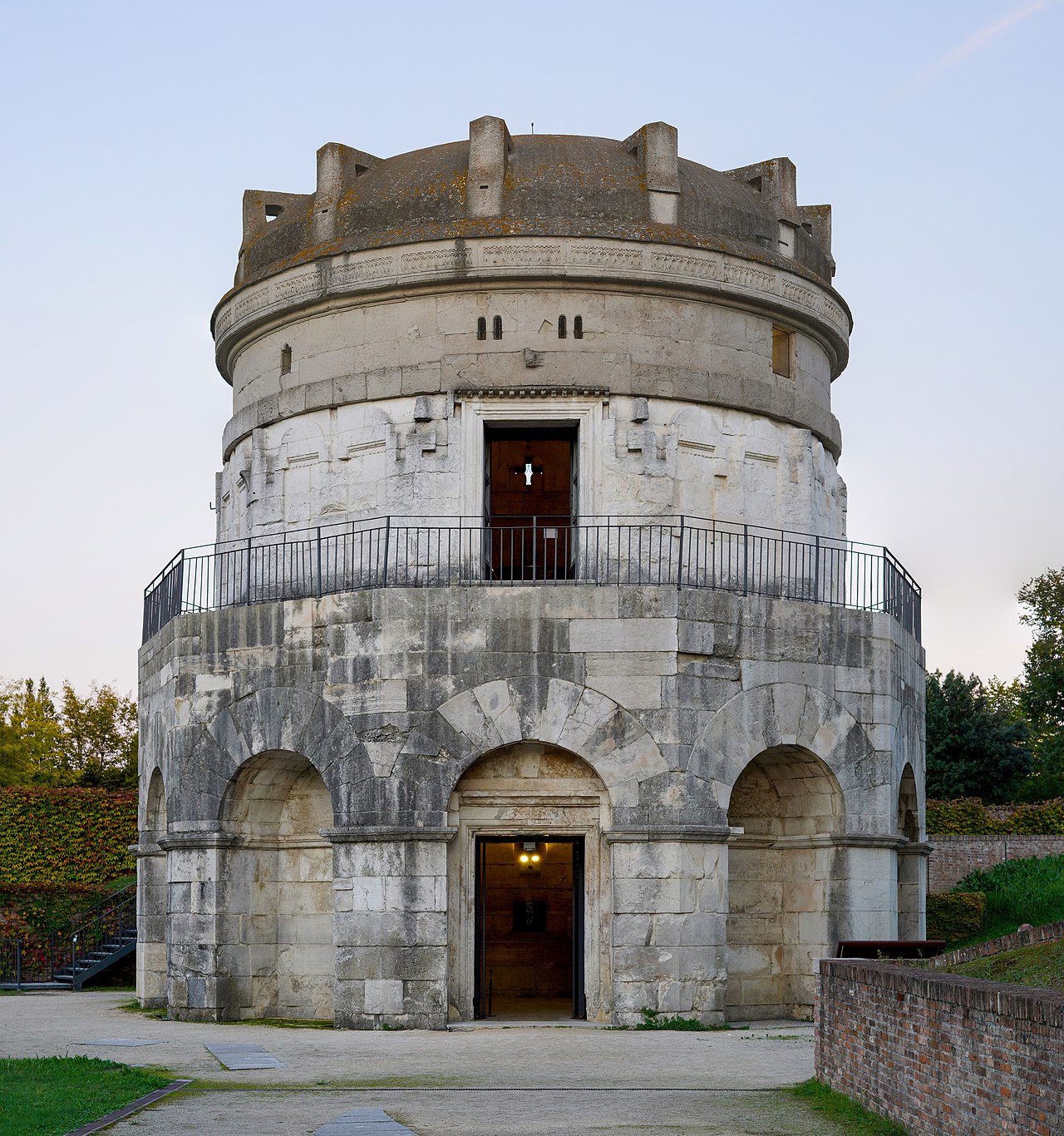




Notable facts
- Theodoric combined Germanic kingship with Roman administrative models, helping preserve Roman law and governance.
- He ruled Italy from 493 to 526 and kept a formal relationship with the Eastern Roman emperors while exercising independent authority.
- His religious policy favored Arian Christianity for Goths while allowing many Roman practices to continue; see Arianism for context.
- After his death in 526 his dynasty weakened and Italy later became the focus of the Byzantine reconquest in the following decades.
Theodoric's reign remains significant for how it exemplifies the blending of Roman and Germanic institutions during the transition from antiquity to the early medieval period. For concise introductions and primary-source discussions see general histories and collections of late antique documents (ruler of Italy, Flavius Theodoricus, king of the Ostrogoths).
Related articles
Author
AlegsaOnline.com Theodoric the Great: Ostrogothic King and Ruler of Italy Leandro Alegsa
URL: https://en.alegsaonline.com/art/99249