
The Merry Wives of Windsor
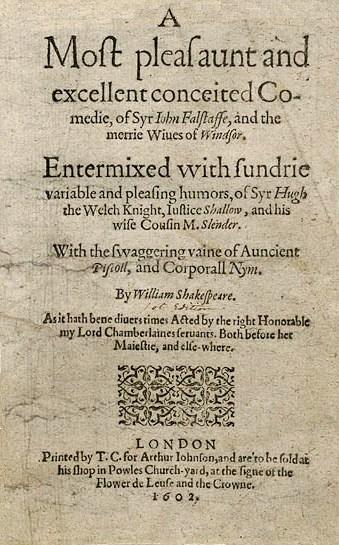
A comic play by William Shakespeare, featuring Sir John Falstaff's schemes, domestic satire, and farcical tricks; first performed around 1600–1601 and printed in 1602.
Overview
The Merry Wives of Windsor is a comic stage play by William Shakespeare. It is generally classified as a comedy and centers on urban and domestic life in the English town of Windsor. The play is best known for the misadventures of Sir John Falstaff, whose attempts at seduction and self-enrichment produce a series of humorous humiliations.
Image gallery
10 Images





Plot and principal characters
At the heart of the action are two married women, Mistress Ford and Mistress Page, who discover that the roguish Falstaff is writing them identical love letters and trying to extort money by insinuating affairs. Rather than suffer him, the women conspire to trick and expose him. The play also follows several secondary strands, including the romantic difficulties surrounding Anne Page and a parade of rivals for her hand.
- Sir John Falstaff — boastful, cowardly, and comic
- Mistress Ford and Mistress Page — clever, resourceful wives
- Master Ford — jealous husband
- Anne Page — young woman whose marriage is contested
Style, themes and structure
The play combines broad farce, disguise and trickery with local color and social satire. Much of the dialogue is in prose, and the humour relies on misunderstandings, practical jokes and public embarrassment more than on the romantic reconciliation typical of some of Shakespeare's other comedies. Themes include marital fidelity, social reputation and the contrast between town life and pretended courtliness.
History and composition
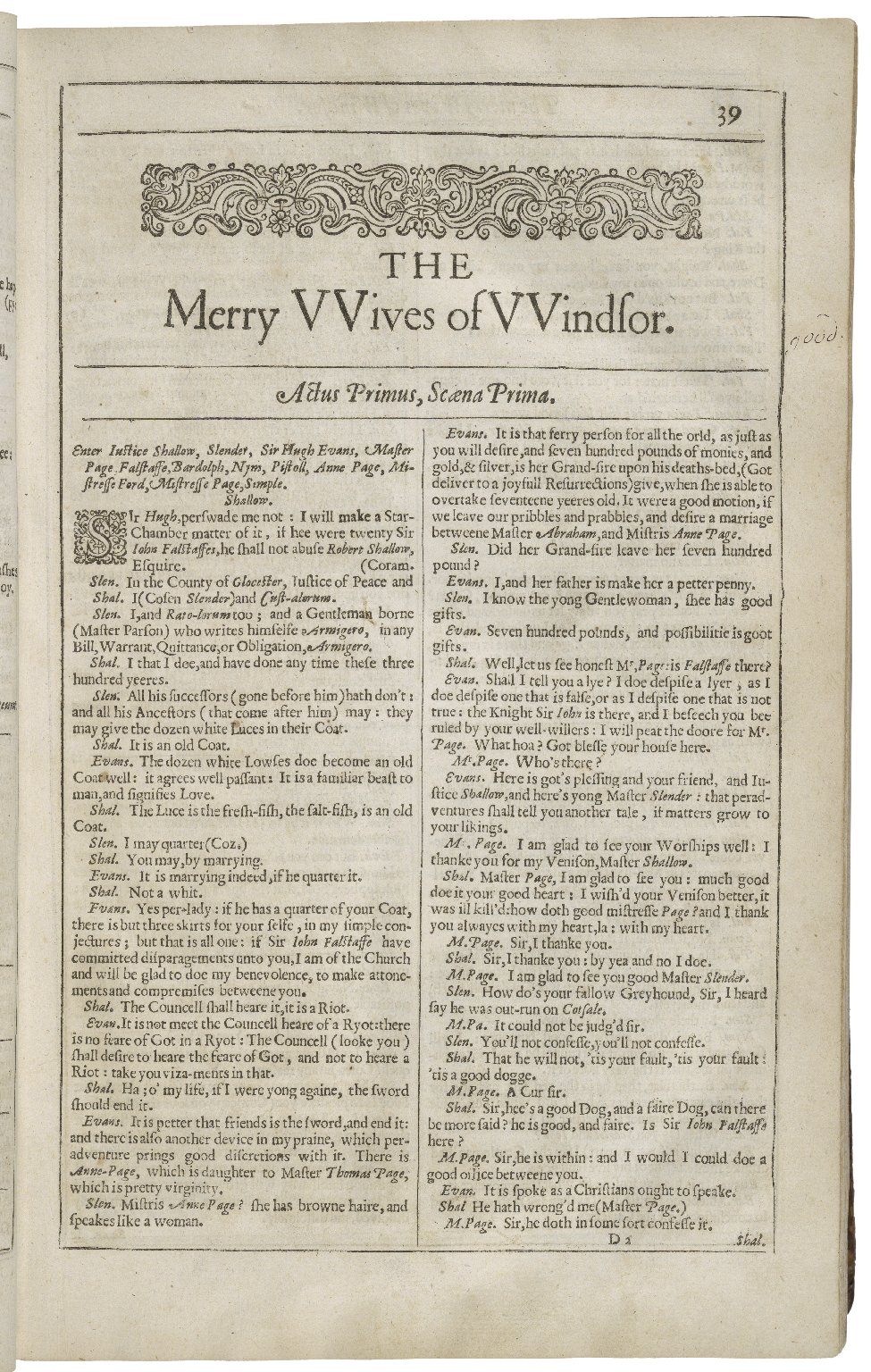
Scholars place the earliest performances in the early 1600s; it was first printed in 1602. Tradition links the play to an entertainment performed before the court of Queen Elizabeth I, and some contemporary accounts suggest Falstaff was a favourite with that audience. Exact circumstances and date of composition remain subjects of cautious scholarly discussion rather than settled fact.
Performance, adaptations and legacy
The work has been staged and adapted in many forms, from straightforward period productions to modernized reinterpretations. It also influenced later artists: for example, Verdi and other composers drew on Falstaff's comic material. Critics often regard this play as lighter and more episodic than Shakespeare's major comedies, but its vivid comic scenes and memorable character of Falstaff have kept it in the repertory.
Notable facts
Unlike Falstaff's appearances in the history plays, here he is placed in a contemporary domestic setting, which emphasizes comic vulnerability rather than political consequence. The play's combination of middle-class detail and high-spirited farce makes it a distinctive entry in Shakespeare's dramatic range. For further reading see general references to the play as a play and as a comedy.
Related articles
Author
AlegsaOnline.com The Merry Wives of Windsor Leandro Alegsa
URL: https://en.alegsaonline.com/art/98452
Sources
- william-shakespeare.info : The Merry Wives of Windsor