
The Last House on the Left (1972 film)
A controversial low‑budget 1972 horror film directed by Wes Craven, produced by Sean S. Cunningham, noted for its brutal revenge story, exploitation style, and lasting influence on modern horror.
Overview
The Last House on the Left is a 1972 American film often categorized as horror and exploitation. Written and directed by Wes Craven and produced by Sean S. Cunningham, it tells a raw, revenge‑driven story that challenged viewers and censors when it first appeared. The picture was made on a small budget and deliberately adopted a gritty, documentary‑like aesthetic.
Image gallery
3 Images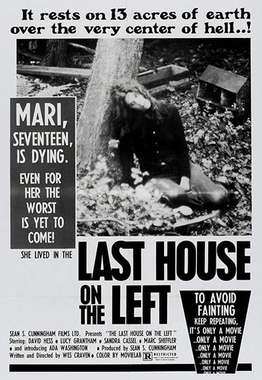


Plot and themes
The narrative follows a violent crime against two young women and the subsequent retribution visited upon the perpetrators by the victims' families. The film explores themes of vengeance, moral ambiguity, and the effects of violence on ordinary people. Its structure and tone were influenced by earlier avenging‑innocent narratives and drew attention for refusing to sanitize brutal events.
Production and release
As an independent production, the movie used nontraditional casting and economical production techniques to create a sense of immediacy. Upon release it provoked polarized responses: some critics condemned its explicitness while others defended its raw power and social commentary. The film encountered censorship and was restricted or cut in several territories.
Cast and characters
- Sandra Peabody – one of the young female leads
- Lucy Grantham – co‑lead
- David A. Hess – played a primary antagonist
- Jeramie Rain, Fred Lincoln, Marc Sheffler – supporting roles
Reception and legacy
Initially controversial and often derided, the film has since been reassessed by many critics and scholars as an influential landmark in American horror cinema. It helped launch the careers of its director and producer and opened debates about violence on screen, realism, and audience responsibility. A commercially released remake appeared decades later, reaffirming the story's continued cultural resonance.
Notable facts
- The movie is frequently cited in discussions of exploitation cinema and independent horror.
- Its uncompromising style made it subject to cuts, bans, and moral panic in parts of the world.
- Despite early controversy, it is regarded as a formative film in the careers of several filmmakers and actors.
Related articles
Author
AlegsaOnline.com The Last House on the Left (1972 film) Leandro Alegsa
URL: https://en.alegsaonline.com/art/98303