
The History of Middle-earth: J.R.R. Tolkien's Drafts and Christopher Tolkien's Edition
A guide to the twelve-volume History of Middle-earth, edited by Christopher Tolkien, explaining its structure, contents, editorial approach, significance for Tolkien studies, and remaining archival material.
Overview
The History of Middle-earth is a twelve-volume editorial project that collects and analyzes the evolving drafts, notes, poems and essays J.R.R. Tolkien produced while developing his legendarium. Published between 1983 and 1996 and assembled by his son Christopher Tolkien, the series traces how early ideas grew into the narratives and languages familiar from The Hobbit, The Silmarillion and The Lord of the Rings. Far more than a simple reprint, the set presents variant texts, authorial revisions and extended commentary that illuminate Tolkien’s creative process.
Image gallery
1 Image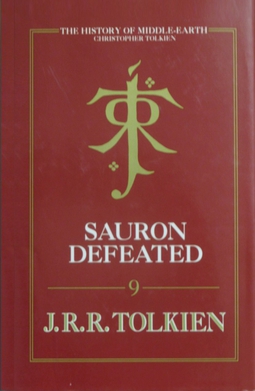
Contents and structure
Each volume combines primary manuscript texts with editorial notes and cross-references. The series includes long narrative drafts (for example, the Book of Lost Tales), poetic compositions and mythic lays, linguistic fragments, chronological annals and analytical essays. Readers will find early versions of major tales, long-deleted episodes, genealogies and developing cosmogonies, plus Christopher Tolkien’s explanations that place each extract in the wider compositional sequence.
Volume list
- The Book of Lost Tales 1 (1983)
- The Book of Lost Tales 2 (1984)
- The Lays of Beleriand (1985)
- The Shaping of Middle-earth (1986)
- The Lost Road and Other Writings (1987)
- The Return of the Shadow (The History of The Lord of the Rings v.1) (1988)
- The Treason of Isengard (v.2) (1989)
- The War of the Ring (v.3) (1990)
- Sauron Defeated (v.4) (1992)
- Morgoth's Ring (The Later Silmarillion v.1) (1993)
- The War of the Jewels (The Later Silmarillion v.2) (1994)
- The Peoples of Middle-earth (1996)
Editorial method and sources
Christopher Tolkien selected, transcribed and organized thousands of manuscript pages, showing successive redrafts and variant directions that his father explored. His editorial apparatus combines faithful transcription with interpretive commentary: dates, conjectural reconstructions and references to related fragments. The published volumes are drawn from material now housed in several archives and private collections; however, not every piece of Tolkien’s papers appears in the series, and further manuscripts remain held in library collections or specialist repositories.
Importance and readership
The set is essential for scholars, linguists and dedicated readers who wish to follow Tolkien’s revisions, study language creation, or understand how mythic themes and characters were reshaped over decades. For general readers The History of Middle-earth can be demanding: it is deliberately scholarly and fragmentary, aimed at revealing process rather than presenting finished narratives. Many later editions of Tolkien’s mythic corpus benefited from the insights the series provides.
Notable facts and remaining materials
Among the materials discussed in the commentary are the long development of Númenor, the shifting cosmology behind Aman and Valinor, and alternate histories of key characters and events. Some texts and working papers were left unpublished or are preserved in institutional archives such as the Bodleian Library and university collections, and in specialist circles like linguistic fellowships that study Tolkien’s invented languages. Readers seeking a complete picture should consult the published volumes alongside archival catalogues and scholarly studies that reference extant manuscripts.
Related articles
Author
AlegsaOnline.com The History of Middle-earth: J.R.R. Tolkien's Drafts and Christopher Tolkien's Edition Leandro Alegsa
URL: https://en.alegsaonline.com/art/98149