
The History of Rock and Roll (radio documentary)
A landmark syndicated radio documentary first broadcast in 1969 that traced rock and roll from its 1950s origins through the 1960s, known for its long format, interviews, and the coining of the term "rockumentary."
Overview
The History of Rock and Roll was an ambitious radio documentary that presented a chronological narrative of rock and roll music from its early roots into the late 1960s. Produced by Bill Drake and Gene Chenault, the program debuted in February 1969 and was promoted as a comprehensive audio history of the genre. Its producers described the format as a "rockumentary," a portmanteau that helped popularize long-form documentary approaches to popular music on radio and later media.
Image gallery
1 Image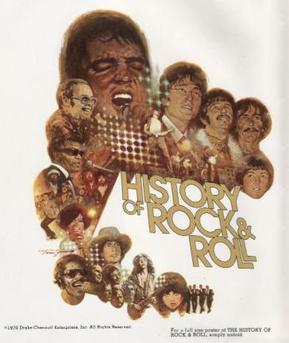
Format and content
The show combined music clips, contemporary hit recordings, narration, and recorded interviews with musicians, producers, and other industry figures. The original 1969 edition ran across multiple days in a multi-hour block, assembling both well-known hits and illustrative examples to tell a largely chronological story. A later version produced in 1978 expanded the runtime and updated the narrative to include later developments.
Broadcast history and syndication
The program first aired on Los Angeles radio station KHJ on February 21–23, 1969 and was subsequently carried by many other stations across the United States that year. Producers marketed the package for syndication, enabling stations to present a ready-made, immersive retrospective for listeners who wanted a deeper context for the songs they heard every day. Information about distribution and station lists was circulated in radio-industry outlets of the era; many markets scheduled the documentary during special programming weeks or over holiday periods.
Features and notable elements
- Long-form radio documentary structure that could run for multiple consecutive hours.
- Use of interviews and first-person recollections to supplement narration.
- Chronological storytelling from early rock and roll to the contemporary scene of the broadcast.
- Updates and extended editions that reflected ongoing changes in popular music.
Impact and legacy
The program is remembered as one of the earliest large-scale attempts to document rock and roll on radio, helping to establish documentary techniques for music programming and to legitimize popular music as a subject of historical study. Its label as a "rockumentary" influenced later radio specials, television pieces, and written histories that adopted a similar narrative mix of music, commentary, and interview. For listeners and broadcasters, it provided a model for how to present the story of a living, evolving musical culture in an accessible audio format.
For further information and archival references about the program itself, see the program entry and related resources: program overview, background on rock and roll, and an explanation of the "rockumentary" approach here.
Questions and answers
Q: What is "The History of Rock & Roll"?
A: "The History of Rock & Roll" is a radio documentary about rock and roll music.
Q: When was it first broadcast?
A: It was first broadcast in 1969.
Q: How long was the 1969 version?
A: The 1969 version was 48 hours long.
Q: How long was the 1978 version?
A: The 1978 version was 52 hours long.
Q: Who produced the show?
A: Producers Bill Drake and Gene Chenault produced the show.
Q: How did they refer to the show?
A: They referred to the show as a "rockumentary".
Q: Which radio station first broadcasted the show?
A: Los Angeles radio station KHJ first broadcasted the show on February 21-23, 1969.
Related articles
Author
AlegsaOnline.com The History of Rock and Roll (radio documentary) Leandro Alegsa
URL: https://en.alegsaonline.com/art/98150
Sources
- reelradio.com : "The Reel Top 40 Radio Repository - The History of Rock and Roll Demo"
- latimes.com : "Bill Drake dies at 71; 'Boss Radio' inventor spread less-talk format across country - Los Angeles Times"
- 93khjhistoryofrockandroll.com : "93/KHJ The History of Rock & Roll"