
The Gunfighter (1950 film)
A concise encyclopedia-style article about The Gunfighter (1950), a Henry King western starring Gregory Peck; its themes, principal cast, production context, and legacy.
Overview
The Gunfighter is a 1950 American Western film directed by Henry King and released by 20th Century Fox. The movie centers on an aging, infamous gunslinger attempting to leave his violent past behind and live a quieter life, only to find that reputation and the demands of others make escape difficult. Praised for its measured storytelling and moral focus, the film marked a turn toward more psychologically complex portrayals of Western heroes in postwar cinema.
Image gallery
1 Image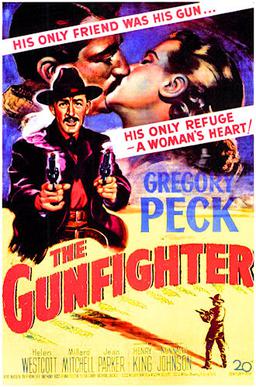
Cast and principal contributors
The film stars Gregory Peck in the lead role and features strong support from a compact ensemble cast. Key performers include:
- Karl Malden
- Helen Westcott
- Jean Parker
- Millard Mitchell
- Richard Jaeckel
- Ellen Corby
Themes and style
Rather than relying on action alone, the picture emphasizes character, reputation, and the costs of violence. It conveys a quieter, more introspective tone than many earlier Westerns, using restrained pacing and pointed dialogue to explore how myth and celebrity can trap an individual. The cinematography and direction favor practical, economical staging, which highlights faces and interactions over spectacle.
Production and reception
Directed by Henry King and produced under the banner of 20th Century Fox, the film was part of a wave of postwar Westerns that probed moral ambiguity and social consequences. Contemporary critics applauded the performances—particularly the lead—and the film received industry recognition when it was nominated for an Academy Award in 1951. Audiences and scholars have since regarded it as an important stepping stone toward more psychologically driven Westerns.
Legacy and notable facts
The film is often noted for helping to redefine the gunfighter archetype from a romanticized adventurer into a more tragic, human figure. Filmmakers and critics point to its influence on later Westerns that examine the personal toll of a violent life. It remains a frequently cited example in studies of genre evolution and mid-century American film.
Why it matters
For students of film and fans of the Western, The Gunfighter offers an accessible yet layered work that bridges classic Western motifs and modern thematic concerns. Its compact cast, restrained direction, and moral complexity make it an instructive title for understanding how American cinema began to question its own myths during the mid-20th century.
Related articles
Author
AlegsaOnline.com The Gunfighter (1950 film) Leandro Alegsa
URL: https://en.alegsaonline.com/art/98115