
The Happy Years (1950 film)
A 1950 romantic comedy directed by William A. Wellman, adapted from Owen Johnson's novel The Varmint; a coming-of-age, boarding-school story produced and released by Metro-Goldwyn-Mayer.
Overview
The Happy Years is a 1950 American romantic comedy film directed by William A. Wellman and released by Metro-Goldwyn-Mayer. It is an adaptation of Owen Johnson's early 20th-century novel The Varmint, a coming-of-age tale set in a preparatory school. The picture blends gentle humor and sentimental drama to portray youth, friendship and the rites of passage associated with adolescence.
Image gallery
1 Image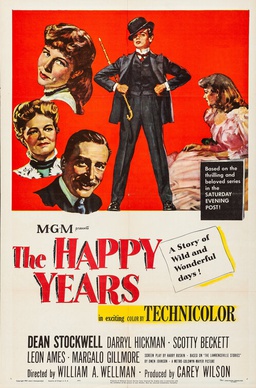
Source and adaptation
The film takes its inspiration from Johnson's novel, which focuses on the experiences of a young student navigating school life, authority figures and personal growth. For its cinematic version, studio writers and filmmakers condensed episodes of the book into a tighter narrative that emphasized warmth and nostalgia—an approach common for studio-era adaptations intended to appeal to family audiences.
Cast and performances
The cast includes a mix of juvenile players and seasoned character actors. Notable names in the billing are:
- Dean Stockwell — one of the film's youthful leads and a performer who began his career as a child actor.
- Darryl Hickman — another young performer represented among the student ensemble.
- Scotty Beckett — part of the supporting group portraying schoolmates.
- Leon Ames — an established character actor who played adult authority figures in many films of the period.
- Leo G. Carroll — a recognizable presence in supporting roles across Hollywood productions.
- Robert Wagner — appearing early in his long career, before later becoming a leading man.
Production and studio context
Produced and distributed by Metro-Goldwyn-Mayer, the film is typical of late-1940s and early-1950s studio fare that favored polished production values, accessible storytelling and dependable box-office appeal. William A. Wellman, the director, was known for a broad range of work; this film represents a lighter, nostalgic side of his output compared with his grittier dramas.
Reception and legacy
While not usually cited among the most famous films of its era, The Happy Years has been remembered as a pleasant, family-oriented adaptation of a classic school story. It offers insight into how Hollywood translated popular literature into wholesome entertainment and showcases several actors at formative stages of their careers. The change in title from the novel to the film reflects a studio preference for optimistic, audience-friendly names.
Notable aspects
The film illustrates postwar Hollywood's taste for nostalgic narratives and for-on-screen portrayals of adolescence. It is also of interest to students of film history for its adaptation choices, casting of juvenile performers alongside veteran character actors, and as part of MGM's mid-century catalog. For further reference on cast members and production details, consult archival resources and studio records.
Related articles
Author
AlegsaOnline.com The Happy Years (1950 film) Leandro Alegsa
URL: https://en.alegsaonline.com/art/98124