
The Fall of Nineveh (poem)
A long 19th‑century epic by English poet Edwin Atherstone that dramatizes the collapse of the Assyrian capital and explores war, tyranny, and fate in grand, elevated verse.
Overview
The Fall of Nineveh is a lengthy narrative poem by the English poet Edwin Atherstone. Written in the spirit of classical and Romantic epic, it recounts the destruction of the Assyrian capital Nineveh as a sweeping historical drama. The work reimagines ancient events as a stage for moral and political reflection, combining vivid battle scenes with reflections on power and collapse.
Image gallery
1 Image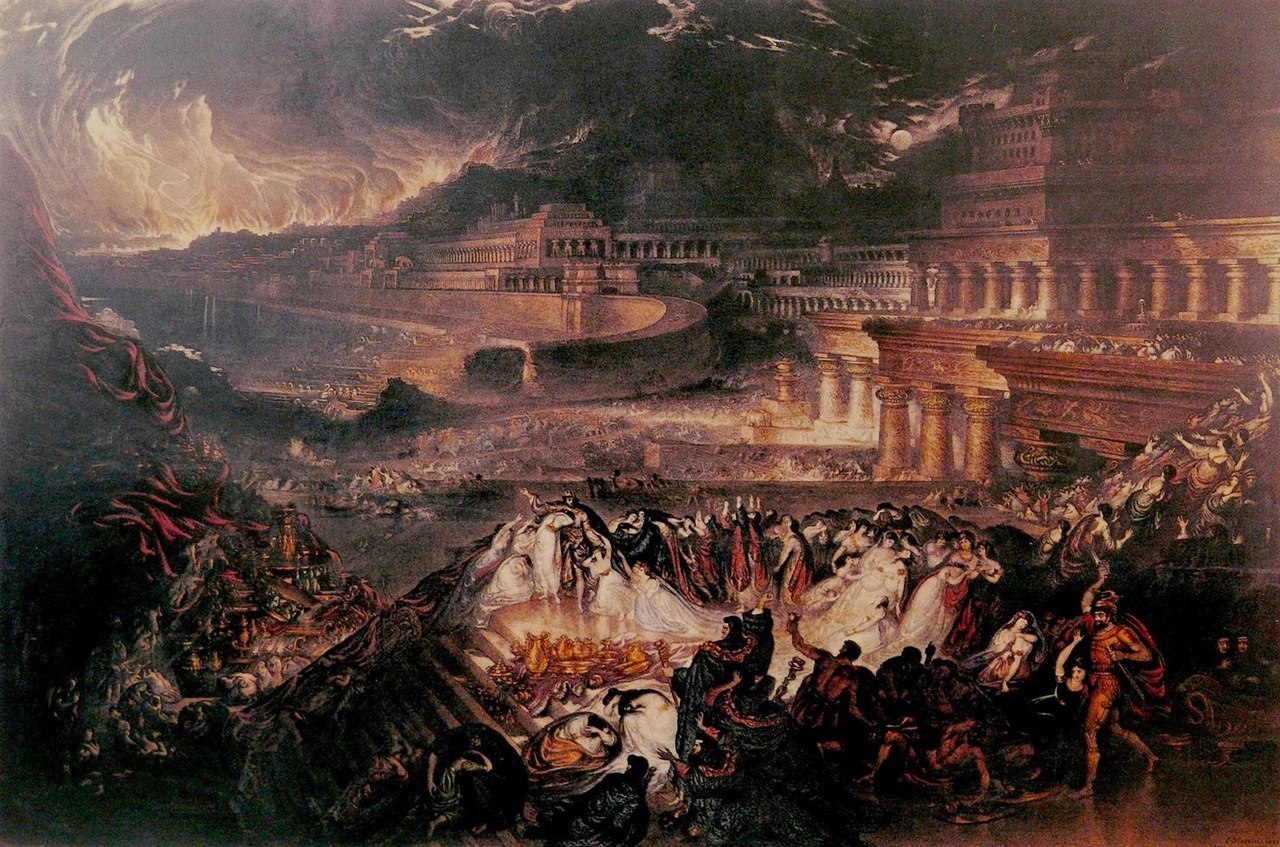
Form and style
The poem employs elevated diction and rhetorical devices associated with epic and historical narrative. Its lines favor long descriptive passages, dramatic speeches and panoramic tableaux of war. Atherstone draws on conventions of classical epic and Romantic poetic feeling, emphasizing spectacle, moral interpretation and the communal consequences of conflict rather than intimate personal lyricism.
Historical context
The subject—Nineveh's fall—derives from a real event in the ancient Near East: the capture and destruction of the Assyrian capital by rival powers in the early 7th century BCE. Atherstone's account is a poetic reconstruction rather than a closely sourced historical narrative; he adapts ancient history to explore ideas current in the 19th century about empire, savagery and civilization.
Themes and significance
Major themes include the consequences of imperial hubris, the suffering inflicted by large‑scale war, and the idea of historical justice or retribution. The poem frames the collapse of a great power as both a political turning point and a moral lesson. Atherstone also dwells on communal loss and the cost of violent change, presenting human experience amid grand events.
Reception and legacy
In its own time the poem was noticed for ambition and scope but has been largely overshadowed by better‑known Romantic and Victorian poets. Modern readers and scholars who encounter the work often remark on its scale, its dramatic battle scenes, and its earnest moral tone. It is sometimes cited as an example of 19th‑century interest in epic re‑creations of antiquity.
Notable features
- Exceptional length and sustained narrative ambition compared with typical narrative poems of the period.
- Frequent use of panoramic description to convey military and civic destruction.
- Emphasis on moral commentary and historical interpretation rather than intimate psychological portraiture.
Readers approaching The Fall of Nineveh should expect a work that privileges spectacle and historical meditation. For more information about the poet and different editions, follow the author link above or consult specialized studies of 19th‑century epic poetry.
Related articles
Author
AlegsaOnline.com The Fall of Nineveh (poem) Leandro Alegsa
URL: https://en.alegsaonline.com/art/97951