
Fantastic Four: Marvel’s First Family of Superheroes
Overview of the Fantastic Four: origins, core members and powers, publication history, adaptations, and their place in comic-book culture.
Overview
The Fantastic Four are a fictional superhero team that helped launch the modern Marvel Universe. Conceived by comic-book creators Stan Lee and Jack Kirby, the group first appeared in Marvel Comics publications in the early 1960s. Their stories combined science fiction, family dynamics, and super-powered adventure, and established a template for character-driven superhero serials.
Image gallery
2 Images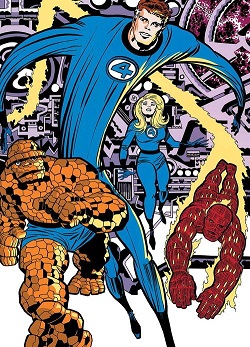

Origins and concept
The team's origin is simple and emblematic: four individuals in an experimental spacecraft are exposed to intense cosmic rays, an event that gives them extraordinary superpowers. Rather than remaining isolated, they choose to use their abilities to protect others and to investigate cosmic and terrestrial threats. This blend of everyday interpersonal drama with outlandish science-fiction hazards became a hallmark of their stories.
Team members and abilities
The core lineup consists of four characters whose personalities and powers create a distinctive group dynamic:
- Reed Richards (Mr. Fantastic) — a brilliant scientist and leader, able to stretch his limbs and torso to incredible lengths and shapes. Stretching is his primary power, often used inventively in both combat and problem solving.
- Susan Storm (Invisible Woman) — originally called the Invisible Girl, she can render herself unseen and generate powerful invisible barriers and force fields; her control of her body's interaction with light and energy is central to many plots.
- Johnny Storm (Human Torch) — Susan’s younger brother, who can engulf himself in flame, fly, and project fiery blasts; his powers combine pyrokinesis with aerial mobility, making him impulsive and charismatic.
- Ben Grimm (The Thing) — a former pilot and close friend of Reed’s, transformed into a strong, durable, rock-like creature with tremendous physical power; his gruff exterior hides a loyal and often melancholy heart.
They operate from a scientific base and headquarters, typically portrayed as a well-equipped laboratory within a prominent skyscraper in New York City, balancing heroic missions with personal relationships and scientific inquiry.
Publication history and cultural impact
Debuting at a moment when superhero comics were evolving, the Fantastic Four helped shift tone and storytelling toward serialized character development. Their early adventures mixed urban threats, interstellar villains, and moral dilemmas. Over decades, the team has appeared across many comic series runs and reboots, influencing how superhero teams are portrayed in comics and other media.
Adaptations and notable facts
Beyond comics, the Fantastic Four have been adapted into animated television series, live-action films, and merchandise. These adaptations have varied in tone and reception but have kept the core idea of a family-like quartet whose powers and personalities contrast and complement one another. Their creation by two of the medium’s most influential figures has made them central to discussions of comic-book history and the development of the Marvel brand.
Why the team matters
The Fantastic Four are important not only for their early commercial success but for demonstrating that superhero stories could mix science, character conflict, and serialized plots while remaining entertaining. Their combination of a research-focused base, the interplay of genius and brute force, and a domestic sensibility set them apart from many contemporary teams and helped shape generations of comic-book storytelling.
Further reading and archival material are available through historical and fan resources; for creator biographies, publishing history, technical topics like Marvel Comics' evolution, or scientific elements referenced in their origin such as cosmic rays, consult specialized collections and annotated editions. For creator-focused material see Stan Lee and Jack Kirby, and for in-universe locations and props consult entries on their headquarters and equipment (laboratory, skyscraper, New York City settings).
Notes: the team’s public image emphasizes both their superhuman attributes and the human relationships between members. For additional context on powers and archetypes visit resources on superpowers, physiological portrayals such as stretching or control of the body, and the aesthetic of transformed characters like the rock-like hero.
Questions and answers
Q: Who are the members of the Fantastic Four?
A: The members of the Fantastic Four are Reed Richards, Sue Storm, Johnny Storm, and Ben Grimm.
Q: How did the Fantastic Four gain their superpowers?
A: The Fantastic Four gained their superpowers after they were affected by cosmic rays while test flying a rocket ship.
Q: Who created the Fantastic Four?
A: The Fantastic Four was created by Stan Lee and Jack Kirby.
Q: When was the Fantastic Four first published?
A: The Fantastic Four was first published by Marvel Comics starting in 1961.
Q: What are the superhero names of the Fantastic Four members?
A: Reed Richards is "Mr. Fantastic", Sue Storm is "Invisible Girl/Woman", Johnny Storm is the "Human Torch", and Ben Grimm is "The Thing".
Q: What do the superpowers of the Fantastic Four members allow them to do?
A: The superpowers of the Fantastic Four members allow them to stretch their limbs and body for long distances and sizes, become invisible, create force fields, become a giant ball of fire, and have super-strength.
Q: Where do the Fantastic Four work from?
A: The Fantastic Four work from their laboratory in a New York City skyscraper.
Related articles
Author
AlegsaOnline.com Fantastic Four: Marvel’s First Family of Superheroes Leandro Alegsa
URL: https://en.alegsaonline.com/art/97961