
The Cosmos Rocks (album) — Queen + Paul Rodgers
The Cosmos Rocks is the only studio album recorded by Queen with vocalist Paul Rodgers, released in 2008. It features 14 tracks, drew mixed-to-negative reviews, and has been part of the band's post‑Mercury era.
The Cosmos Rocks is a studio album credited to the collaboration known as Queen + Paul Rodgers. It was issued in Europe on 15 September 2008 and in North America on 28 October 2008. The record contains fourteen songs whose writing credits are shared among Brian May, Paul Rodgers and Roger Taylor. It stands as the only full studio album produced by the former members of Queen in partnership with Rodgers.
Image gallery
1 Image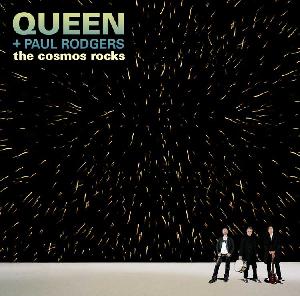
Background and context
After Freddie Mercury's death in 1991, the surviving members of Queen explored various projects and guest singers. In the mid‑2000s Brian May and Roger Taylor began working with British rock singer Paul Rodgers — known for his work with Free and Bad Company — bringing a different vocal and stylistic dynamic to the band. The partnership focused on touring older Queen material as well as creating new songs intended for a contemporary studio album.
Music, songwriting and production
The Cosmos Rocks presents a mixture of hard rock and blues‑tinged songs shaped by the three principal writers: May, Rodgers and Taylor. The album emphasizes guitar‑driven arrangements and Rodgers' distinct, soulful baritone rather than attempting to recreate Freddie Mercury's vocal character. Some tracks aim at classic rock anthems, while others lean toward straightforward rock and blues forms. Production choices and the overall sonic direction received attention because they marked a deliberate move away from the theatrical elements that characterized much of Queen's earlier work.
Release, promotion and touring
Released in staggered dates across regions in 2008, the album was supported by live performances under the Queen + Paul Rodgers banner. The group toured internationally, performing both new material and a selection of classic Queen songs reinterpreted with Rodgers on vocals. Promotional activity centered on showcasing the collaboration and the new studio material alongside the band's established catalogue.
Reception and legacy
Critical reaction to The Cosmos Rocks was mixed to largely negative: reviewers commonly praised the musicianship but critiqued the songwriting and questioned whether the record lived up to expectations tied to the Queen name. Commercially the album did not match the sales of classic Queen releases and had a modest chart impact compared with the band's earlier peaks. Nevertheless, it documents a clear chapter in Queen's post‑Mercury history and reflects an attempt by May and Taylor to move forward creatively with a respected rock singer.
Notable facts and further reading
- The album contains 14 tracks written by Brian May, Paul Rodgers and Roger Taylor.
- It is the only studio album featuring the collaboration of the former Queen members with Paul Rodgers.
- For more on the band and the release, see the artist page: Queen + Paul Rodgers overview.
- Regional release details can be found here: North American release information and European release information.
- Additional context on Paul Rodgers' career is available at: Paul Rodgers biography.
- Details about the contributions of Brian May and Roger Taylor are covered at: Brian May & Roger Taylor notes.
The Cosmos Rocks remains a distinct entry in Queen's catalogue: an album that reflects both the strengths and the limits of a high‑profile collaboration that attempted to blend different legacies of British rock.
Related articles
Author
AlegsaOnline.com The Cosmos Rocks (album) — Queen + Paul Rodgers Leandro Alegsa
URL: https://en.alegsaonline.com/art/97807