
The Crystal City (novel)
A 2003 alternate-history fantasy novel by Orson Scott Card; sixth in The Tales of Alvin Maker series, following Alvin Miller as he seeks to build a healing community in a magical early America.
The Crystal City is a 2003 novel by Orson Scott Card that blends alternate history and fantasy. It is the sixth volume in Card's long-running series The Tales of Alvin Maker, and continues the story of Alvin Miller, a prodigiously gifted man born the seventh son of a seventh son. The book follows Alvin's efforts to use his unusual powers to create a place of healing and social renewal in a reimagined early United States.
Image gallery
2 Images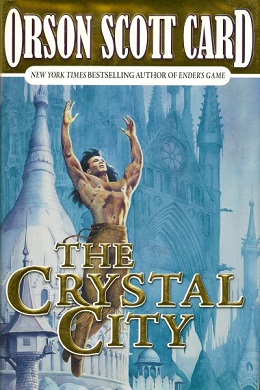

Setting and premise
The series creates an alternate North America in which folk magic and "knacks" are common and public life diverges from our historical timeline. Alvin's particular gift—often described as the power to "make"—positions him as a figure with near-messianic responsibility. In The Crystal City, this responsibility focuses on the practical and moral task of founding a settlement intended to repair personal and communal harm, restore balance, and demonstrate a different model of society.
Characteristics and themes
- Genre blend: the novel mixes alternate-history speculation with fantasy elements and moral allegory, a combination that shapes its characters and conflicts.
- Power and responsibility: Alvin's talents raise questions about leadership, free will, and the costs of trying to shape people and places.
- American identity: the book engages with early American politics, social institutions, and the legacy of expansion, reframing them through folklore and supernatural forces.
- Conflict: personal and metaphysical antagonists oppose Alvin's project, embodying resistance to change and the destructive tendencies the city aims to heal.
Readers will find recurring motifs from earlier volumes—such as the confrontation with a destructive supernatural force—and the gradual maturation of Alvin's vision. Card explores how extraordinary ability interacts with ordinary social problems like prejudice, law, and economic development.
As part of a continuing narrative by Orson Scott Card, The Crystal City advances long-term plotlines while also standing as a reflection on utopian planning and communal ethics. The book is often discussed in relation to the rest of the series for its emphasis on concrete action: building, organizing, and sustaining a settlement that embodies its creator's ideals.
For readers interested in the wider world and background material, see general series resources and critical overviews that place Alvin's project in context within alternate-history literature and fantasy traditions. Additional background on genre and publication can be found through overview pages on alternate-history fiction and Card's bibliography, such as genre and author resources.
Related articles
Author
AlegsaOnline.com The Crystal City (novel) Leandro Alegsa
URL: https://en.alegsaonline.com/art/97826