
The Chinese Convert (1687) — portrait by Godfrey Kneller
A 1687 portrait by Godfrey Kneller of Michael Alphonsius Shen Fu‑Tsung, an early Western depiction of a Chinese Catholic convert that illustrates 17th‑century cultural exchange between Europe and China.
Overview
Godfrey Kneller painted The Chinese Convert in 1687. The work represents Michael Alphonsius Shen Fu‑Tsung, a Chinese man who was recorded in Europe as a Catholic convert in the later 17th century. The portrait is often cited in art history and cultural studies as one of the earlier Western oil portraits to depict a named Chinese sitter and to emphasize themes of conversion and intercultural encounter.
Image gallery
2 Images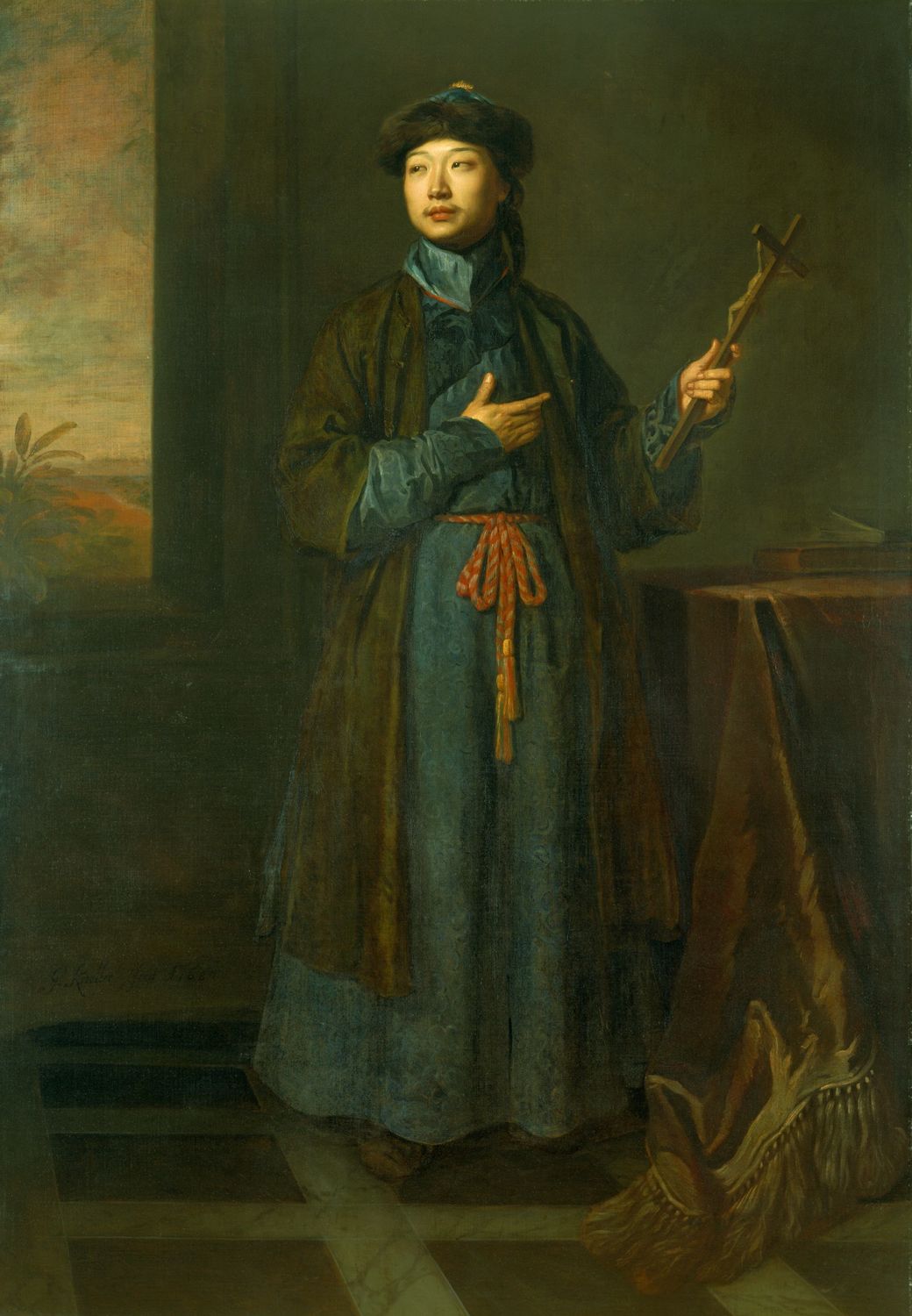

Visual characteristics
The painting follows the conventions of late 17th‑century English portraiture: a focus on the sitter's face and upper body, controlled lighting, and an emphasis on individual presence. Iconography associated with Christian faith — such as a cruciform emblem or a prayer book — is commonly noted in descriptions of the work and signals the sitter's identity as a convert. Kneller's technique highlights flesh tones and costume textures, combining the formal dignity of court portraiture with the exotic curiosity Europeans attached to visitors from East Asia.
Historical and cultural context
Shen Fu‑Tsung's appearance in Europe occurred amid growing contact between China and various European powers in the 17th century. Jesuit missionaries and diplomatic missions brought Chinese scholars, converts, and objects to European courts and universities. Portraits of Chinese visitors played a role in how Europeans visualized China and its people: they recorded individuality while also serving as documents of religious and cultural exchange.
Significance and legacy
The painting is important both artistically and historically. Artistically, it illustrates Kneller's standing as a leading portraitist in England and his capacity to render unfamiliar subjects within a familiar pictorial vocabulary. Historically, it has been used by scholars to discuss conversion, missionary activity, and early modern globalization. As an image of a named Chinese convert, the portrait provides a rare personal face to broader narratives about contact between East and West.
Notable features
- Depiction of a Chinese sitter in European portrait style.
- Clear references to Christian identity and conversion.
- Example of cross‑cultural circulation of people and ideas in the 17th century.
Because documented encounters between Chinese individuals and European courts were relatively uncommon in surviving painted portraits, The Chinese Convert remains a frequently referenced work in studies of early modern visual culture and the history of Sino‑European relations.
Related articles
Author
AlegsaOnline.com The Chinese Convert (1687) — portrait by Godfrey Kneller Leandro Alegsa
URL: https://en.alegsaonline.com/art/97756