
Godfrey Kneller
Sir Godfrey Kneller (1646–1723) was the preeminent portrait painter in England during the late 17th and early 18th centuries, serving as court painter to monarchs from Charles II to George I.
Overview
Sir Godfrey Kneller, 1st Baronet (8 August 1646 – 19 October 1723) was the leading portrait painter in England during the late 1600s and early 1700s. Born in northern Germany and later established in London, he became the dominant official portraitist for successive English and British sovereigns. He is best known for formal state portraits, series of group likenesses, and decorative court commissions that helped shape the public image of the ruling classes.
Image gallery
10 Images




Life and career
Kneller trained and worked on the Continent before settling in London by the later 17th century. He rose to prominence at a time when court portraiture was a primary means of conveying status and authority. Appointed as the principal painter to the crown, he executed royal commissions for monarchs from Charles II through to George I. His studio produced single likenesses, full-length state portraits, and numerous individual heads for private and public patrons.
Major works and series
Several kinds of commissions recur in Kneller’s oeuvre. Notable examples include large-scale portraits of leading figures, images of foreign dignitaries and intellectuals, and themed series intended for display. Among his better-known pieces and groups are:
- Single notable paintings: works such as The Chinese Convert (1687) reflect England’s expanding global connections.
- Portraits of scientists and thinkers: a sequence of portraits of Isaac Newton underlines the link between portraiture and contemporary fame.
- Group and club commissions: over forty "Kit-cat" portraits for the influential Kit-Cat Club helped establish a recognizable set of likenesses tied to politics and literature.
- Courtesan and court beauty series: ten "beauties" painted for the court of William III echoed an earlier royal series and displays the decorative role of such portraits.
Style and practice
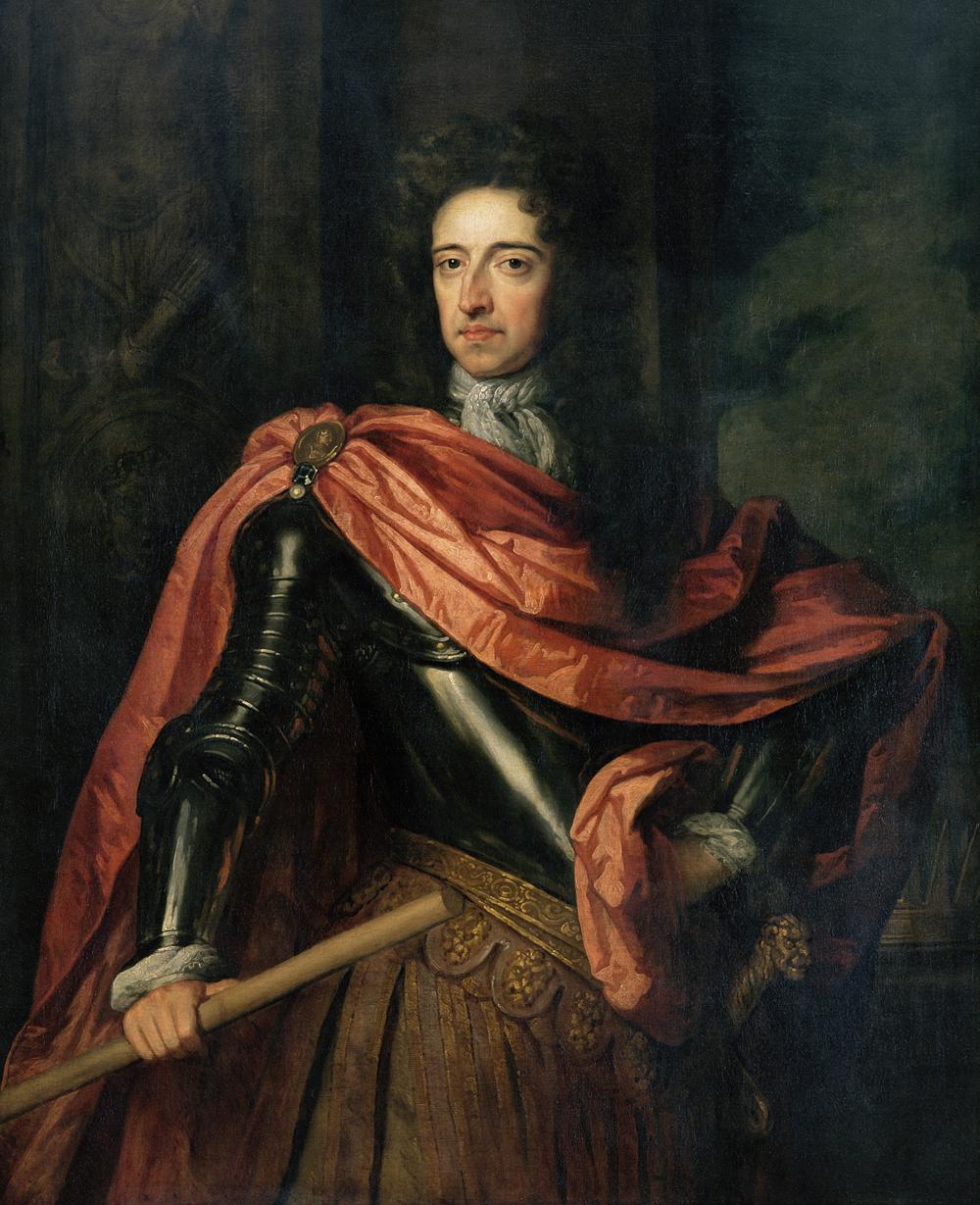
Kneller’s style combined a dignified, formal approach with attention to costume, texture and the fashions of high society. His work continued and adapted the grand manner of court portraiture, favoring composed poses, rich fabrics and carefully arranged accessories that signaled rank and character. He maintained a busy studio that often produced replicas and variants of popular portraits for patrons.
Legacy and significance
As a central figure of English portrait painting in his era, Kneller shaped how aristocrats and monarchs were publicly represented. Many of his portraits survive in public and private collections and continue to be studied for their artistic merit and historical value. His long career bridged the Restoration and early Georgian periods, making his work an important source for the visual culture of late 17th- and early 18th-century Britain.
Questions and answers
Q: Who was Sir Godfrey Kneller?
A: Sir Godfrey Kneller was a leading portrait painter in England during the late 17th and early 18th centuries. He was court painter to English and British monarchs from Charles II to George I.
Q: What are some of his major works?
A: Sir Godfrey Kneller's major works include The Chinese Convert (1687); a series of four portraits of Isaac Newton; a series of ten reigning European monarchs, including King Louis XIV of France; over 40 "Kit-cat portraits" of members of the Kit-Cat Club; and ten "beauties" of the court of William III.
Q: What is the Kit-Cat Club?
A: The Kit-Cat Club was a Whig dining club that met at the Kit-Cat Club in London from the late 17th to mid-18th century. Sir Godfrey Kneller painted over 40 "Kit-cat portraits" of members of the club.
Q: What is the "beauties" series of portraits?
A: The "beauties" series of portraits is a ten portrait series of the court of William III, painted by Sir Godfrey Kneller. The purpose of this series was to match a similar series of ten beauties of the court of Charles II, which were painted by court painter before him, Sir Peter Lely.
Q: Who were some of the European monarchs painted by Sir Godfrey Kneller?
A: Sir Godfrey Kneller painted a series of ten reigning European monarchs, including King Louis XIV of France.
Q: Who preceded Sir Godfrey Kneller as the court painter to Charles II?
A: Sir Peter Lely was the court painter before Sir Godfrey Kneller during the reign of Charles II.
Q: Who were some of the people painted in the "Kit-cat portraits" by Sir Godfrey Kneller?
A: Sir Godfrey Kneller painted over 40 "Kit-cat portraits" of members of the Kit-Cat Club. These include politicians, writers, and other notable figures of his time.
Related articles
Author
AlegsaOnline.com Godfrey Kneller Leandro Alegsa
URL: https://en.alegsaonline.com/art/119939
Sources
- oxforddnb.com : "Kneller, Sir Godfrey , baronet (1646–1723)"
- doi.org : 10.1093/ref:odnb/15710