
The Cable Guy (1996 film)
A darkly comic 1996 film directed by Ben Stiller, starring Jim Carrey as an obsessive cable installer and Matthew Broderick as his reluctant friend; a controversial tone shift in 1990s comedy.
Overview
The Cable Guy is a 1996 American black comedy psychological thriller directed by Ben Stiller and produced by Judd Apatow and Bernie Brillstein. It centers on a solitary, socially awkward cable installer who forms a disturbing attachment to one of his customers, upending the customer's life with escalating pranks and harassment. The film marked a tonal departure for its star and challenged audience expectations for mainstream comedy in the mid-1990s.
Image gallery
1 Image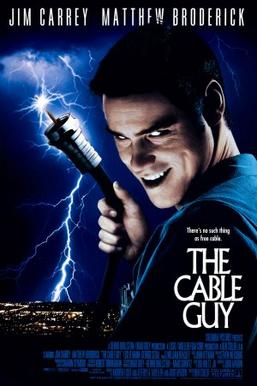
Premise and themes
At its heart the film blends broad comic set pieces with darker themes of obsession, loneliness, and the effects of media on identity. Rather than a simple slapstick vehicle, the story uses satire and unease to explore how boundaries break down when one person intrudes into another's domestic life. The protagonist's unstable behavior raises questions about mental health and celebrity persona in comic performance.
Cast and production
Jim Carrey headlines as the cable installer, with Matthew Broderick co-starring as the customer who becomes the focus of that obsession. The movie was developed and overseen by producers including Judd Apatow and Bernie Brillstein. Ben Stiller directed and helped shape the film's mix of humor and menace during a production that sought to balance studio expectations with a riskier creative tone.
Reception and legacy
Upon its North American release on June 14, 1996, the film received mixed critical responses. Some praised its willingness to subvert comic formulas, while others found the shift in tone jarring. As documented in contemporary reviews, it registered middling aggregate scores on several review platforms: a moderate percentage on Rotten Tomatoes and a higher average on Metacritic, reflecting divided opinions. Over time the film has been re-evaluated by some critics who view it as an important experiment in 1990s comedy.
Notable facts and distinctions
- The Cable Guy combines elements of black comedy and psychological thriller rather than fitting neatly into a single genre.
- The film contributed to broader conversations about comic actors taking darker or more ambiguous roles.
- Its release and reception illustrate tensions between studio marketing and auteur-driven shifts in tone.
Further reading and sources
- Production background and credits
- Genre analysis and classification
- Producer profile: Judd Apatow
- Discussion of character psychology
- Technical aspects: cable installation scenes
- Matthew Broderick: role overview
- Release date information
- Contemporary critical responses
- Rotten Tomatoes aggregation
- Metacritic score and summary
Related articles
Author
AlegsaOnline.com The Cable Guy (1996 film) Leandro Alegsa
URL: https://en.alegsaonline.com/art/97713