
The Castle of Cagliostro
A 1979 animated heist-adventure directed by Hayao Miyazaki, part of the Lupin III franchise. Celebrated for its kinetic action, charm, and early display of Miyazaki's visual storytelling.
Overview
The Castle of Cagliostro is an animated feature that follows Arsène Lupin III, a charismatic gentleman thief, as he uncovers secrets at a small European principality. Released in 1979, it is widely regarded as Hayao Miyazaki's first major theatrical film and an accessible entry point to the Lupin III universe. The film blends heist thrills, romance, and whimsical adventure into a compact, fast-paced narrative.
Image gallery
4 Images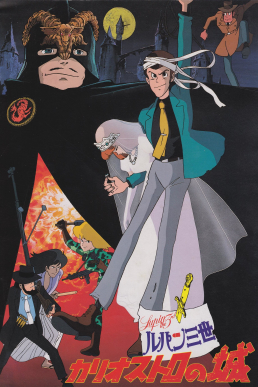


Plot and main characters
The story centers on Lupin's attempt to rescue a young countess who is held in the fortress-like Cagliostro Castle, revealing a counterfeit-money conspiracy and the ruling count's darker ambitions. Supporting characters include Lupin's loyal marksman companion, a stoic swordsman, and a femme fatale whose loyalties shift during the adventure.
Production and style
Directed and storyboarded by Hayao Miyazaki, the film is notable for its fluid action sequences, inventive camera moves achieved through traditional hand-drawn animation, and carefully designed mechanical and architectural details. The animation emphasizes momentum and character movement over complex effects, giving chase scenes and set pieces a clear, energetic choreography.
Themes and artistic approach
Beyond its surface as a caper, the film explores themes of honor, innocence, and resistance to corruption. Miyazaki's interest in craftsmanship and machines appears in the film's lovingly rendered cars, clocks, and traps. The tone mixes lighthearted humor with moments of genuine peril, enabling both comic escapades and emotional stakes.
Reception and legacy
The film was well received by critics and fans and has grown in stature over the decades. It is often cited as influential for international animators and filmmakers who admire its economy of storytelling and visual inventiveness. Restorations and multiple dubbed releases have helped maintain its availability, and it introduced many viewers worldwide to Miyazaki's sensibilities.
Notable facts
- Key memorable sequences include a high-speed car chase, a daring infiltration of the castle, and a climactic mechanical confrontation.
- The movie is part of a larger series; earlier and later entries feature the same core characters but differ in tone and continuity.
- For further reading and background on titles and versions, see related materials linked via official filmographies and series guides: more on the movie.
Whether encountered as a classic of Japanese animation or as a spirited crime caper, The Castle of Cagliostro remains an influential work that helped define a director's approach to visual storytelling and character-driven adventure.
Related articles
Author
AlegsaOnline.com The Castle of Cagliostro Leandro Alegsa
URL: https://en.alegsaonline.com/art/97739