
The Butterfly Effect (2004 film)
A 2004 psychological thriller starring Ashton Kutcher in which a young man discovers he can alter his past with unforeseen consequences; explores causes, responsibility, and the chaos-theory metaphor.
The Butterfly Effect is a 2004 American psychological thriller that blends elements of science fiction and drama. Directed by Eric Bress and J. Mackye Gruber, the film follows a troubled young man who discovers he can revisit and change episodes of his childhood by reading his old journals. Its title refers to the popularized idea from chaos theory that small changes in initial conditions can produce large, unpredictable differences in later outcomes.
Image gallery
1 Image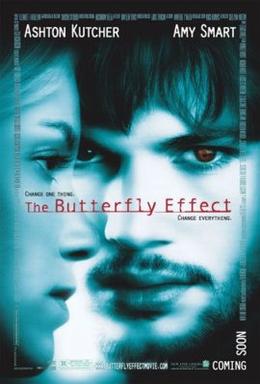
Overview and premise
The film centers on Evan Treborn, played by Ashton Kutcher, who experiences blackouts that coincide with traumatic events. As an adult he learns that by focusing on his written memories he can travel back to those moments and alter decisions or events. Each alteration creates a new present with unanticipated consequences for Evan and the people around him. The narrative repeatedly resets to show different timelines, emphasizing moral dilemmas about whether one should try to fix the past.
Cast and production
- Ashton Kutcher as Evan Treborn
- Amy Smart as Kayleigh
- Elden Henson as Lenny
- Supporting cast includes Melora Walters and others
The picture was produced by Anthony Rhulen, Chris Bender, J.C. Spink and A.J. Dix and released in North America on January 22, 2004. For production details and credits see the film's production notes or official pages, often linked from studio materials or archival listings: production information.
Versions and sequels
Two principal versions of the first film circulated: the theatrical cut and an unrated director's cut, the latter extending several scenes and altering certain tonal details. The original film later spawned two sequels — The Butterfly Effect 2 and The Butterfly Effect 3: Revelations — both of which were released direct-to-video and follow the concept of small changes producing large impacts in new characters' lives. For sequel details see distributor listings: sequel information.
Reception and themes
Critical reaction to the film was mixed to negative, with reviewers pointing to narrative inconsistencies even as they acknowledged its high-concept premise and emotional ambition. Aggregate scores reported at release included a roughly 32% rating on Rotten Tomatoes and a Metacritic score near 30, reflecting divided opinion about its execution and plausibility: Rotten Tomatoes and Metacritic. Viewers and critics often discuss the film in terms of ethics and responsibility, the limits of reparative action, and the narrative use of alternate timelines.
Although not universally acclaimed, The Butterfly Effect has remained a reference point in popular culture for stories that dramatize the chaos-theory metaphor. It helped popularize cinematic treatments of alternate timelines and the consequences of altering past events, and it continues to be cited in discussions about fate, free will and unintended consequences in fiction.
Related articles
Author
AlegsaOnline.com The Butterfly Effect (2004 film) Leandro Alegsa
URL: https://en.alegsaonline.com/art/97708