
The Book Thief (2013 film)
2013 German–American war drama adapted from Markus Zusak’s novel, directed by Brian Percival, with music by John Williams and starring Sophie Nélisse, Geoffrey Rush and Emily Watson.
The Book Thief is a 2013 German–American war drama film adapted from Markus Zusak’s novel of the same name. Directed by Brian Percival from a screenplay by Michael Petroni, the picture transposes the novel’s story of a young girl in Nazi-era Germany to the screen, following her relationships with a foster family and a Jewish man they shelter, and exploring the saving power of words and books in dark times.
Image gallery
2 Images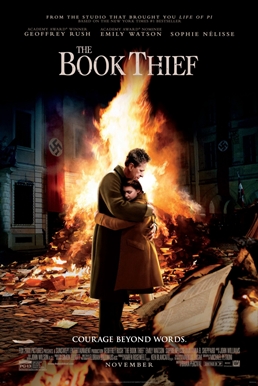

Plot summary
The film centers on Liesel, a girl placed with a foster family during the Second World War. As she grows up amid rationing, air raids and increasing political pressure, she forms close bonds with her foster parents and other neighbours, steals books to read and share, and finds an unexpected friendship with a Jewish man hidden in her new home. The adaptation preserves the novel’s focus on memory, loss and the moral choices ordinary people face under authoritarian rule.
Cast and crew
- Director: Brian Percival; screenplay: Michael Petroni.
- Score: composed by John Williams; the music is a prominent element of the film’s emotional tone. See more on the composer: John Williams and the score.
- Principal cast includes Sophie Nélisse, Geoffrey Rush and Emily Watson. Other credited performers include Ben Schnetzer and Nico Liersch.
Production and adaptation
The film was produced as a German–American collaboration and sought to condense the book’s episodic structure into a single, coherent feature. Filmmakers retained several of the novel’s key scenes and motifs while streamlining secondary subplots. The adaptation uses visual motifs and voiceover to suggest the book’s reflective narrative perspective.
Themes and style
Major themes include the human need for stories, the ethical complexity of everyday choices in wartime, and the contrast between small domestic acts of compassion and the larger machinery of violence. The cinematography and score work together to balance intimate household moments with the wider anxieties of life under conflict.
Release and reception
Released in November 2013, the film drew attention for its performances—especially from the young lead—and for John Williams’s musical contribution. Critics were divided on whether the film could capture every nuance of the novel, but many praised the acting and the film’s emotional clarity. It continues to be discussed as an accessible cinematic entry point to Zusak’s novel and as an example of contemporary literary adaptation.
Further reading
Related articles
Author
AlegsaOnline.com The Book Thief (2013 film) Leandro Alegsa
URL: https://en.alegsaonline.com/art/97658