
The Boy in the Striped Pyjamas (2008 film)
A 2008 British–American historical drama adapted from John Boyne's novel. It follows a young German boy who befriends a Jewish boy across a Nazi camp fence and provoked debate over its portrayal of the Holocaust.
Overview
The Boy in the Striped Pyjamas is a 2008 British–American historical drama film adapted from the novel by John Boyne. Directed by Mark Herman and produced by David Heyman, the film tells an intimate, fictionalised story set against the wider backdrop of World War II. It is framed through the limited and literal understanding of an eight-year-old German boy, Bruno, and uses that child’s viewpoint to examine themes of innocence, friendship and the human consequences of state violence.
Image gallery
1 Image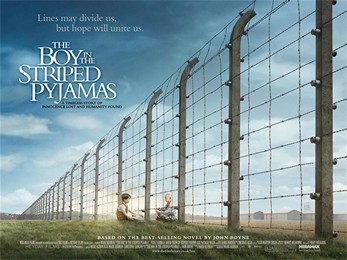
Plot summary
When Bruno’s family moves because his father receives a new military posting, Bruno discovers the perimeter of a nearby internment site and meets a boy on the other side of the fence. Unaware of the full nature and purpose of the site, the boys form a clandestine friendship characterised by miscommunication and contrasting circumstances. The story builds to a tragic denouement, which the film depicts as the dramatic culmination of the boys’ limited understanding of the situation in which they live.
Cast and production
The film features Asa Butterfield as Bruno, with supporting performances from Jack Scanlon, David Thewlis, Vera Farmiga, Amber Beattie, Richard Johnson and Rupert Friend. Production design, costumes and cinematography emphasise contrasts between the domestic world of Bruno’s family and the restricted environment beyond the camp fence. Filmmakers have described their intention to evoke the period and to concentrate the drama on a small group of characters rather than present a broad documentary account.
Themes and historical context
The film explores weighty themes—innocence and complicity, the limits of knowledge, and the destructiveness of ideology—through a deliberately narrow perspective. It addresses the reality of concentration camps and the persecution of Jewish people, but does so by filtering events through a child’s limited comprehension. One central sequence depicts the boys being caught up in a fatal moment inside a gas chamber, presented as the story’s tragic climax. Because the narrative is fictional and condensed, it is important to distinguish between the film’s dramatized events and the broader, well-documented history of the Holocaust.
Reception and controversy
On release, the film received mixed reactions. Many viewers and reviewers praised the performances—particularly those of the child actors—and the film’s emotional directness. At the same time, historians, educators and some critics questioned aspects of the story’s historical plausibility and the decision to dramatise certain events in the way the film does. Debates have focused on whether the work functions appropriately as a parable about human behaviour or whether it risks simplifying and misrepresenting complex historical realities when used without contextualisation.
Adaptation differences
As with many adaptations, the filmmakers made narrative choices that differ from the source novel. These include compression of events, emphasis on particular character relationships and the visual presentation of the camp and household settings. Readers and viewers who wish to explore those differences can consult the original novel and commentary by scholars and critics to understand how the film’s choices shape audience perception.
Educational use and legacy
The film has been used in some educational settings as a prompt for discussion about memory, moral responsibility and how fiction portrays historical trauma. Educators frequently advise pairing the film with reliable historical sources and guided discussion to address inaccuracies or simplifications. Regardless of differing views about its approach, the film has remained a widely known cultural work that continues to provoke conversation about representation, remembrance and the responsibilities of storytellers when treating traumatic subjects.
- John Boyne (novel)
- Asa Butterfield
- David Thewlis
- Vera Farmiga
- Richard Johnson
- Rupert Friend
- World War II
- concentration camps
- Jewish
- gas chamber
For readers and viewers seeking further information, consult reputable historical works and educational materials in addition to fictional portrayals. Putting the film into context helps distinguish artistic choices from the broader historical record and supports thoughtful engagement with its themes.
Related articles
Author
AlegsaOnline.com The Boy in the Striped Pyjamas (2008 film) Leandro Alegsa
URL: https://en.alegsaonline.com/art/97673
Sources
- observer.com : "On Demand This Week: Lost Boys"