
Thal Desert (Punjab, Pakistan)
A semi-arid sandy plain in Punjab, Pakistan, the Thal Desert lies between major rivers and supports sparse thorny vegetation, rain-fed farming and pastoralism, with growing irrigation efforts and social challenges.
Overview
The Thal Desert is a broad, sandy region in Punjab, Pakistan. It occupies a belt of largely arid land located between the river systems of the region and the uplands near the Pothohar Plateau. The landscape is characterized by low dunes, stony ridges in places and expanses of dry, sandy soil with limited surface water. Vegetation is sparse and largely consists of thorny shrubs, scattered grasses and plants adapted to drought.
Image gallery
10 Images



Geography and ecology
The desert lies roughly between the watersheds of the Jhelum River and the great Sindh river system, traditionally referred to in local sources as the Sindh rivers. It stretches for many tens of miles across central Punjab and forms a transitional zone between irrigated plains and higher, rockier terrain. Soil is mostly sandy and low in organic matter, which limits natural fertility and supports only tough, drought-resistant plants and grazing for small numbers of livestock.
Human settlement and economy
Communities in the Thal have adapted to arid conditions through a mix of rain-fed agriculture (often called barani farming), pastoralism and seasonal migration. Farmers grow drought-tolerant cereals and other hardy crops when rainfall permits. Historically the region has faced challenges of poverty, limited infrastructure and relatively low literacy levels compared with more irrigated parts of Punjab. Local towns and administrative units provide markets and basic services; for example, Noor Pur Thal is a recognized local center with multiple union councils.
Development, irrigation and land use
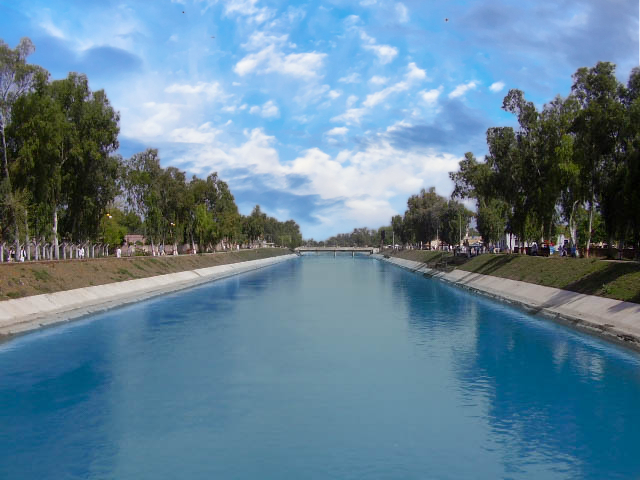
Over the past decades there have been efforts to reduce the region's dependence on rainfall through irrigation projects and improved water management. Canal schemes and smaller local waterworks aim to bring more land under cultivation and to stabilize rural livelihoods. Where irrigation reaches, cropping patterns shift toward higher-value or more intensive agriculture; where it does not, people continue to rely on hardy grains and livestock grazing.
Notable facts and distinctions
- The Thal is distinct from the larger Thar and Cholistan deserts: it is a more fragmented, inland plain with a strong seasonal dependence on monsoon rains.
- Vegetation is dominated by thorny scrub and drought-adapted grasses rather than continuous sand seas.
- Development initiatives in the Thal illustrate wider challenges of rural uplift in arid zones: improving access to irrigation, education and services can change land use and living standards over time.
For regional maps, historical context and ongoing projects, consult authoritative regional sources and local administrative records; the Thal remains an important example of human adaptation to semi-arid environments in South Asia.
Related articles
Author
AlegsaOnline.com Thal Desert (Punjab, Pakistan) Leandro Alegsa
URL: https://en.alegsaonline.com/art/97351