
The Book of the Law (Liber AL vel Legis): origin, structure, and influence
Liber AL vel Legis, or the Book of the Law, is the central revealed text of Thelema, written down in Cairo in 1904. It shaped modern occult practice and remains widely studied and debated.
Overview
The Book of the Law, commonly called Liber AL vel Legis or Liber Al, is the foundational sacred text of the religious and philosophical current known as Thelema. According to its recorder, Aleister Crowley, the text was received in a series of communications in Cairo, Egypt in 1904. Its full title includes the Latin and symbolic notation Liber AL vel Legis, sub figura CCXX, as delivered by XCIII=418 to DCLXVI. The work is short but dense in imagery and aphorism, and it has been the subject of extensive commentary, ritual adaptation, and scholarly attention.
Image gallery
3 Images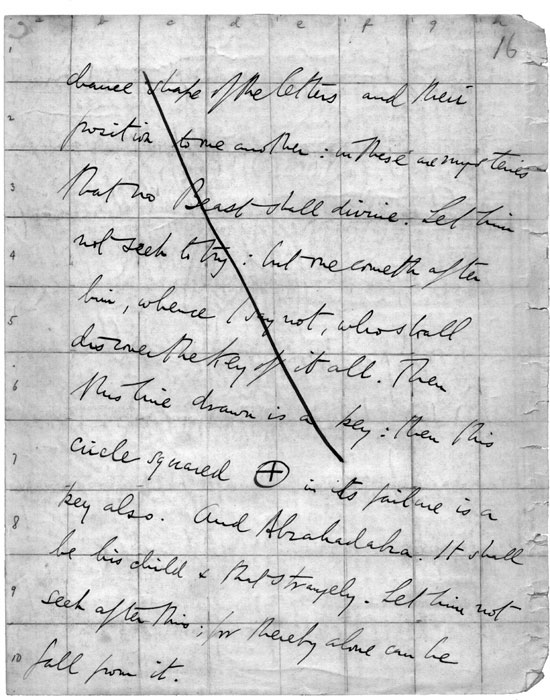


Composition and structure
The book consists of three chapters, each of which Crowley reported as being written down in the space of one hour around noon on successive days: April 8, April 9, and April 10. Each chapter is framed as a message delivered by a different speaker-like voice and employs symbolic language, allegory, and imperative statements. Central themes include the primacy of individual will, renewal of spiritual law, and an emphasis on the motto often associated with Thelema: "Do what thou wilt shall be the whole of the Law."
Themes and characteristics
- Authority and revelation: The text is presented as a revealed scripture rather than a philosophical treatise.
- Mythic and symbolic language: It uses gods, mystical names, and numerology to convey meanings.
- Ethical focus: It foregrounds the concept of True Will, a distinguishing ethical and spiritual idea within Thelemic practice.
History, claims of origin, and publication
Crowley described the source of the book as a nonphysical intelligence named Aiwass, who dictated the text to him. That account is central to how adherents regard the work, while critics and historians treat the claim as part of its mythos. The book was later circulated among occult groups and published with various commentaries and annotations. Over time it became both a scriptural core for some practitioners and a primary literary document in studies of modern esotericism.
Reception, influence, and distinctions
The Book of the Law has had a significant cultural and religious impact within modern occultism. It influenced ritual systems, magical orders, and individual spiritual practitioners. Interpretations vary widely: some read it as literal revelation, others as poetic manifesto, and still others as a source of symbolic inspiration. The text has also been controversial, generating debate over its authenticity, translations, and ethical implications. Scholars often place it among early 20th-century works that reshaped Western esoteric thought.
Further study
For readers seeking more context, critical editions, annotated translations, and contemporary commentaries are available. Academic treatments examine the work’s language, historical context, and role in the development of modern occult movements. For those interested in primary and secondary sources, consult collections and analyses that trace both the textual variants and the varied responses it has provoked within religious and scholarly communities.
Questions and answers
Q: What is the Book of the Law?
A: The Book of the Law is the central sacred text of Thelema.
Q: Who wrote the Book of the Law?
A: The Book of the Law was written by Aleister Crowley.
Q: Where was the Book of the Law written?
A: The Book of the Law was written in Cairo, Egypt.
Q: When was the Book of the Law written?
A: The Book of the Law was written in the year 1904.
Q: What is the full title of the Book of the Law?
A: The full title of the Book of the Law is Liber AL vel Legis, sub figura CCXX, as delivered by XCIII=418 to DCLXVI.
Q: How many chapters does the Book of the Law contain?
A: The Book of the Law contains three chapters.
Q: When were the three chapters of the Book of the Law written?
A: The three chapters of the Book of the Law were written down in one hour each, beginning at noon on April 8, April 9, and April 10.
Related articles
Author
AlegsaOnline.com The Book of the Law (Liber AL vel Legis): origin, structure, and influence Leandro Alegsa
URL: https://en.alegsaonline.com/art/97657
Sources
- hermetic.com : Equinox of the Gods