
Tape drive (magnetic tape data storage device)
A tape drive is a magnetic storage device used for sequential reading and writing of data, commonly employed for backups, long-term archival storage, and offline data protection.
Overview
A tape drive is a data storage device that reads and writes digital information on magnetic tape. It attaches to a computer or storage system and is optimized for sequential access, meaning data is processed in order along the tape rather than accessed randomly. Tape technology remains in use for backup, archival retention and cold storage because of its cost efficiency and physical portability.
Image gallery
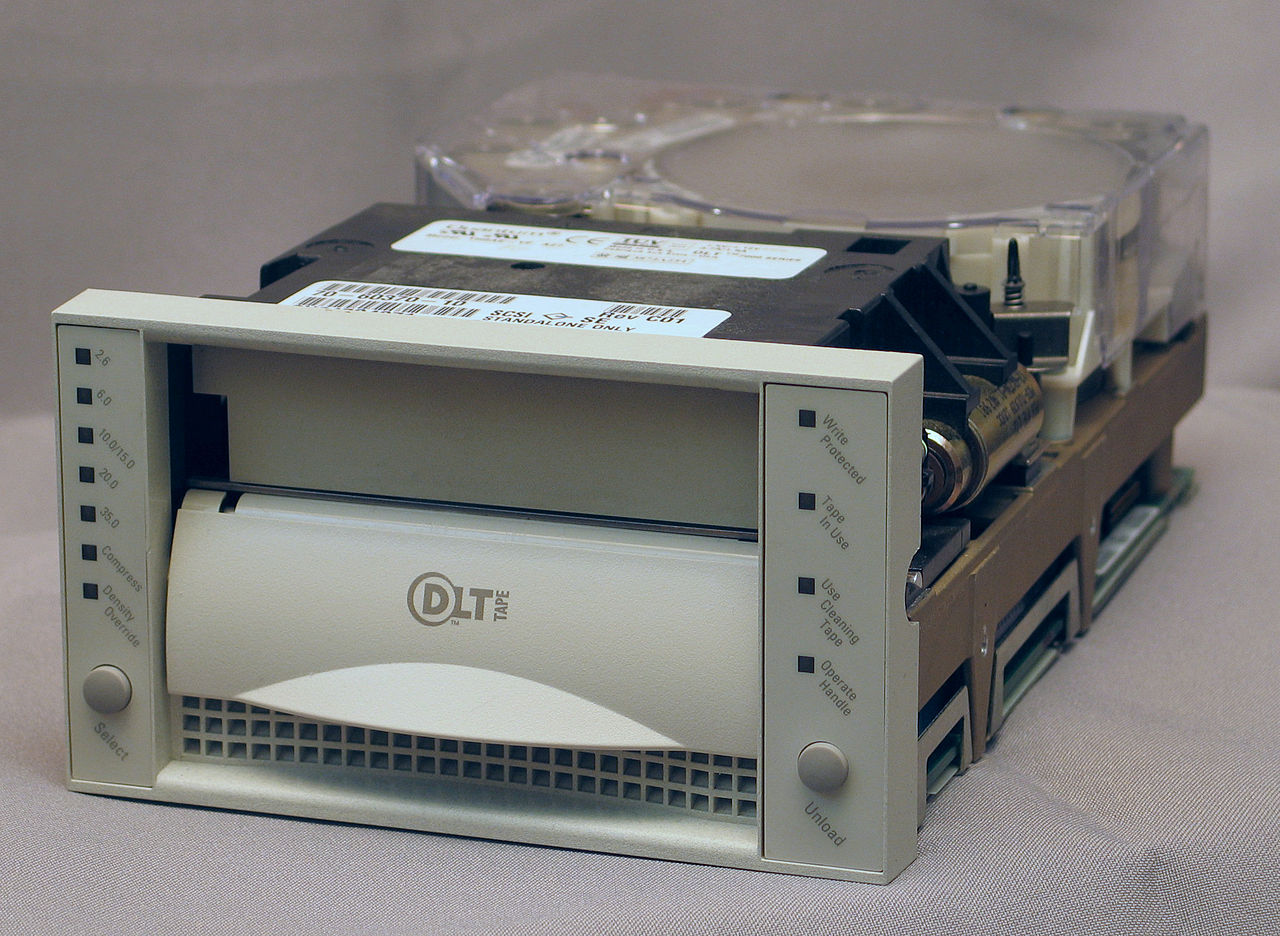
4 Images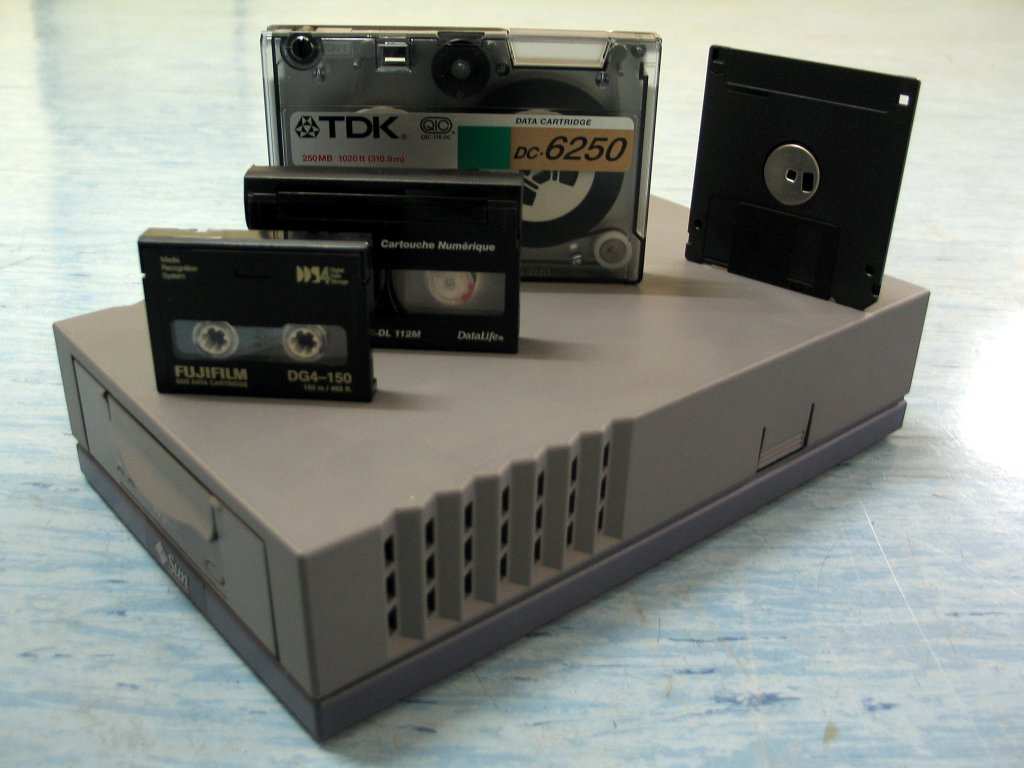


Design and operation
Typical tape systems consist of a removable cartridge or reel, a transport mechanism that moves the tape past read/write heads, and an electronic controller that handles formatting, compression and error correction. When data is written, the drive converts digital signals into magnetic patterns along the tape. Reading requires the tape to be positioned so the heads traverse the correct segment; this sequential nature influences how tape is used and how storage workflows are designed.
History and development
Magnetic tape was one of the earliest forms of electronic storage and evolved from large reel-to-reel systems used on mainframes to smaller, standardized cartridges. Over time formats have been refined to improve reliability, density and automation. Standards and generations of cartridges and drives have helped interoperability among vendors, and robotics in libraries allow many cartridges to be mounted and accessed without human intervention.
Uses and importance
Tape drives are widely used for:
- Periodic backups and long-term archival of business and research data.
- Disaster recovery plans where offsite or offline copies are required.
- Cold storage of large datasets that are infrequently accessed but must be retained.
Organizations appreciate tape for its relatively low cost per unit of stored data and for the ability to keep media physically isolated from networks as a protection against cyber threats.
Advantages and limitations
Key advantages include:
- High capacity per cartridge and good shelf life when stored properly (cartridge capacity varies by format).
- Cost-effective long-term retention and the possibility of air-gapped storage.
- Scalable automation via tape libraries and robotic loaders.
Limitations to consider:
- Sequential access causes higher latency for random reads compared with disk or solid-state storage.
- Throughput depends on streaming performance and can require buffering to avoid start/stop wear.
- Operational complexity when integrating with modern backup software and workflows.
Formats, software and best practices
Modern tape ecosystems include multiple cartridge formats and data formats; drives often support hardware compression and encryption to improve usable capacity and security. Backup strategies that use tape typically combine periodic full images with incremental updates, cataloging and offsite rotation. Manufacturers and industry groups provide compatibility matrices and migration guidance to preserve access to long-lived archives; for more implementation detail see common vendor and archival resources via technical documentation and backup solution guides linked by vendors and community sites (backup strategy resources).
Understanding the trade-offs between access speed, capacity and cost is essential when deciding whether tape is appropriate for a given storage need.
Related articles
Author
AlegsaOnline.com Tape drive (magnetic tape data storage device) Leandro Alegsa
URL: https://en.alegsaonline.com/art/96342