
Sylvester the Cat (Looney Tunes character)
Sylvester is a black-and-white tuxedo cat from Warner Bros. cartoons, best known for chasing Tweety and for his lisping voice. Created by Friz Freleng in 1945, he appears across shorts, TV, comics and films.
Overview: Sylvester James Pussycat, Sr., commonly called Sylvester, is an animated tuxedo cat created for mid-20th-century Warner Bros. theatrical cartoons. He first appeared in the short "Life with Feathers" (March 24, 1945) and was developed by director Friz Freleng. The character is a staple of the Looney Tunes and Merrie Melodies series and is best known as the persistent, often outwitted hunter of Tweety Bird. Sylvester’s full name is a playful nod to the wildcat’s scientific name, Felis silvestris, even though he is portrayed as a domestic cat.
Image gallery
7 Images



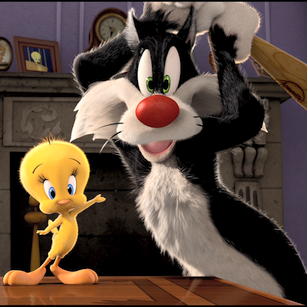


Design, voice and mannerisms
Sylvester is drawn as a black-and-white "tuxedo" cat with a white belly and facial markings that make his expressions easy to read in animation. His vocal identity was established by Mel Blanc, whose performance gave Sylvester a distinctive lisp and the frequently heard exclamation "Sufferin' succotash." The combination of visual design and vocal characterization made Sylvester ideally suited to slapstick setups in which elaborate schemes go comically wrong. In later decades other voice artists have taken on the role for television revivals and feature projects.
Typical plots and recurring characters
Much of Sylvester’s humor comes from predator–prey chases, mistaken identities, and prideful self-deception. Common storylines include:
- Attempts to capture Tweety, in which Sylvester’s plans are foiled by Tweety’s cleverness, intervening humans such as Granny, and a succession of physical mishaps.
- The Hippety Hopper episodes, where Sylvester mistakes a baby kangaroo for an enormous mouse while trying to prove his bravery to his son, Sylvester Jr., who first appeared in "Pop 'im Pop" (1949).
- Ensemble or crossover shorts that place Sylvester alongside other Looney Tunes figures, generating a variety of comic situations beyond the Tweety rivalry.
The formula—an overconfident but hapless antagonist, rapid visual gags, and music-driven timing—allowed animators and directors to stage inventive sequences that emphasize physical comedy and expressive animation.
Several pairings and episodes became notable: the Sylvester–Tweety team produced celebrated shorts, and that partnership helped secure Sylvester’s place in popular culture. The character has appeared in theatrical shorts, television anthologies, comic books and contemporary reboots, and he is often included among promotional ensembles representing the Looney Tunes franchise.
Legacy and recognition: Sylvester remains one of Warner Bros.' most recognizable animal characters. Critics and viewers have praised the character for lively animation, precise comedic timing, and memorable voice work. Publications have celebrated Sylvester and his co-stars on lists of classic cartoon characters, and the cat continues to appear in new media, merchandising and retrospective collections. For further reading on the cartoons and studio history, consult official Warner Bros. collections and curated cartoon anthologies available through archival resources such as studio catalogs and general cartoon reference guides.
Related articles
Author
AlegsaOnline.com Sylvester the Cat (Looney Tunes character) Leandro Alegsa
URL: https://en.alegsaonline.com/art/95610