
Sylvie and Bruno (novel by Lewis Carroll)
Two-volume late Victorian novel by Lewis Carroll combining a realistic social narrative with fairyland episodes. Published 1889 and 1893; met mixed reviews and remains of scholarly interest.
Sylvie and Bruno is a two-volume novel by Lewis Carroll (the pen name of Charles Lutwidge Dodgson). The work was issued in two parts by Macmillan: the first volume, titled Sylvie and Bruno, appeared in 1889 and its companion volume, Sylvie and Bruno Concluded, followed in 1893. Carroll returned in these books to the interplay of fantasy and everyday life that most readers associate with his earlier Alice stories, but with a markedly different tone and structure.
Image gallery
2 Images
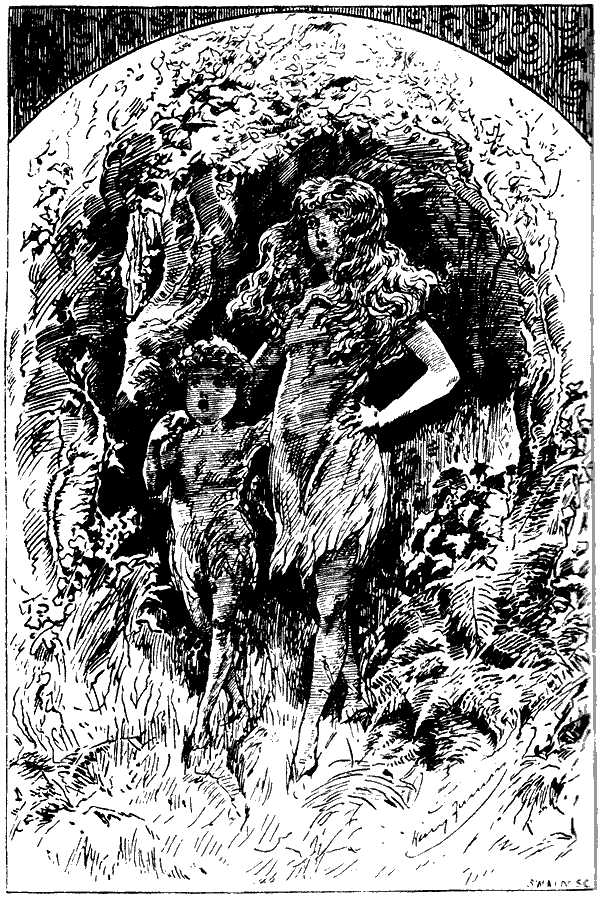
Overview and structure
The novels interweave two principal narrative strands: one located in the more prosaic, real-world setting and the other in a fairyland of fable and allegory. Chapters vary in mood, alternating between light verse, whimsical scenes and extended moral or conversational passages. This alternation produces a composite work that reads part children's tale, part social sketch and part philosophical conversation.
Characteristics and themes
Carroll employs familiar devices—playful language, nonsense elements and songs—alongside more reflective material. Themes touched on in the books include social manners, ethics, and the contrast between adult and child perspectives. Unlike the tightly concentrated episodic adventures of Alice, these volumes are more diffuse and often shift register from comic to earnest, which contributed to divided responses from contemporary readers.
Publication history and reception
The two volumes were published by Macmillan in 1889 and 1893. Contemporary critics and the reading public generally considered the books less successful than Carroll's Alice books; reviewers frequently described the narrative as uneven and the mingling of tones as awkward. Nevertheless, the novels attracted attention for their ambition and for showing a later stage of Carroll's literary experimentation.
Importance and distinctions
While never achieving the popular or critical heights of Alice's Adventures in Wonderland, Sylvie and Bruno is notable for its attempt to merge fairy tale elements with explicit moral and social commentary. Scholars of Victorian literature and Carroll's work study the novels to better understand his evolving interests and narrative methods. The books also illustrate how a single author may revisit familiar motifs while pursuing different aims.
Key facts and further reading
- Author: Lewis Carroll (Charles L. Dodgson)
- Volumes: Sylvie and Bruno (1889) and Sylvie and Bruno Concluded (1893)
- Publisher: Macmillan
- Narrative: Interleaved real-world and fairyland strands, prose and verse
- Reception: Mixed; less popular than the Alice books
For basic bibliographic information and text editions see Sylvie and Bruno and for details about the author consult Lewis Carroll.
Related articles
Author
AlegsaOnline.com Sylvie and Bruno (novel by Lewis Carroll) Leandro Alegsa
URL: https://en.alegsaonline.com/art/95621