
Suppiluliuma II
Suppiluliuma II was the last recorded king of the Hittite New Kingdom (late 13th–early 12th century BCE). He is known from hieroglyphic Luwian inscriptions that record campaigns and the final decades of Hittite power.
Overview
Suppiluliuma II is identified in surviving records as the final known ruler of the Hittite state commonly called the New Kingdom. He reigned in the late Bronze Age, traditionally dated to about 1207 BCE to c.1178 BCE, and was a contemporary of the Assyrian king Tukulti-Ninurta I. His reign coincided with the turbulent period of the Late Bronze Age collapse that affected the eastern Mediterranean and Anatolia.
Image gallery
3 Images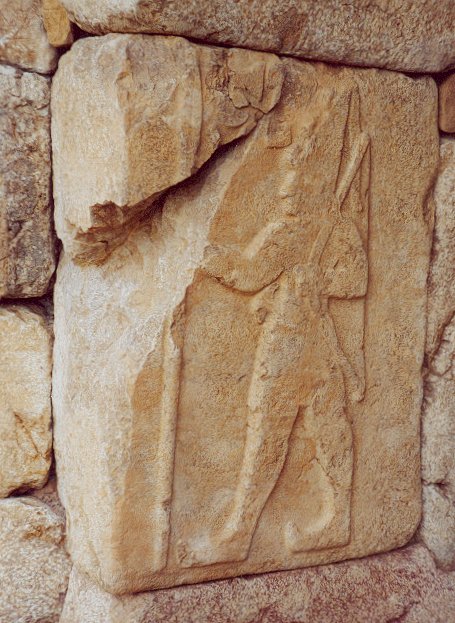


Sources and inscriptions
Our knowledge of Suppiluliuma II rests primarily on two royal inscriptions written in hieroglyphic Luwian, a Anatolian script used in late Hittite monuments and seals. These inscriptions, carved on stone in the Hittite heartland, provide the main direct testimony for his name, titulary and certain military actions. They are an important part of the epigraphic corpus that supplements Hittite cuneiform archives from earlier centuries.
Military actions and foreign relations
The inscriptions attributed to Suppiluliuma II record campaigns against former vassal territories. They mention operations directed at Tarhuntassa — a region or rival polity in southern Anatolia — and an expedition involving Alasiya, the Late Bronze Age name generally associated with copper-producing centers on Cyprus. Modern readers sometimes follow these inscriptions to reconstruct shifting loyalties, maritime contacts and resource disputes in the region. For discussion of the Cypriot connection see Alasiya.
Collapse and aftermath
Within a few decades of his reign the Hittite capital Hattusa was destroyed and the centralized royal administration of the New Kingdom ceased to function. Archaeological and textual evidence indicate a breakdown of the old order; in the adjacent highlands groups often called the Kaska or Kaskians appear to have asserted control over former Hittite territory. The capital site lay abandoned as a major urban center and was not reoccupied on a comparable scale until much later, when Phrygian activity is visible centuries after the collapse.
Significance and interpretation
As the last attested New Kingdom king, Suppiluliuma II occupies a symbolic place in Hittite history. His inscriptions mark an end-point for the dynastic line visible in the monumental record and offer a contemporary voice for the period of decline. Scholars use his record alongside archaeological layers at Hattusa and neighboring sites to study the processes that ended Hittite hegemony and reshaped Anatolia in the early Iron Age.
Notable points
- He is known chiefly from two hieroglyphic Luwian inscriptions preserved in the Hittite region.
- His reign is associated with military action against Tarhuntassa and campaigns touching Alasiya (Cyprus).
- After his time the Hittite political structure collapsed and Hattusa was abandoned until much later reoccupation.
Related articles
Author
AlegsaOnline.com Suppiluliuma II Leandro Alegsa
URL: https://en.alegsaonline.com/art/95101