
Suplex (wrestling maneuver)
A suplex is a grappling throw used in professional and amateur wrestling where one competitor lifts and throws another, with many variations and safety considerations.
Overview
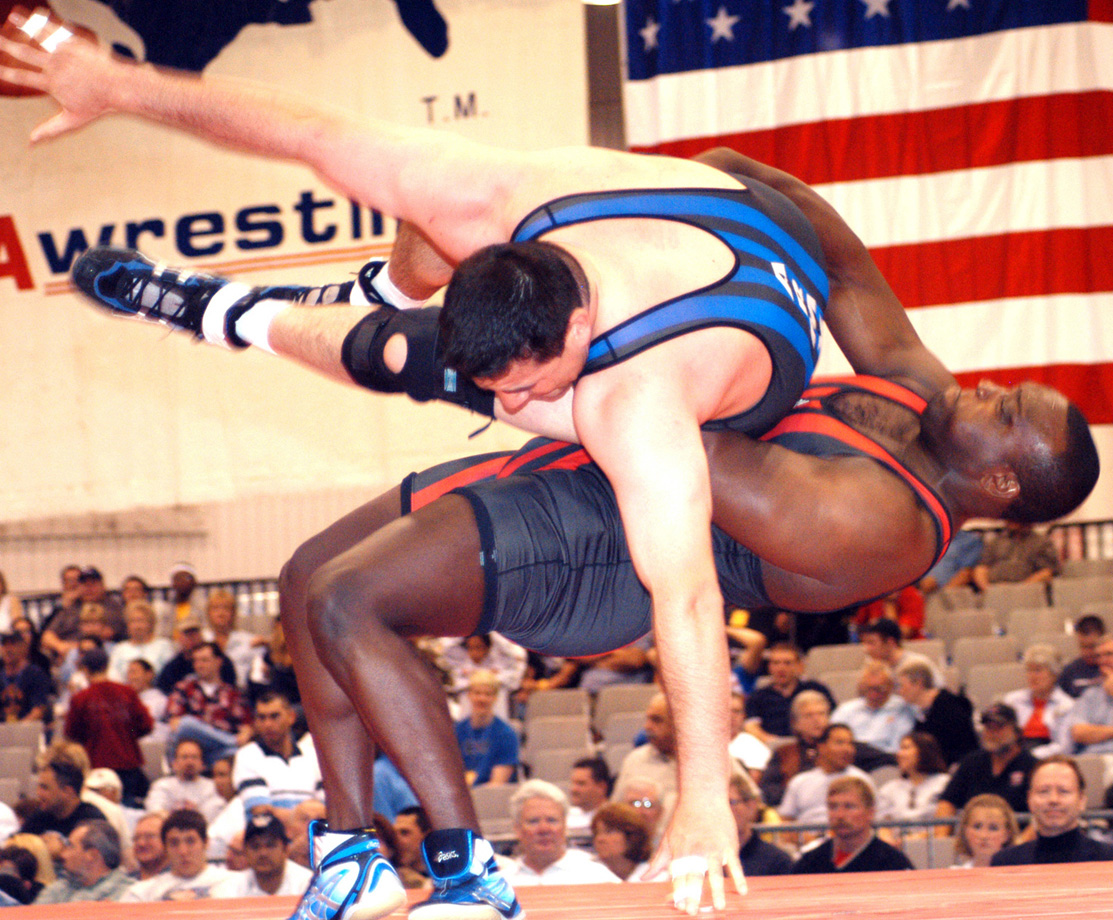
A suplex is a wrestling throw in which one competitor lifts or hoists an opponent and brings them down so that the opponent lands on their back, shoulders or upper torso. It is a staple move in both professional wrestling and various grappling sports, and it appears in many stylistic forms adapted for effectiveness, showmanship, or pinning purposes.
Image gallery
10 Images





Common characteristics
Most suplexes share the same essentials: gaining close control of the opponent, creating leverage to elevate them, and directing their descent. A performer may use a bridge (arching the back after the throw) to secure a pin. Execution emphasizes timing, balance and mutual cooperation in staged contests; in combat sports it relies on technique to protect both athletes' necks and spines.
Major variations
- Belly-to-belly: opponents face each other; the attacker wraps arms and throws forward or sideways.
- Belly-to-back (often called a German suplex): attacker lifts from behind and arches backward, sometimes bridging for a pin.
- Vertical: opponent is lifted straight up and dropped backward, emphasizing height and control.
- Fisherman and snap variants: combine leg hooks or quick, explosive motion for added control or speed.
History and cultural role
The suplex developed from throws used in amateur wrestling, catch-as-catch-can, and other grappling traditions. It became highly visible in professional wrestling, where performers adapted and named many versions for character and spectacle. Over time the move entered popular culture through televised events and video games, often as a signature or finishing maneuver.
Uses, safety and notable facts
In staged professional wrestling the suplex is used to demonstrate strength, shift momentum, or set up pins and submissions. In competitive grappling, similar throws score points and allow positional advantage. Because of the forces involved, proper training and cooperation are essential to avoid neck, back or head injuries. For more about wrestling techniques and terminology see wrestling references.
Related articles
Author
AlegsaOnline.com Suplex (wrestling maneuver) Leandro Alegsa
URL: https://en.alegsaonline.com/art/95100