
Wrestling: Styles, Techniques, History and Competitive Practice
Wrestling is a combat sport in which two competitors use throws, takedowns and holds to control or pin an opponent. Overview of styles, rules, history, techniques, and its role in sport and martial arts.
Overview
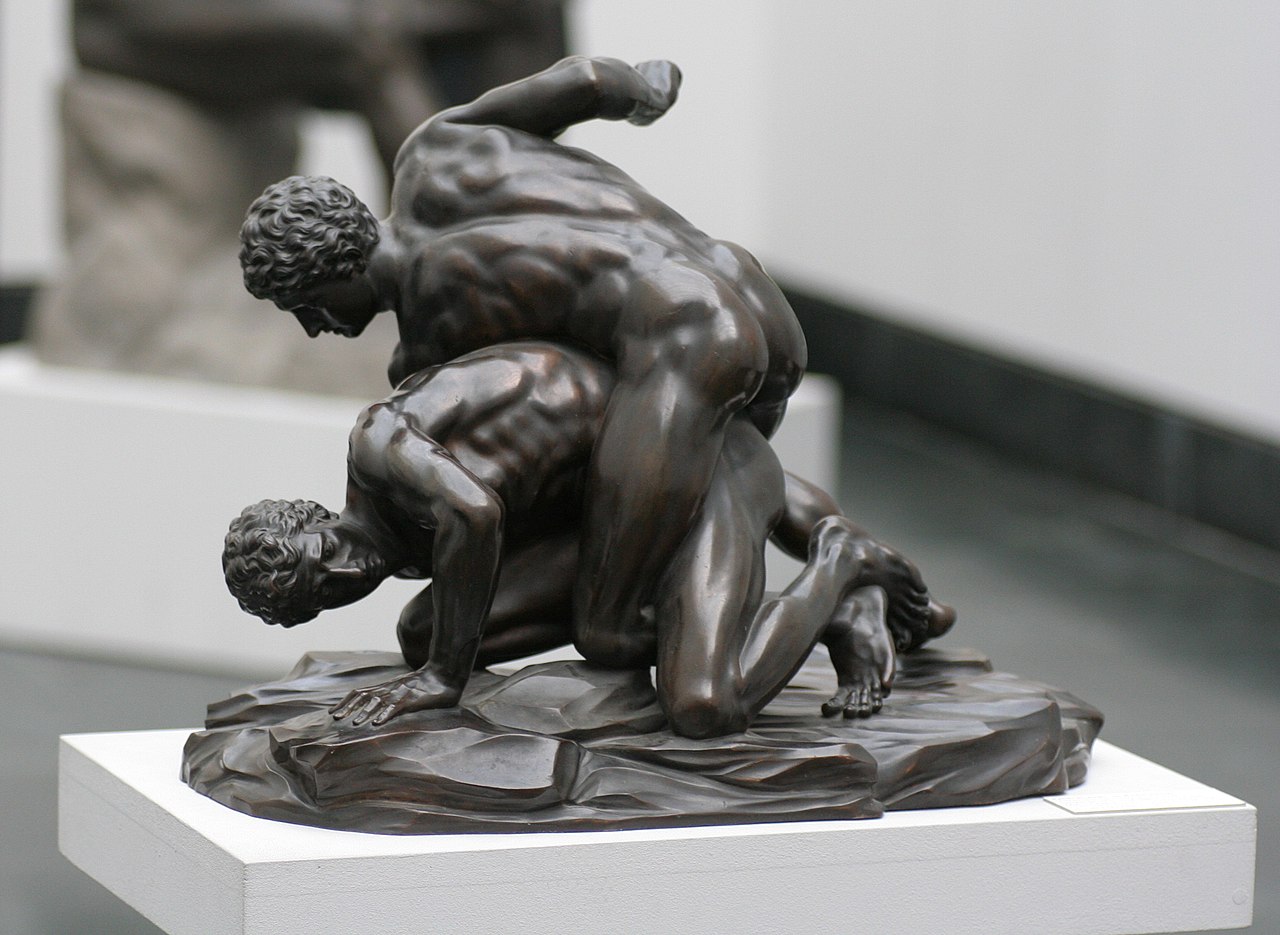
Wrestling is a grappling sport in which two people attempt to control each other and, in many rule sets, secure a pin. Matches emphasize balance, leverage, timing and physical conditioning rather than strikes. Competitors use takedowns, throws, trips and ground control to gain decisive positions. Wrestling exists both as an amateur competitive sport and, separately, as a form of staged professional entertainment.
Image gallery
10 Images



Major styles and rule categories
There are several primary competitive rule systems, each with its own emphasis and permitted techniques. Among the best known are:
- Freestyle — an international Olympic discipline that permits attacks on the entire body and rewards exposure of the opponent's back.
- Greco-Roman — another Olympic discipline that restricts holds to the upper body and forbids grabbing the legs for takedowns.
- Collegiate (folkstyle) — common in the United States at school and college levels; it emphasizes control, escapes and riding time.
Beyond these, many regional or traditional "folk" styles have developed worldwide, such as Mongolian wrestling, Turkish oil wrestling and Scottish backhold. Professional wrestling—distinct from amateur sport—is an entertainment form with predetermined outcomes.
Techniques and objectives
Techniques fall into standing and ground phases. Common elements include takedowns and throws to bring an opponent off their feet, followed by pins, holds and positional control on the mat. Matches are often decided by a fall (pin), points scored for successful moves and exposures, or by decision after time expires. Weight classes, protective rules and refereeing standards vary by federation to keep contests fair and safe.
History and development
Wrestling has ancient roots and appears in the sporting traditions of many cultures. It featured prominently in classical antiquity and was part of early international athletic competitions. Over centuries the sport evolved into organized modern styles governed by national and international bodies, and two styles—freestyle and Greco-Roman—are contested at the Olympic Games.
Training, importance and applications
Wrestling training develops strength, anaerobic conditioning, balance, spatial awareness and problem-solving under pressure. Because of its emphasis on control and positional dominance, wrestling techniques provide an effective base for combat sports and self-defense; many successful fighters cross-train in wrestling for grappling skills in mixed martial arts. At the same time, wrestling promotes discipline, weight management and teamwork in youth and collegiate programs.
Distinctions and notable facts
Important distinctions include the difference between amateur competitive wrestling and staged professional wrestling, the separate rulebooks for freestyle, Greco-Roman and folkstyle, and the global diversity of traditional wrestling forms. Governance, scoring and match duration are set by regional and international federations, which also organize tournaments from local meets to world championships and the Olympic Games.
Questions and answers
Q: What is wrestling?
A: Wrestling is a competition where two people try to pin the other person to the ground during matches using throws, takedowns, and trips.
Q: What are the people who wrestle called?
A: The people who wrestle are called wrestlers.
Q: Is striking allowed in wrestling?
A: No, striking is not allowed in wrestling.
Q: What do wrestlers use to get their opponents down to the ground?
A: Wrestlers use throws, takedowns, and trips to get their opponents down to the ground.
Q: What do wrestlers use to control their opponent on the ground?
A: On the ground, wrestlers use holds and pins to control their opponent.
Q: What is the purpose of wrestling in mixed martial arts competitions?
A: Wrestling is a popular and effective base for fighters in mixed martial arts competitions.
Q: What are the different styles of wrestling?
A: The different styles of wrestling include Freestyle, Greco-Roman (French wrestling), Collegiate (folk style) (USA), and International folk wrestling styles.
Related articles
Author
AlegsaOnline.com Wrestling: Styles, Techniques, History and Competitive Practice Leandro Alegsa
URL: https://en.alegsaonline.com/art/109216