
Sunda clouded leopard (Neofelis diardi)
A medium-to-large wild cat of Borneo and Sumatra, the Sunda clouded leopard is a distinct species adapted to arboreal life, threatened by habitat loss and hunting and noted for its long canines and patterned coat.
Overview
The Sunda clouded leopard (Neofelis diardi) is a forest-dwelling felid native to the islands of Sumatra and Borneo. Long recognized by local peoples and hunters, it was formally distinguished from the mainland clouded leopard following genetic and morphological studies. It is an elusive, largely nocturnal and solitary predator adapted to life both in the trees and on the forest floor.
Image gallery
6 Images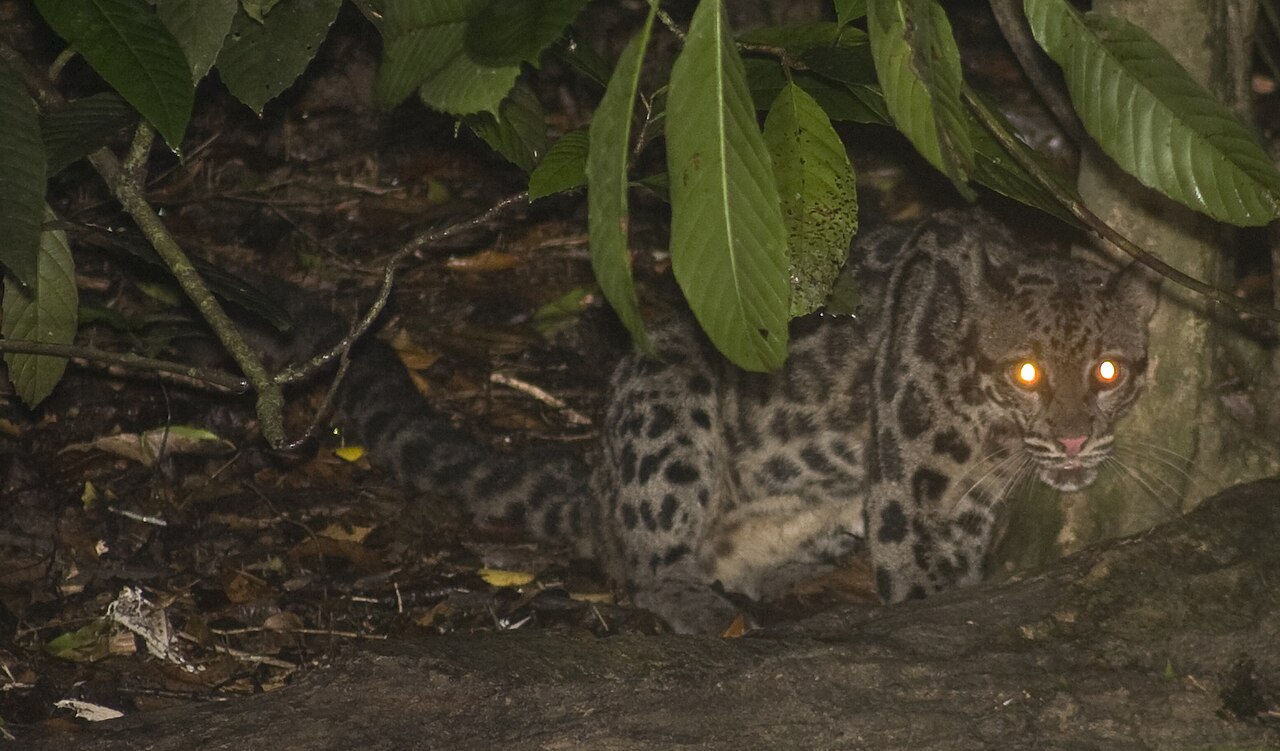



Physical characteristics
This species is characterized by large, rounded spots and irregular, cloud-like markings on a tawny or grayish coat. Individuals weigh roughly 12–25 kg (26–55 lb), with a long, thick tail that often approaches the body length and aids balance when climbing or leaping. The Sunda clouded leopard has proportionally long upper canine teeth—among the longest relative to skull size of any living cat—giving it a powerful bite. Short, muscular limbs and flexible ankle joints enable it to climb headfirst down trunks and to maneuver among branches.
Distribution and habitat
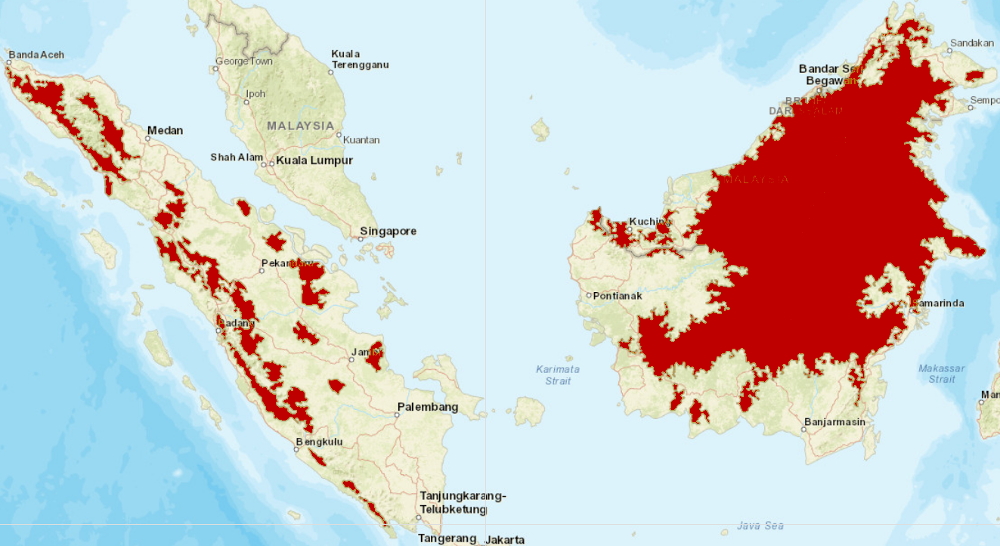
The species occurs across lowland and hill forests of Borneo and in a range of forested habitats on Sumatra, where populations are sometimes found at higher elevations. In Borneo it is commonly associated with lowland rainforest, while on Sumatra it appears more adaptable to montane and hilly terrain. Records from some nearby small islands have been uncertain or sporadic, and field surveys continue to refine its known range.
Behavior and diet
Sunda clouded leopards are largely crepuscular and nocturnal hunters. They take small to medium-sized mammals and birds, including arboreal prey such as primates and civets, using stealth and powerful ambush attacks. They are solitary except during mating or when females rear young. Camera traps and occasional telemetry studies have improved understanding of their movements, home ranges and activity patterns in recent decades.
Taxonomy and conservation
Genetic research and comparative studies in the early 21st century established Neofelis diardi as distinct from the mainland clouded leopard, leading to a formal split based on DNA and morphological differences and subsequent conservation focus. A variety of threats—primarily habitat loss from logging and agricultural conversion, fragmentation, and illegal hunting—reduce populations. Conservation efforts rely on protected areas, anti-poaching measures and research; ongoing genetic work and field studies continue to inform management decisions (genetic study).
Notable facts
- The species has been documented on film and by camera traps, which helped confirm behaviors and distribution.
- Its combination of arboreal skill, cryptic coat and long canines makes it one of Southeast Asia's most distinctive felids.
- Because of its island distribution and the pressure on tropical forests, monitoring populations and preserving contiguous habitat are conservation priorities.
Questions and answers
Q: Where is the Sunda clouded leopard found?
A: The Sunda clouded leopard is found on Sumatra and Borneo.
Q: What is the Sunda clouded leopard related to?
A: The Sunda clouded leopard is related to the Clouded leopard.
Q: Has the Sunda clouded leopard been filmed?
A: Yes, the Sunda clouded leopard has now been filmed.
Q: How much does the Sunda clouded leopard weigh?
A: The Sunda clouded leopard weighs around 12 to 25 kg (26 to 55 lb).
Q: What is unique about the canine teeth of the Sunda clouded leopard?
A: The canine teeth of the Sunda clouded leopard are two inches long, which, in proportion, are longer than other living felines.
Q: What is the purpose of the Sunda clouded leopard's long tail?
A: The tail of the Sunda clouded leopard helps it balance when running and jumping.
Q: Where do Sunda clouded leopards occur in Borneo and Sumatra?
A: In Borneo, Sunda clouded leopards occur in lowland rainforest. In Sumatra, they appear to live more in hilly, montane areas.
Related articles
Author
AlegsaOnline.com Sunda clouded leopard (Neofelis diardi) Leandro Alegsa
URL: https://en.alegsaonline.com/art/94871
Sources
- iucnredlist.org : iucnredlist.org/details/136603/0
- doi.org : 10.1016/j.cub.2006.08.066
- pubmed.ncbi.nlm.nih.gov : 17141620
- doi.org : 10.1016/j.cub.2006.10.066
- pubmed.ncbi.nlm.nih.gov : 17141621
- bbc.co.uk : Walker Matt 2012. Rare cat filmed up close in Borneo. BBC Nature
- cell.com : cell.com/current-biology/abstract/S0960-9822(06)02133-6