
Sulfur tetrafluoride (SF4)
Sulfur tetrafluoride (SF4) is a reactive inorganic gas used as a fluorinating reagent in organic synthesis; it has a see-saw molecular shape and must be handled under inert, dry conditions.
Sulfur tetrafluoride is an inorganic molecular compound with formula SF4. It contains sulfur in the +4 oxidation state, bonded to four fluorine atoms. At ambient conditions it is a colorless gas with a sharp odor and high chemical reactivity.
Image gallery
4 Images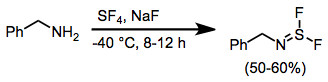


Structure and bonding
Sulfur in SF4 has five electron regions (four bonding pairs and one lone pair), which gives the molecule a see-saw shape derived from a trigonal bipyramidal electronic geometry. The lone pair occupies an equatorial position, making the axial and equatorial S–F bonds inequivalent and affecting reactivity and NMR behavior.
Preparation and physical behavior
SF4 is produced and handled as a gas in specialized laboratories and chemical plants. It reacts readily with water and alcohols; hydrolysis and moisture exposure generate corrosive hydrogen fluoride and various sulfur oxyfluorides. Because of this sensitivity, it is stored and used under dry, inert atmospheres.
Uses and reactions
In organic chemistry SF4 has been applied as a deoxofluorinating agent: it converts carbonyl compounds into the corresponding geminal difluorides and can replace hydroxyl groups with fluorine under suitable conditions. Its gaseous nature and reactivity distinguish it from liquid deoxofluorinating reagents used as safer or more convenient alternatives in many labs.
Safety and handling
SF4 is highly reactive and toxic. Contact with moisture forms hydrogen fluoride, which is corrosive and hazardous. Work with SF4 requires gas-handling equipment, gas-tight reaction vessels, appropriate scrubbing of exhaust gases, and strict respiratory and skin protection. Industrial and academic users follow detailed protocols to minimize exposure.
Context and distinctions
Sulfur tetrafluoride is part of a family of sulfur fluorides that vary widely in properties: for example, inert sulfur hexafluoride (SF6) contrasts sharply with reactive SF4. For further technical details about sulfur and related oxidation states see sulfur and general material on oxidation states. Researchers now often choose alternative fluorinating reagents for practical or safety reasons, but SF4 remains historically important in the development of organofluorine chemistry.
Related articles
Author
AlegsaOnline.com Sulfur tetrafluoride (SF4) Leandro Alegsa
URL: https://en.alegsaonline.com/art/94714