
Suicide Squad: DC Comics' Black‑ops Team of Supervillains
Overview of the Suicide Squad, a DC Comics team of incarcerated supervillains recruited for dangerous missions; origins, membership, ethics, and film adaptations.
Overview
The Suicide Squad is a government‑run covert unit that appears in American comic books and related media. Rather than a conventional superhero team, the Squad is typically made up of imprisoned supervillains offered commuted sentences in exchange for carrying out high‑risk black‑ops assignments. The group has been used to explore themes of coercion, redemption, and expendability within the superhero genre. For more on the team's nature see supervillain team and its publication context in American comic books from DC Comics.
Image gallery
7 Images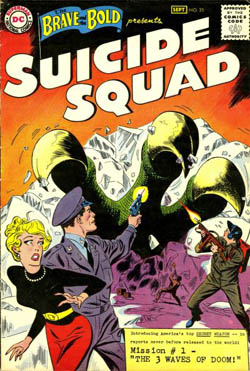


Origins and development
Two distinct incarnations of the concept have appeared in print. An early iteration debuted in the late 1950s as a short‑lived adventure feature, while a modern, grittier version was reimagined by writers and editors in the late 20th century and established a continuing series. That modern revival emphasized Amanda Waller's role as the ruthless administrator who assembles and controls the unit; her leadership is a defining element of the team's tone and mission Amanda Waller.
Members and structure
Lineups change frequently, but recurring members include skilled marksmen, brutal enforcers, wildcard sorcerers, and unstable antiheroes. Notable figures associated with the Squad are:
- Captain Boomerang — a cunning ranged combatant.
- Deadshot — an expert marksman often portrayed as the team’s best shot.
- Enchantress — a dangerous sorceress whose powers can destabilize missions.
- Harley Quinn — a chaotic, unpredictable presence who has become culturally prominent.
- Katana — a skilled swordswoman with a personal code of honor.
- Killer Croc — a physically imposing combatant used for brute force.
Methods, ethics, and narrative use
Typical mission mechanics include strict supervision by government agents, compulsory obedience enforced by implanted explosive devices or analogous safeguards, and high casualty risk. Writers use the Squad to test moral boundaries: government oversight, the ethics of using criminals for national security, and the possibility of redemption under duress. The format permits rotating casts and morally complex storytelling that contrasts with more idealized superhero teams.
Adaptations and cultural impact
The concept has been adapted to other media, including feature films and animated series. A live‑action film released in 2016 introduced the team to a broader audience and a later, reimagined film in 2021 offered a different tone and creative team, both raising public interest in the characters and themes 2016 movie and 2021 film. These adaptations highlight the Squad's mixture of dark humor, action, and ethical ambiguity and have helped several members, especially Harley Quinn, become mainstream pop culture figures.
Notable distinctions
Unlike many superhero teams formed around shared ideals, the Suicide Squad is defined by coercion and pragmatic government control. Its rotating roster and willingness to feature antiheroes or outright villains make it a useful narrative vehicle for exploring the costs of state‑sanctioned violence and the thin line between heroism and villainy.
Related articles
Author
AlegsaOnline.com Suicide Squad: DC Comics' Black‑ops Team of Supervillains Leandro Alegsa
URL: https://en.alegsaonline.com/art/94670