
American comic book
A compact overview of the American comic book: its form, development from the 1930s, major genres and industry changes, and its cultural influence and formats.
Overview
An American comic book is a thin periodical that tells stories primarily through sequential art and short captions. Published in the United States as monthly or irregular issues, these booklets traditionally combine full-color covers, interior panels and a mix of text and images to convey action, character and dialogue. Many editions emphasize costumed heroes, but the form has hosted a wide variety of narratives and artistic approaches. For more on the national context see United States publishing and for the broader medium see comics.
Image gallery
8 Images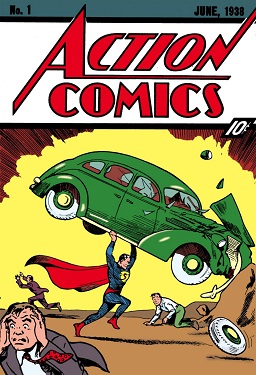


Origins and early growth
The comic-book format emerged in the early 1930s as publishers collected and reprinted comic strips and new material in inexpensive stapled booklets. American comic books rose to mainstream attention after the 1938 release of Action Comics, which famously introduced the character Superman. That issue helped usher in a period of rapid expansion for the industry; historians also refer to this period when discussing American comic books more generally.
Golden Age and mid-century shifts
The popularity of superheroes peaked around World War II and for several years thereafter. The genre's wartime prominence coincided with broader cultural themes and distribution growth, but the superhero boom subsided by the late 1940s. The industry then diversified into horror, crime, science fiction, westerns and romance, responding to changing readerships and market conditions. The wartime era is often noted in studies of World War II and its social impact.
Regulation, format and content
In the 1950s concerns about content and juvenile readership prompted the creation of self-regulatory measures that shaped storytelling and visual style for decades. Typical comic-book issues remain short (often 20–30 pages) and are later collected as trade paperbacks. Production roles include writers, pencillers, inkers, colorists and letterers; modern editions also appear digitally and in deluxe collected editions.
Genres, distribution and readership
- Superhero fiction: the best-known American export, exemplified by characters such as Superman.
- Genre fiction: horror, crime, romance and science fiction.
- Independent and alternative comics: smaller press and creator-owned work distributed through specialty shops and online platforms.
Importance and cultural influence
American comic books have shaped popular culture through adaptations to film, television and merchandise, influenced visual storytelling worldwide and fostered a collecting culture. Today the field includes corporate publishers, independent creators and digital platforms, all contributing to a diverse marketplace of stories and styles.
For general reference on the medium and industry developments see resources on publishing practices and comics history via national publishing and broader comics studies at comics resources.
Author
AlegsaOnline.com American comic book Leandro Alegsa
URL: https://en.alegsaonline.com/art/134416