
Stream of consciousness (literary technique)
A narrative method that seeks to depict the continuous flow of a character’s thoughts and sensations; used widely in modernist fiction to convey subjectivity, memory, and perception.
Stream of consciousness is a literary technique that attempts to represent the inner flow of a character’s thoughts, impressions, sensations and associations. Rather than presenting polished, linear narration, it reproduces mental life as a sequence of fleeting perceptions, fragmentary memories, interior commentary and sensory detail. When this interior flow is emphasized as unspoken thought, the device is frequently described as an interior or internal monologue, an unvoiced register that can include material the character might never say aloud.
Image gallery
1 Image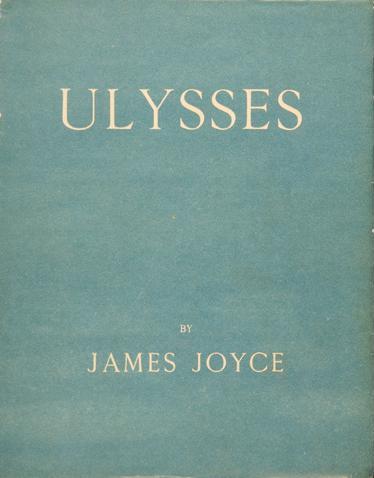
Characteristics
- Associative and non-linear ordering: ideas follow the mind’s jumps rather than grammatical sequence.
- Unconventional punctuation and syntax: fragments, run-ons and abrupt shifts are common to mimic thought rhythms.
- Blend of perception and memory: present sensations often trigger recollection, daydreams or anticipations within the same passage.
- Close psychological distance: language often collapses narrator, focal character and immediate experience into a single perspective.
The technique can range from brief passages of interior reflection to entire novels organized around a conscious stream. For example, Mikhail Bulgakov used a sustained interior viewpoint in parts of Heart of a Dog, in which a non-human mind comments on its surroundings. Other writers turn the method into extended experiments with narrative form.
History and development
The phrase "stream of consciousness" comes from psychology: William James used it in his Principles of Psychology to describe the flow of human thought, and the term was later adopted by literary critics and novelists to describe comparable narrative practice; see William James. In the early twentieth century, writers associated with the modernist movement experimented with interiority as part of broader challenges to realist, omniscient narration. Critics such as May Sinclair helped popularize the label when discussing these new narrative effects in fiction.
Notable examples and uses
- Short passages or entire novels by authors like James Joyce, Virginia Woolf, Marcel Proust, William Faulkner and Dorothy Richardson are frequently cited as exemplar uses.
- Short stories and scenes sometimes employ the method to convey crisis, stream-of-mind humor or psychological fragmentation.
- Contemporary writers, playwrights and filmmakers borrow its principles to suggest consciousness in dispersed cinematic montage or interior monologue sequences.
Writers use the technique to reveal character motivations, explore subjective time and represent perception more faithfully than objective narration often allows. It can make inner conflict, memory distortions and sensory overload immediate for the reader.
Distinctions and challenges
Stream of consciousness differs from related devices such as free indirect discourse (which blends third-person narration and a character’s voice) and traditional interior monologue (which can be more orderly and reportable). Its open-ended, associative quality can enrich psychological realism but also present challenges: passages may feel obscure, translations can alter rhythm and meaning, and some readers find sustained passages taxing. Nevertheless, when used with care it remains a powerful tool for rendering human thought and experience on the page.
For further reading on specialized aspects and examples, consult resources on narrative technique and modernist fiction, or follow introductions to specific authors and passages that exemplify the method. Additional contextual material and critical perspectives are available through scholarly surveys and annotated editions of major works.
Related articles
Author
AlegsaOnline.com Stream of consciousness (literary technique) Leandro Alegsa
URL: https://en.alegsaonline.com/art/94231