
Steeplechase (athletics): track obstacle race with barriers and water jump
Steeplechase is a track event in athletics featuring fixed barriers and a water jump. The standard international distance is 3000 metres; roots trace to horseback steeplechase across countryside.
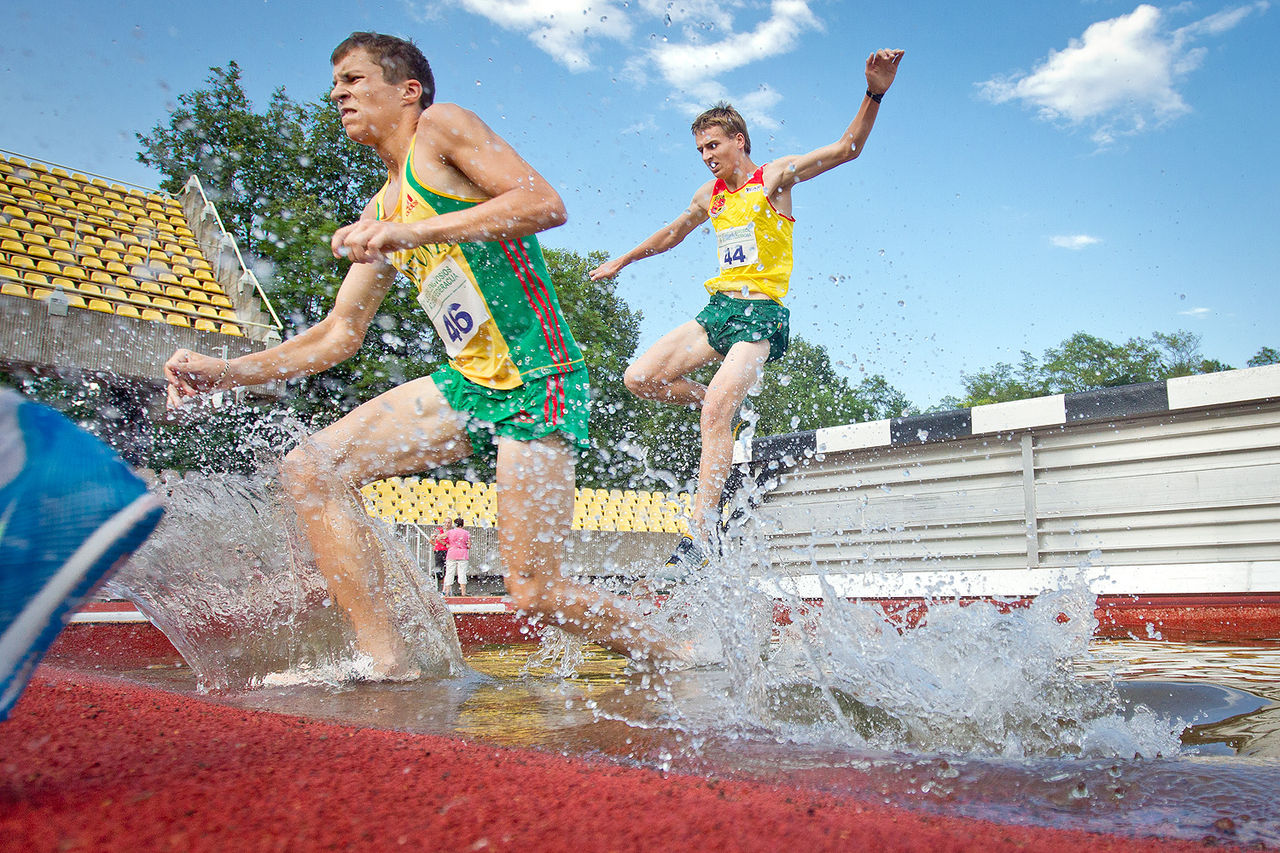
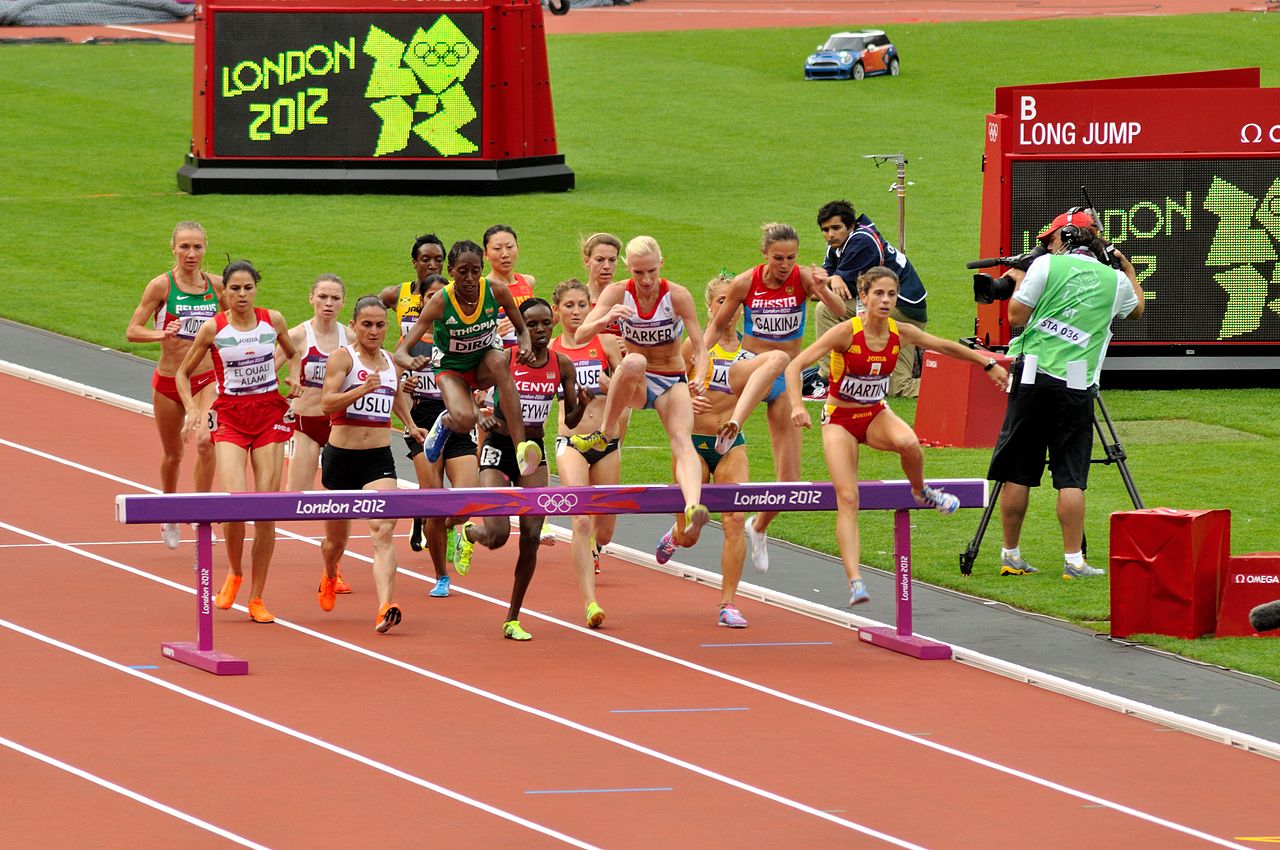
The steeplechase is a middle-distance track event in athletics in which competitors run a set number of laps while clearing a series of fixed barriers and negotiating a water jump. Unlike hurdle races, steeplechase barriers are solid and do not fall over if struck, so athletes must either clear them cleanly or step on them to push off. Races combine endurance, rhythm, and obstacle technique and are contested at club, national and international levels.
Image gallery
10 Images




Characteristics and rules
A standard senior international steeplechase is 3000 metres. That race routinely features several laps of a 400-metre track and a prescribed number of obstacles per lap, including one water jump. The barriers are heavier and more rigid than track hurdles, and the water pit follows one of the barriers on each circuit. Athletes may contact barriers without disqualification but doing so can slow or unbalance a runner.
Typical formats
- 3000 m: the standard for senior international competitions and the Olympics.
- Shorter distances (e.g., 2000 m) for youth or some domestic competitions.
- Cross-country or steeplechase variants exist on grass courses in some meets.
In championship racing pacing, positioning and efficient clearing of obstacles are as important as raw speed. Athletes often practice hurdle technique, landing and immediate re-acceleration, and specific strength to absorb impacts from the water jump.
History and origins
The event takes its name from the old field event in which riders raced from one church steeple to another across open countryside, a form of steeplechase in horse racing. Over time the riding contest inspired a footrace equivalent that migrated onto prepared tracks and adopted fixed barriers and the distinctive water jump. Men’s steeplechase has been part of international athletics programs for many decades; women’s steeplechase was added to major championships more recently as the event grew in popularity.
Steeplechase remains a distinctive athletics discipline because it mixes sustained running with repeated technical challenges. It rewards athletes who combine aerobic fitness, agility, timing and mental focus. At grassroots and elite levels, the event provides dramatic, tactical races that differ markedly from flat middle-distance running.
Related articles
Author
AlegsaOnline.com Steeplechase (athletics): track obstacle race with barriers and water jump Leandro Alegsa
URL: https://en.alegsaonline.com/art/93645