
Track and field athletics: overview, events, history and competition
Comprehensive guide to track and field athletics: its events (running, jumping, throwing), venues, history, major competitions, training, and how performances are measured and compared.
Overview
Track and field is the core set of events within the wider sport of athletics. It groups contests that take place on a running track or on the grass or turf inside the oval: primarily running, jumping and throwing. Track and field is contested at school, club, national and international levels and forms a centrepiece of major multi-sport meets such as the Olympic Games.
Image gallery
10 Images


Events and characteristics
Events are classified by the physical skill they test. Track events measure speed and endurance and include sprints (for example, the 100 m and 200 m), middle and long distances, hurdling and relay races. Field events measure height or distance in jumps and throws. Combined events mix disciplines over one or two days to reward versatility.
- Track: sprints, middle-distance, long-distance, hurdles, relays (e.g., the 200 m is a common sprint event and appears at championships 200 m).
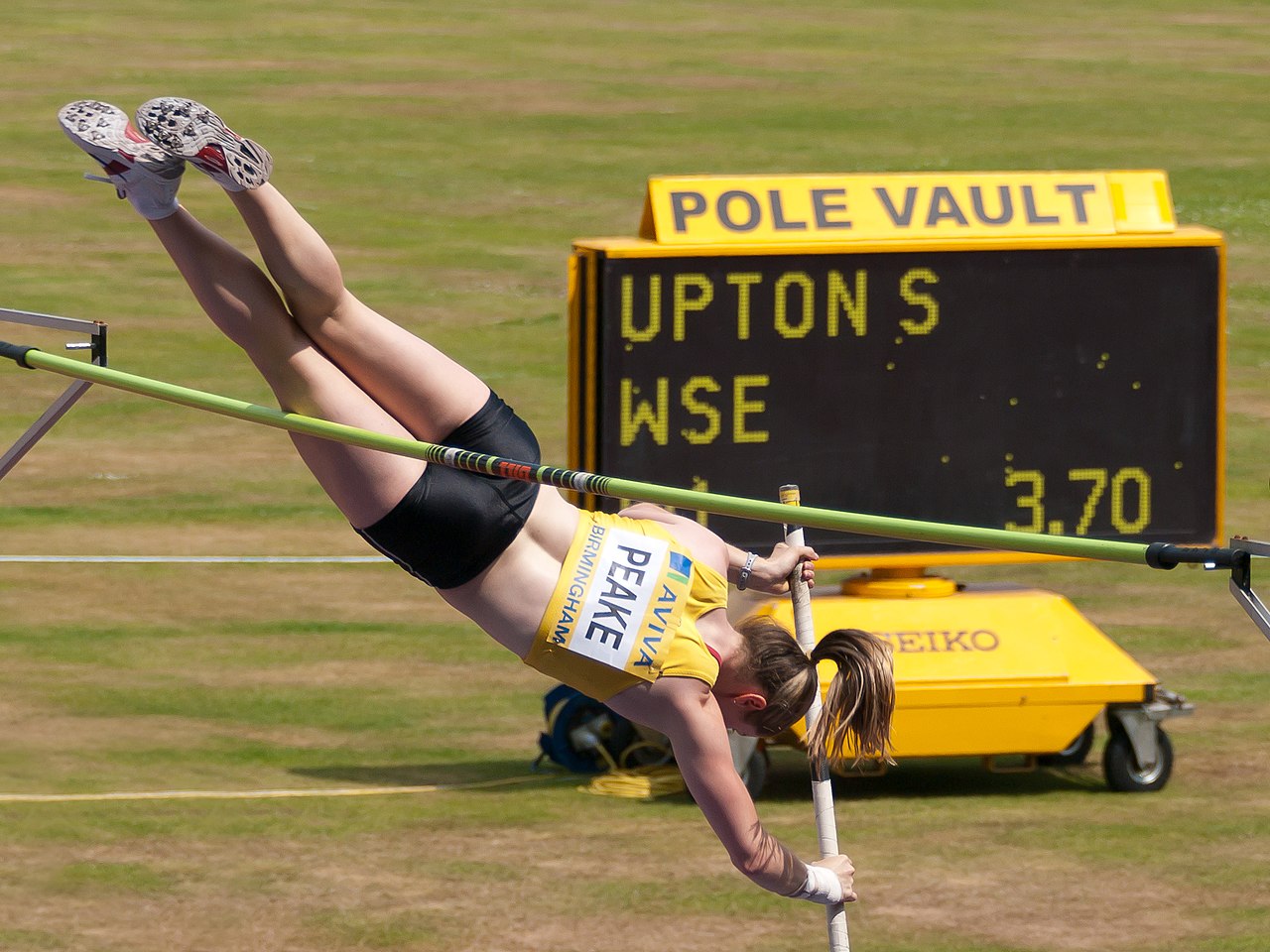
- Jumps: high jump (high jump), long jump (long jump), triple jump and pole vault (pole vault).
- Throws: javelin, discus (discus throw), hammer (hammer throw) and shot put (shot put).
- Combined events: decathlon and heptathlon, which pair sprints, distance, jumps and throws into a single competition.
Venue, equipment and surfaces
Most track and field competitions are staged in a stadium with a standard oval track and interior field. Modern tracks are usually made from synthetic rubber systems—rubber particles bound in a resin—designed to provide traction and consistent energy return; such surfaces are often collectively described as synthetic tracks. Throws and jumps require specialized equipment: landing pits, runways, hurdles, vault standards and implements such as discs, javelins and shots.

History and development
Organized forms of running and jumping date back to ancient civilizations and were central to the ancient Olympic Games. Modern track and field evolved in the 19th century with standardized distances, rules and national governing bodies; the codified sport entered the modern Olympic movement and world championships, consolidating events like the sprint, the marathon (marathon) and the jumps and throws as international standards.

Competitions, measurement and governance
Performances are measured by time, height or distance and ranked to produce results, records and seeds for future events. National federations and the international governing body set rules about equipment, wind assistance, timing accuracy and athlete eligibility. Major competitions include national championships, continental championships and global events where anti-doping and standardised measurement are strictly enforced.
Training, purpose and distinctions
Athletes specialize by event group but many begin with a broad base of running, jumping and strength training before narrowing focus. Track and field is accessible at recreational levels and forms a development pathway for youth into elite sport; it also serves academic scholarship systems and professional circuits.


Non-stadia and related events
Not all athletics takes place inside a stadium. Cross country, road racing, marathon events and race-walking are organized under athletics governance but occur on courses and roads. Recognising these distinctions helps when comparing training demands, rules and seasonal calendars between track-and-field specialists and non‑stadia athletes.
For more technical descriptions of individual events and up-to-date competition calendars consult official federation materials and event organizers via their reference pages: see sprint and distance rules, the technical manuals on jumps and throws, and event histories provided by meet hosts and national bodies (for example, resources linked to event names in this article).
Questions and answers
Q: What is track and field?
A: Track and field is part of the sport of athletics. It includes running, jumping and throwing events that take place in a sports stadium, either on the running track or on the field inside the running track.
Q: What type of surface are tracks generally made up of?
A: Tracks are generally made up of synthetic rubber - rubber particles bound with latex or polyurethane.
Q: What other types of athletics events are there besides track and field?
A: Other athletics events include cross country running, road running, marathon running, and race-walking - these events take place outside a sports stadium.
Q: How is athletics different from other sports?
A: Athletics is a combination of different sports, generally running, jumping and throwing events. It also includes some combined events such as decathlon which involve parts from all three disciplines.
Q: Who participates in athletics?
A: Athletics is a very common sporting event over the world for people between young children up to younger adults. People can participate for enjoyment or competitively at higher levels such as Olympic games.
Q: What types of running events are included in athletics?
A: Running events include marathons, hurdle races, long distance and short-distance races.
Q: What types of throwing events are included in athletics?
A: Throwing events involve javelin throw, discus throw, hammer throw and shot put.
Related articles
Author
AlegsaOnline.com Track and field athletics: overview, events, history and competition Leandro Alegsa
URL: https://en.alegsaonline.com/art/101003