
Standing Rock Indian Reservation
A Native American reservation spanning North and South Dakota, home to Lakota and Dakota bands; notable for its size, culture, governance, and recent environmental and sovereignty disputes.
Overview
The Standing Rock Indian Reservation is a federally recognized Native American territory that lies on both sides of the Missouri River, in North Dakota and South Dakota. It is composed of lands that include all of Sioux County in North Dakota (Sioux County) and all of Corson County in South Dakota (Corson County). Standing Rock is one of the largest reservations in the United States by land area and is historically home to Hunkpapa and Sihasapa bands of the Lakota and the Ihunktuwona and Pabaksa bands of the Dakota.
Image gallery
3 Images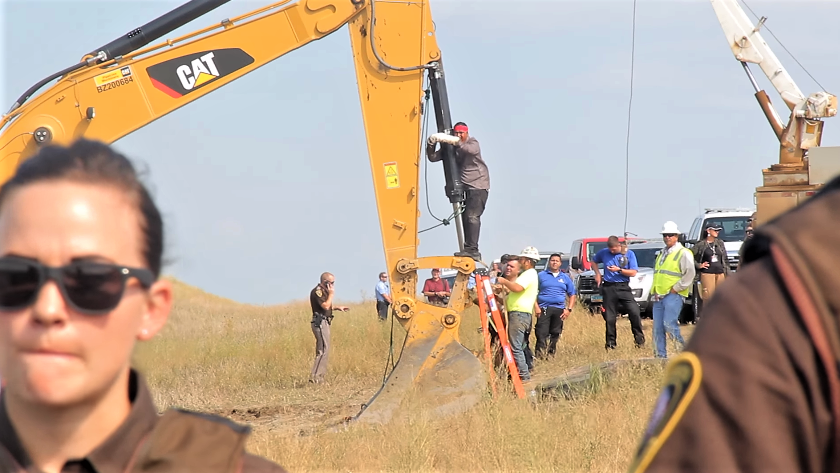


Geography and environment
The reservation extends across a mix of river valleys, grasslands, and rolling hills. The Missouri River and the reservoir known as Lake Oahe form prominent hydrological features that shape local ecosystems, transportation routes, and land use. Seasonal weather ranges from cold continental winters to warm summers; traditional lifeways and contemporary livelihoods have long adapted to these conditions.
People, language, and culture
Residents of Standing Rock include enrolled tribal members and others who identify with the community. Native languages — Lakota and Dakota — are part of daily life for many and are the focus of cultural preservation and language revitalization efforts alongside English. Ceremonial life, powwows, traditional arts, and community events sustain cultural continuity. Prominent historical figures associated with the area, such as leaders of the Hunkpapa Lakota, play an important role in local memory and identity.
History and development
The reservation system was established in the 19th century through treaties, executive orders, and federal policies that reshaped Indigenous territory across the northern Plains. Standing Rock’s boundaries and governance evolved through this period and through later legal and administrative actions. Throughout the 20th and 21st centuries, tribal institutions developed to provide education, health, and social services while asserting tribal sovereignty.
Government, economy, and services
Standing Rock is governed by an elected tribal council and maintains agencies that administer schools, health services, public safety, and housing programs. Economic activity on the reservation includes agriculture and ranching, arts and crafts, small businesses, and initiatives in energy and tourism. Like many reservations, Standing Rock faces ongoing challenges related to infrastructure, employment, and access to services, and it pursues local development efforts to address these needs.
Contemporary significance
In recent years Standing Rock gained international attention during large-scale demonstrations against an oil pipeline project in 2016–2017; those events highlighted issues of tribal consultation, water protection, sacred sites, and Indigenous rights. The reservation continues to be an important center for cultural resilience, legal advocacy, and efforts to balance economic opportunity with stewardship of land and water.
- Location: spans parts of North Dakota and South Dakota.
- Administrative areas: contains all of Sioux County and all of Corson County.
- Peoples: chiefly Hunkpapa and Sihasapa Lakota, and Ihunktuwona and Pabaksa Dakota.
Related articles
Author
AlegsaOnline.com Standing Rock Indian Reservation Leandro Alegsa
URL: https://en.alegsaonline.com/art/93338
Sources
- standingrock.org : Impacts of an Oil Spill from the Dakota Access Pipeline on the Standing Rock Sioux Tribe
- standingrock.org : "History"