
St. John the Baptist Parish, Louisiana
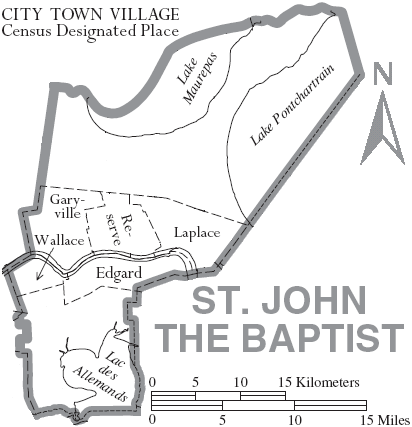
St. John the Baptist Parish is a parish in southeastern Louisiana along the Mississippi River. In 2010 it had 45,924 residents; the parish seat is Edgard and the largest community is LaPlace.
Overview
St. John the Baptist Parish lies in southeastern Louisiana, occupying low-lying land along the east bank of the Mississippi River. Its name reflects the region's Roman Catholic and French colonial heritage; the French form of the name is often cited in local records and signage French name. In Louisiana, counties are known as parishes, a distinction rooted in the territory's colonial and ecclesiastical history parish, and St. John is one of those administrative divisions within the U.S. state of Louisiana. According to the 2010 count recorded by the U.S. census 2010 census, the parish had 45,924 residents.
Image gallery
3 Images

Geography and environment
The parish is characterized by a mix of riverfront levees, wetlands, and industrial corridors. The Mississippi River shapes local settlement patterns and economy, while surrounding marshes and bayous form part of the Gulf Coast ecosystem. This landscape supports agriculture (historically sugarcane), fishing, and industrial activity but also exposes the area to flooding and hurricane impacts. Local infrastructure focuses on flood control and navigation to support communities and commerce.
History and development
Settlement in the area dates to the colonial period when French and Spanish planters established plantations along the river. The parish's social and architectural heritage includes plantation houses, Creole and Cajun cultural traditions, and the legacy of antebellum agriculture. Over time the economy diversified with the arrival of shipping, refining and petrochemical facilities that rely on river and rail links.
Government, communities, and demographics
The parish seat is the community of Edgard, which is an unincorporated location within the parish; many of the parish's population centers are not incorporated as cities and are described as unincorporated. The largest population center is LaPlace, a populous and commercially active area that serves as a regional hub. Local government provides services across a mixture of residential towns, industrial zones, and rural areas.
Economy, culture, and notable features
Industry, river transport, and remaining agricultural activity form key parts of the local economy. Culturally, the parish shares in the greater New Orleans area’s Creole and Cajun heritage, seen in food, music, and festivals. Historic plantation sites and community events draw visitors, and the parish balances economic development with environmental challenges tied to coastal and riverine change.
Further context
- Regional connections: the parish is linked to nearby metropolitan areas by highways and river traffic.
- Conservation and risk: wetland preservation and flood mitigation are ongoing priorities.
- Community identity: French, Spanish and African influences shape local traditions and place names.
Related articles
Author
AlegsaOnline.com St. John the Baptist Parish, Louisiana Leandro Alegsa
URL: https://en.alegsaonline.com/art/93138
Sources
- quickfacts.census.gov : "State & County QuickFacts"
- naco.org : "Find a County"