
SR Class 4Lav — Southern Railway four-car 'Lav' electric multiple units
4Lav was the Southern Railway designation for four-car electric multiple units with lavatories used on semi-fast London–Brighton services. None survived long enough to receive a TOPS classification.
Overview
The designation 4Lav was used by the Southern Railway for a family of four-car electric multiple units built to work semi-fast passenger services, notably on the London to Brighton corridor. The abbreviation "Lav" indicates the inclusion of lavatory facilities within the formation, a feature intended to increase passenger comfort on longer suburban and regional runs compared with shorter-distance suburban stock.
Image gallery
1 Image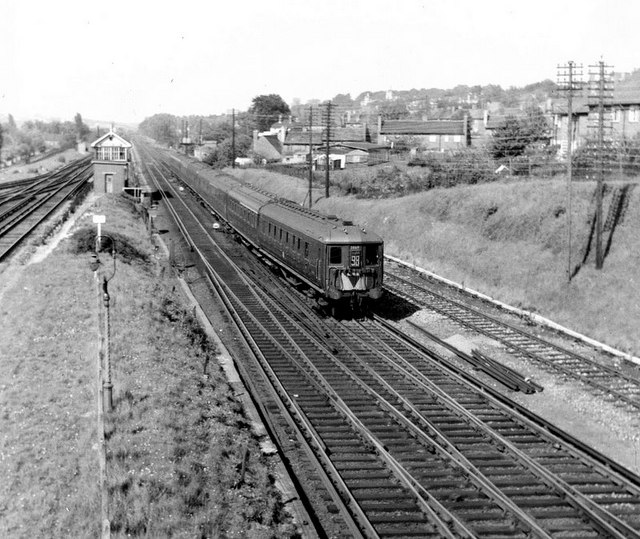
Design and formation
4Lav sets were four-car units, formed to provide a balance between seating capacity and onboard amenities. Typical characteristics included:
- four vehicles per set, with a mix of motor and trailer cars to provide traction and passenger accommodation;
- provision of lavatory facilities (hence the suffix "Lav") suitable for semi-fast schedules;
- compatibility with the Southern Region third-rail direct current electrification system;
- interior arrangements intended for longer journeys than inner-suburban stock, often with compartment or corridor arrangements rather than purely longitudinal seating.
Operational history
Introduced by the pre-nationalisation Southern company, the 4Lav units operated primarily on semi-fast services where the combination of moderate capacity and onboard toilets was valued. They ran alongside other Southern multiple unit types that were tailored to different service patterns, such as pure suburban, corridor express, and buffet-equipped formations. During the nationalisation period these units passed into the ownership of British Rail, but they were withdrawn from service before the late-20th-century computerised classification system was applied.
Withdrawal and legacy
Because the 4Lav units were taken out of service prior to the full implementation of the BR classification known as TOPS, none were allocated a TOPS class number. Their relatively early withdrawal means that examples did not survive into preservation in significant numbers. Nevertheless, the 4Lav concept—four-car formations with onboard lavatories for semi-fast duties—illustrates how the Southern Railway tailored multiple-unit designs to match specific route requirements, and it influenced later standardisation efforts for express and regional EMUs.
Notable distinctions
The 4Lav type should be seen in the context of a varied Southern fleet: suffixes such as Lav, Cor (corridor) and SUB (suburban) signalled differences in layout and intended use. While detailed records of individual vehicles and exact build dates are matters for specialist publications and preserved archive material, the broad legacy of the 4Lav designation is its clear functional label—four cars, with lavatory accommodations, built for semi-fast electrified services on the Southern network.
Further information
For readers seeking technical diagrams, formation lists or unit-by-unit histories, railway archives and specialist books on Southern Railway electric multiple units provide detailed rosters and photographs. Online and printed resources that focus on Southern Region rolling stock and the transition to British Rail ownership often include sections on these intermediate semi-fast EMUs and their role in mid-20th-century commuter and regional operations.
Related articles
Author
AlegsaOnline.com SR Class 4Lav — Southern Railway four-car 'Lav' electric multiple units Leandro Alegsa
URL: https://en.alegsaonline.com/art/92960