
SS Edmund Fitzgerald: Great Lakes freighter lost in the 1975 storm
The SS Edmund Fitzgerald was a large U.S. Great Lakes ore carrier that sank in Lake Superior on November 10, 1975, with the loss of all 29 crew. Its loss remains one of North America’s most famous maritime mysteries.
The SS Edmund Fitzgerald was a U.S. Great Lakes bulk carrier that sank during a violent November storm on Lake Superior on November 10, 1975. Built in the late 1950s for transporting iron ore, she was one of the largest ore carriers operating on the Great Lakes at the time. The ship went down with all 29 hands aboard; no bodies were recovered. The disaster captivated the public and led to widespread attention to Great Lakes shipping safety and emergency procedures.
Image gallery
10 Images
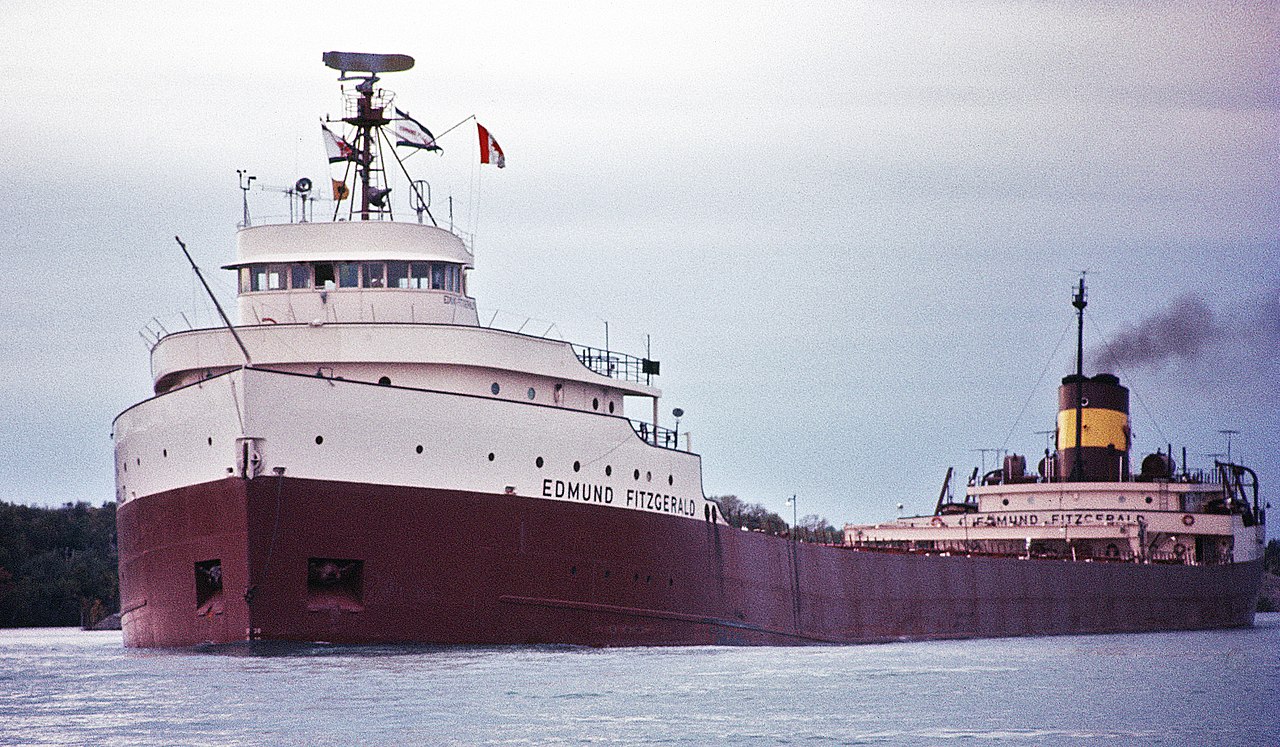




Design, role, and operation
Edmund Fitzgerald was designed as an ore freighter to move dense cargoes of iron ore between mines and industrial ports. Like other “lakers,” she was optimized for maximum cargo capacity and efficient loading and unloading on the lakes. Her hull form, large cargo holds and covered hatches were typical of mid‑20th‑century Great Lakes bulk carriers. During the shipping season these vessels ran routes in often harsh autumn weather, carrying raw materials essential to steel production and heavy industry.
The storm and sinking
On November 10, 1975, the Fitzgerald encountered a severe storm on Lake Superior with hurricane‑force winds and very large waves. Radio traffic from other ships in the area indicates the Fitzgerald struggled in the conditions; she disappeared without a distress signal being widely recorded. Searchers later located the wreck on the lake floor. The loss occurred quickly enough that all 29 crew members were lost and none of their bodies were recovered.
Investigations and prevailing theories
Because the vessel sank in deep, cold water beyond routine diving limits, investigators relied on survivor accounts from nearby vessels, wreck examinations using remote technology, and engineering studies to reconstruct what happened. The official U.S. Coast Guard inquiry attributed the sinking to progressive flooding amid severe weather and possible failure of fittings or hatch covers, but it did not establish a single definitive cause. Subsequent dives and inspections produced evidence that complicated early hypotheses.
- Hatch or cover failure allowing rapid flooding of cargo holds.
- Structural failure from extreme bending stresses (hogging or sagging) in heavy seas.
- Shoaling or grounding that damaged the hull, followed by flooding and loss of propulsion.
- Water shipped over the deck causing machinery or steering failure and rapid loss of stability.
No single theory enjoys unanimous agreement; the ship’s loss remains best described as the result of severe weather combined with one or more rapid failures that prevented recovery or escape.
Legacy and cultural impact
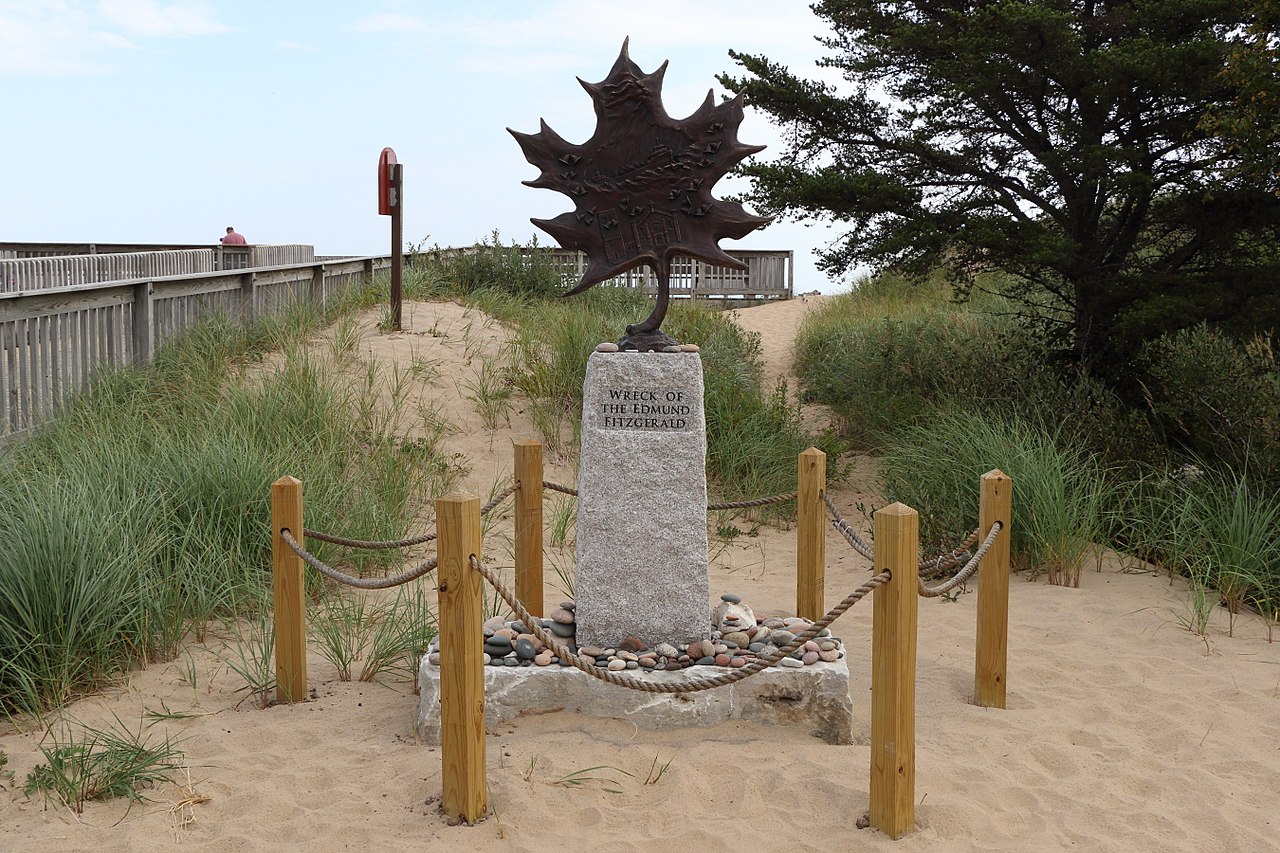
The tragedy entered popular consciousness through memorials, commemorative services at ports such as Whitefish Point, and a widely known ballad by Canadian singer Gordon Lightfoot, "The Wreck of the Edmund Fitzgerald," which brought international attention to the event. Lightfoot’s song originally included a line suggesting a hatch cover had caved in; later examinations of the wreck indicated hatch covers were largely intact, and the lyric was revised. The sinking prompted renewed focus on vessel maintenance, hatch‑cover inspection, weather forecasting for lake shipping, and safety practices for Great Lakes mariners.
For readers seeking further background, contemporary summaries of the disaster and technical analyses of Great Lakes bulk carrier safety are available through maritime archives and specialized texts. The Fitzgerald remains a poignant symbol of the risks of working on the inland seas and a subject of ongoing study and remembrance. For information about the lake and iron ore trade see Lake Superior and iron ore, and for the folk song that popularized the story see Gordon Lightfoot.
Questions and answers
Q: What was the SS Edmund Fitzgerald?
A: The SS Edmund Fitzgerald was an ore carrier on Lake Superior that sank on November 10, 1975, while carrying iron ore.
Q: What was the weight of the ship?
A: The ship was one of the largest “iron boats” working on the Great Lakes and weighed around 13,600 tons.
Q: What caused the ship to sink?
A: Nobody knows for sure, but it is possible that the dangerously high weight of its cargo, as well as violent winds and waves, caused the ship to sink.
Q: How many crew members were aboard the ship?
A: All 29 men aboard the boat died in the sinking.
Q: Has anyone ever recovered the bodies of the crew members?
A: No, to this day, no bodies have been recovered from the sunken ship.
Q: Why was a song written about the SS Edmund Fitzgerald?
A: To remember the men who lost their lives in the sinking, the Canadian singer Gordon Lightfoot wrote a song titled "The Wreck of the Edmund Fitzgerald."
Q: What did the original version of the song say that was proven to be false?
A: The song originally contained a passage that said, "At seven P.M. a main hatchway caved in." However, a dive team sent to recover the bodies found the hatchway to be in perfect condition. Gordon Lightfoot rewrote the verse after being informed of this.
Related articles
Author
AlegsaOnline.com SS Edmund Fitzgerald: Great Lakes freighter lost in the 1975 storm Leandro Alegsa
URL: https://en.alegsaonline.com/art/92994
Sources
- misunderstoodmariner.blogspot.ca : misunderstoodmariner.blogspot.ca/2011/11/new-lyrics-for-wreck-of-edmund.html