
Spyro the Dragon (1998 PlayStation video game)
A platform game starring a young dragon, developed by Insomniac for the original PlayStation. Known for colorful levels, collectible-driven gameplay, and spawning a long-running series and a later remaster.
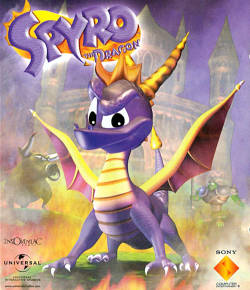
Spyro the Dragon is a platform video game originally released for the Sony PlayStation. Developed by Insomniac Games and published by Sony Computer Entertainment, it introduced the purple dragon Spyro as a playable hero and established a format of exploration, light combat and collectible-driven objectives. The title first appeared in North America in September 1998 and was subsequently released in Europe, Australia and Japan.
Image gallery
4 Images


Gameplay and structure
The game is organized into themed worlds made up of multiple levels and hub areas. Players control Spyro, using his flame breath, charging attack and gliding ability to traverse environments, overcome enemies and reach hidden areas. Objectives typically include freeing trapped dragons, collecting gems, and completing simple puzzles and challenges. Sparx, Spyro's dragonfly companion, serves as an on-screen indicator of health and can be upgraded by collecting certain pickups.
Characters and mechanics
- Spyro – the agile protagonist who can breathe fire, charge with his horns, and glide between platforms.
- Sparx – a small dragonfly that reflects player health and helps gather nearby gems.
- Enemies and bosses – level-specific foes culminate in boss encounters, including an opening antagonist whose actions set the plot in motion.
Development, release and editions
Insomniac Games developed Spyro as a 3D platformer designed to showcase vibrant level design and responsive controls on the PlayStation hardware. Sony Computer Entertainment published the game across several regions: it reached North America in September 1998, Europe and Australia later that year, and Japan in 1999. The original title later became the foundation of a multi-game franchise and was included, in updated form, within a modern remastered collection.
Reception and legacy
Critics praised the game for its colorful graphics, approachable mechanics and imaginative level themes while noting occasional camera limitations typical of early 3D platformers. Major outlets gave favorable scores, and the game is widely credited with helping to define family-friendly platforming on the PlayStation. It was followed by direct sequels that expanded mechanics and storylines, and the first three Spyro games were later remade in a contemporary compilation to introduce the series to new players.
Why it matters
Spyro the Dragon helped establish Insomniac Games as a notable developer and contributed to the late-1990s revival of 3D platformers aimed at broad audiences. Its combination of collectible goals, accessible combat and exploration proved influential for contemporaries and successors in the genre.
Further reading and resources
Related articles
Author
AlegsaOnline.com Spyro the Dragon (1998 PlayStation video game) Leandro Alegsa
URL: https://en.alegsaonline.com/art/92914