
Star Fox 2 — cancelled SNES sequel completed in 1995 and released in 2017
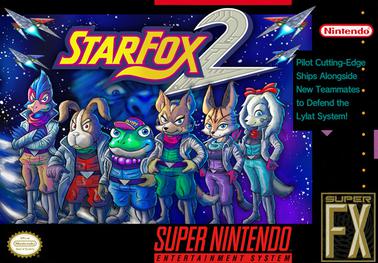
Star Fox 2 is the unreleased-for-decades sequel to Star Fox for the SNES, notable for its Super FX 2 polygon graphics, strategic mission structure, cancellation in 1995 and eventual 2017 release.
Overview
Star Fox 2 was developed in the mid-1990s by Nintendo in collaboration with Argonaut Software. Built for the Super Nintendo Entertainment System, the project pushed the console's hardware with the Super FX 2 co-processor to produce polygonal 3D graphics and new gameplay systems. Although the game reached a finished state in 1995, Nintendo elected not to ship it at the time; an official release did not occur until the Super NES Classic Edition in 2017.
Image gallery
9 Images




Gameplay and distinguishing features
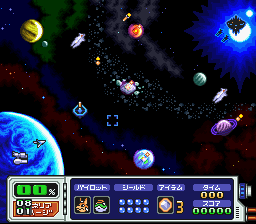
Unlike its predecessor, which was primarily an on-rails shooter, Star Fox 2 introduced several significant changes to structure and play. Its design emphasized a strategic layer in which players moved wing members and interceptors on a map while responding in real time to enemy advances. Missions alternated between small-scale space and ground engagements, and the game experimented with new vehicle behaviors and transformations to expand tactical options.
- Polygonal 3D visuals driven by the Super FX 2 chip for the SNES.
- A strategic overworld map combined with shorter action engagements.
- New mechanics not present in the original Star Fox, including variable mission objectives and alternative movement modes.
- Support for multiplayer and varied mission types in prototype builds.
Development history and cancellation
The project was a collaboration between Nintendo and Argonaut Software and was planned as the official sequel to the original Star Fox. Development progressed alongside work on the Super FX family of chips to expand what the SNES could render. By mid-1995 the game was functionally complete, but Nintendo decided to shelve the title. The company cited a desire to focus attention on next-generation hardware—specifically the then-upcoming Nintendo 64—and marketing considerations for launching a new console generation.
Circulation, preservation and eventual release
After cancellation, prototype cartridges and ROM images of Star Fox 2 circulated among collectors and on the internet, where enthusiasts studied, preserved and in some cases completed translations or bug fixes. Because of that interest and the game's historical importance as a shelved yet finished project, Nintendo ultimately authorized an official release. In 2017 the finished version appeared on the Super NES Classic Edition, giving a wide audience access to a title that had been largely known only by screenshots and prototype footage for two decades.
Legacy and significance
Nintendo's decision to withhold the SNES sequel is often discussed as an example of platform-transition strategy: choosing to prioritize new hardware over releasing late-generation software. The game itself is cited by fans and historians for its experimental design that foreshadowed later series entries and for its role in demonstrating how dedicated co-processors like the Super FX 2 could extend the life of a cartridge-based system.
Today Star Fox 2 is referenced in retrospectives about 1990s console development, preservation debates and the evolution of 3D gameplay on home consoles. Its story illustrates how commercial strategy, technical innovation and fan-driven preservation all shape the videogame record.
Questions and answers
Q: Who developed Star Fox 2?
A: Star Fox 2 was developed by both Nintendo and Argonaut Software.
Q: When was Star Fox 2 completed?
A: Star Fox 2 was completed in 1995.
Q: When was Star Fox 2 released?
A: Star Fox 2 was not released until 2017 on the Super NES Classic Edition.
Q: What console was Star Fox 2 originally going to be released for?
A: Star Fox 2 was originally going to be released for the Super Nintendo Entertainment System (SNES).
Q: Why was Star Fox 2 cancelled?
A: Star Fox 2 was cancelled because the Nintendo 64 was going to be released the following year.
Q: Where were unfinished versions of Star Fox 2 found after it was cancelled?
A: Unfinished versions of Star Fox 2 were found and put on the internet after it was cancelled.
Q: When was Star Fox 2 finally released?
A: Star Fox 2 was finally released in 2017 for the Super NES Classic Edition.
Related articles
Author
AlegsaOnline.com Star Fox 2 — cancelled SNES sequel completed in 1995 and released in 2017 Leandro Alegsa
URL: https://en.alegsaonline.com/art/93430
Sources
- arwinglanding.net : "Starfox2"
- psp.ign.com : "Top 10 Tuesday: Modern Vaporware"
- anthrofox.org : "TOTAL! magazine Star Fox 2 preview scans"