
Somersault
A somersault is an acrobatic rotation in which the body turns so the feet pass over the head. Performed in gymnastics, diving, martial arts and play, it has many variations and safety progressions.
Overview
A somersault is an acrobatic movement in which a person rotates the body so that the feet travel over the head and return to a feet-first landing. The term covers both aerial rotations performed in the air and ground-based rolls; in everyday English the action is often called a "flip." Somersaults may be executed forwards, backwards or to the side and are fundamental in gymnastics, diving, trampoline, circus arts, cheerleading and many forms of freerunning and martial arts.
Image gallery
2 Images
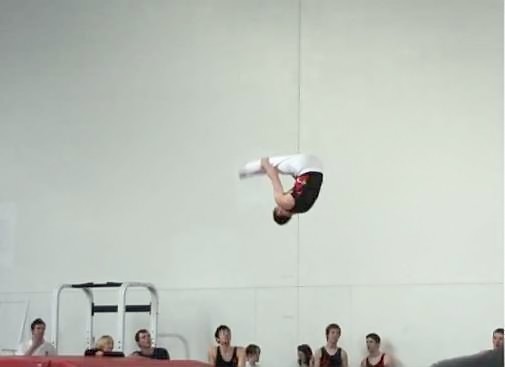
Characteristics and basic technique
Successful somersaults depend on controlling rotation, body shape and timing. Key elements include a strong takeoff, compact or extended body positions, and a coordinated landing. Common body positions are:
- Tuck: knees drawn to chest to increase rotation speed.
- Pike: hips bent with legs straight — intermediate rotation speed.
- Layout: body held straight — slowest rotation but visually extended.
Progressing safely typically follows a sequence from rolls and assisted drills to jump-tucks and then full aerial rotations under supervision. Many coaches use trampolines, spotting belts or foam pits to teach airborne phases. For more detail on drill progressions and coaching cues, see technique resources and training guides.
History and etymology
The English word "somersault" derives from an older French form sombresault. Over centuries the name has been applied to a wide range of rolling and flipping movements seen in folk acrobatics, military displays and performance arts. The move became codified in modern competitive gymnastics and diving in the 19th and 20th centuries as equipment and training methods evolved.
Variations, uses and examples
Variations of the somersault are distinguished by direction, body shape and added elements such as twists or multiple rotations. Notable examples include:
- Forward somersaults (front flips) and backward somersaults (backflips).
- The "gainer": a backward somersault executed while the performer continues moving forward, common in diving and parkour.
- Twisting somersaults that combine rotation about the longitudinal axis (twist) with the flip.
Different disciplines emphasize different variants: diving judges the entry and form, gymnastics scores amplitude and control, while parkour values efficiency and landing stability. For audiovisual examples and discipline-specific rules consult specialist sources such as discipline guides.
Safety, training and distinctions
Because somersaults involve significant aerial rotation and impact, training should follow gradual progressions and use protective equipment until mastery. Distinct from a simple roll, a somersault implies a committed rotation in which the feet pass over the head; a cartwheel rotates the body laterally on the hands, and an aerial cartwheel omits hand support. The term "flip" is often used interchangeably in casual speech, while gymnastics and diving sometimes prefer more specific names that describe direction, body position and additional twists. For authoritative coaching standards and safety recommendations consult a certified instructor or the resources linked here: coaching standards.
Related articles
Author
AlegsaOnline.com Somersault Leandro Alegsa
URL: https://en.alegsaonline.com/art/91755