
Soissons — historic town in northern France
Soissons is a commune in the Aisne department of northern France, known for its ancient origins, early Frankish history (the Vase of Soissons), medieval cathedral and abbey ruins, and wartime significance.
Soissons is a town and commune in what was historically the Picardy area and today lies within the administrative region that includes northern provinces of France. It is located on the banks of the Aisne River in the Aisne department, in the greater territory of the north of France. The name Soissons derives from the Belgic tribe of the Suessiones, who lived in this part of Gaul before and during Roman times.
Image gallery
5 Images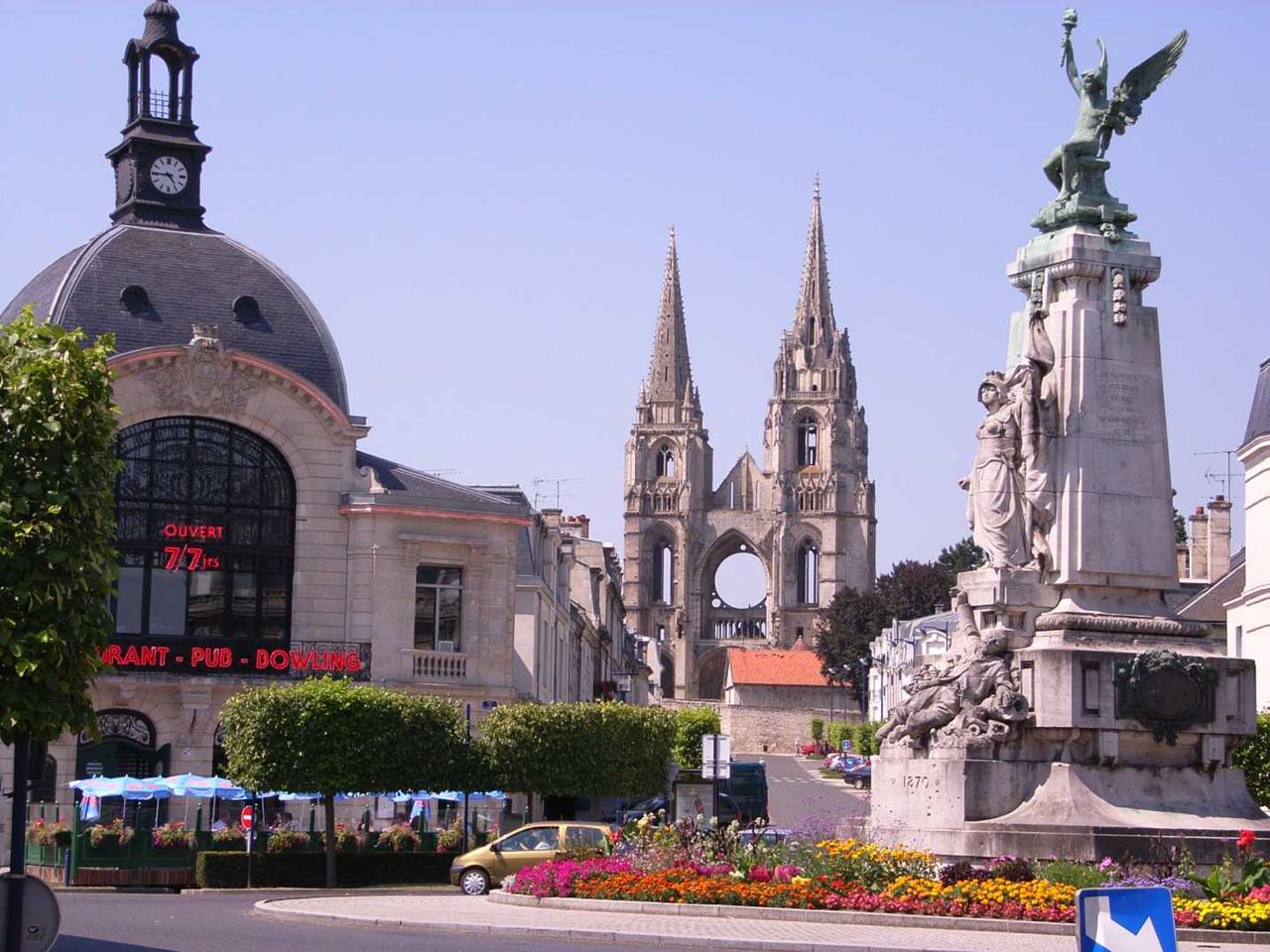


Overview and location
Positioned along the Aisne, Soissons has long served as a local administrative and religious center. Its proximity to Paris and placement on river and road routes made it an important market town and strategic point from antiquity through modern times. The urban core preserves a concentration of religious and medieval architecture that reflects its layered past.
History
Archaeological and written records show settlement here dating back to the Suessiones and the Roman period. In the late 5th century the town entered a new phase of prominence with events associated with the early Frankish kingdom; the famous story known as the "Vase of Soissons" (486) is tied to Clovis and marks a memorable episode in Merovingian tradition. Over the Middle Ages and into the early modern era Soissons served at times as a royal residence and ecclesiastical seat, witnessing shifts in political control common to northern France.
Because of its strategic position, Soissons has been the scene of numerous military engagements across centuries, including actions during medieval conflicts and heavy fighting in the 20th century. These episodes affected its urban fabric, resulting in rebuilding phases that combine ruined abbey remains with restored civic and religious buildings.
Sights and cultural importance
- Cathedral: the cathedral of Saint-Gervais-et-Saint-Protais is a notable Gothic monument with an elaborate interior and sculptural programs.
- Abbey ruins: the remains of abbeys and cloisters, including tall towers and archaeological traces, testify to the town's monastic past.
- Historic center: streets, townhouses and civic buildings show layers of medieval, Renaissance and 19th-century reconstruction.
Today Soissons combines heritage tourism, local commerce and cultural programming. Museums and local exhibitions present archaeological finds, medieval artifacts and the history of the surrounding Aisne countryside. The town also hosts periodic events that draw visitors interested in history, architecture and regional traditions.
For those researching early Frankish history, medieval monasticism or the military history of northern France, Soissons offers accessible material remains and documentary traces. Its identity rests on the continuity from a Belgic tribal capital through Roman integration to a medieval ecclesiastical and administrative center — a compact example of northern France's layered past.
Practical visitor notes: many principal sites are concentrated and walkable from the town center; local guides and museums can provide context for the "Vase of Soissons" episode and the town's role in later wars. Transport links connect Soissons with regional rail and road networks, making it a convenient stop for those exploring the history of the Aisne and greater Picardy area.
References to administrative status, historic episodes and archaeological identity can be explored further through regional resources and specialized studies; for general information about the commune and heritage attractions see local municipal and tourism materials.
Administrative profile — Historical Picardy context — Regional overview — Aisne department — Departmental details — Northern France — Suessiones and ancient origins
Related articles
Author
AlegsaOnline.com Soissons — historic town in northern France Leandro Alegsa
URL: https://en.alegsaonline.com/art/91610