
Sokodé: Central Togo’s Regional Capital and Market City
Sokodé is Togo’s second-largest city, a regional administrative center in central Togo and a long-standing market and transport hub serving surrounding agricultural areas.
Overview
Sokodé is the principal city of central Togo and the country’s second-largest urban settlement. It serves as the administrative seat for the Tchaoudjo prefecture and for the Centrale Region. Located in the interior of Togo, Sokodé functions as a commercial crossroads and regional service centre, linking rural producers with national markets.
Image gallery
7 Images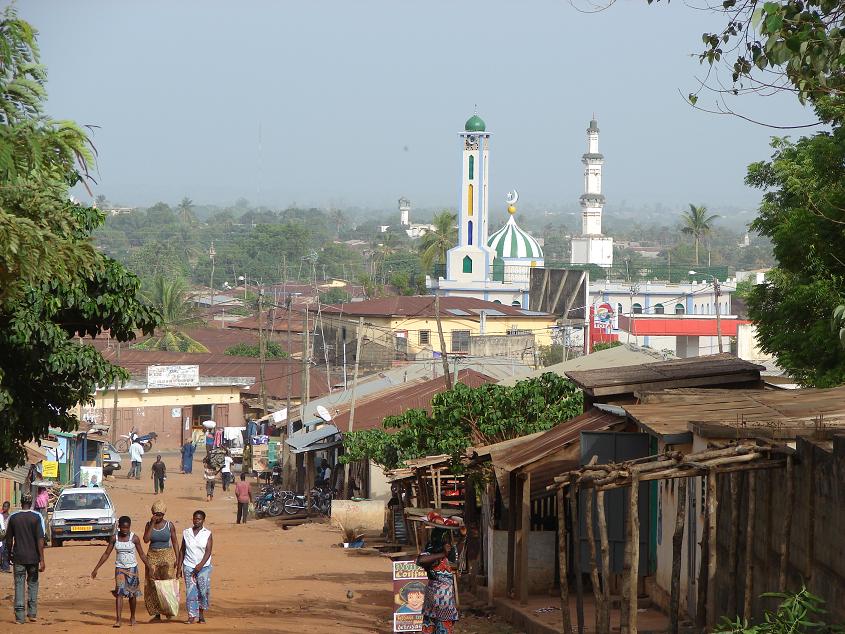


Geography and climate
The city lies roughly 339 kilometres north of Lomé, on the central plateau between the Mo and Mono rivers. The surrounding landscape is characterised by cultivated fields, gallery forest along waterways and gently rolling hills. Sokodé experiences a tropical climate with a pronounced wet season and a drier period that shapes agricultural cycles in the surrounding countryside.
History and development
Historically, Sokodé grew from a cluster of villages into a township through its role as a local trading centre. Its development accelerated during the colonial era when administrative and transport links were expanded under German and later French authority. Post‑independence, Sokodé retained its position as a regional capital and market town, absorbing rural migration and gradually urbanising.
Economy and infrastructure
The city’s economy is anchored in trade, services and small‑scale manufacturing. Sokodé’s markets handle cereals, cotton, livestock and other produce from surrounding farms. Artisans and traders provide goods and services for both local residents and itinerant buyers. As a transport hub, Sokodé sits on routes connecting northern and southern Togo and supports regional bus and freight traffic.
Society and culture
Sokodé is ethnically diverse, with large communities of the Tem (Kotokoli) people alongside other groups found in central Togo. French is the official language for administration and education, while local languages are widely used. The city is noted for its lively market life, traditional music and seasonal cultural events that attract visitors from the region. Religious life is plural: Islam, Christianity and indigenous beliefs are all present.
Key facts and significance
- Second-largest city in the nation and regional administrative centre.
- Major market and distribution point for central Togo’s agricultural production.
- Population on the order of about 118,000 (circa 2020 estimates).
- Important cultural centre for the Tem people and surrounding communities.
Related articles
Author
AlegsaOnline.com Sokodé: Central Togo’s Regional Capital and Market City Leandro Alegsa
URL: https://en.alegsaonline.com/art/91615
Sources
- worldpopulationreview.com : worldpopulationreview.com/countries/togo-population/cities/
- tools.wmflabs.org : 8°59′N 1°08′E / 8.983°N 1.133°E / 8.983; 1.133
- commons.wikimedia.org : Sokodé